Centre signs oil and gas MoU with Assam, Nagaland to boost NE exploration
Synopsis
Nagaland is set to produce oil and gas again after 31 years — that is the headline buried inside a tripartite MoU signed by the Centre with Assam and Nagaland on 12 June. With a new basin opened for wildcat exploration and a regulatory framework finally in place, the North East's long-dormant hydrocarbon story may be about to restart in earnest.
Key Takeaways
The Ministry of Petroleum and Natural Gas signed a tripartite MoU with Assam and Nagaland on 12 June 2025 to boost oil and gas E&P in the North East.
Assam holds approximately 22% of India's crude oil reserves and 15% of its natural gas reserves.
Nagaland will resume oil and gas production after a gap of 31 years , with fresh wildcat exploration in the Naga-Schuppen Belt .
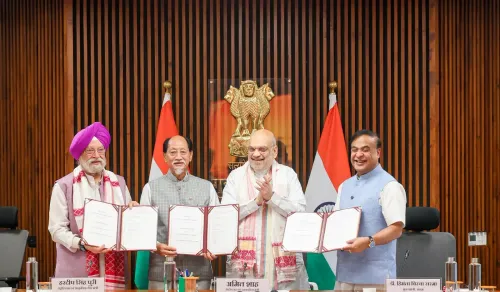
The MoU was signed in the presence of Home Minister Amit Shah and provides regulatory certainty for long-term investor commitments.
The agreement is expected to generate employment, support local businesses, and strengthen infrastructure across the North East Region .
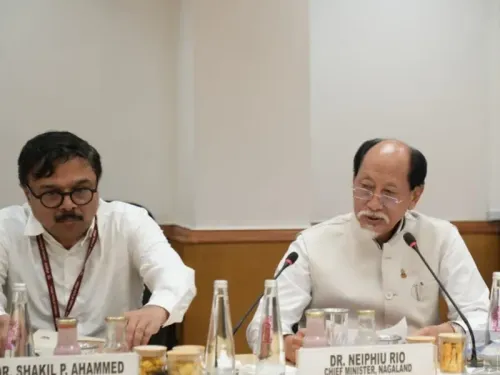
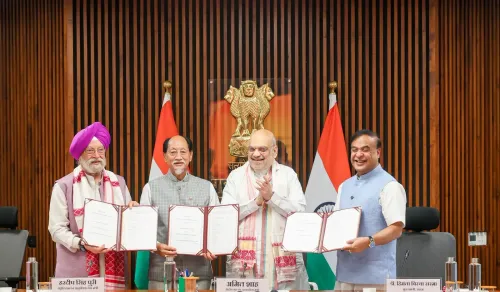
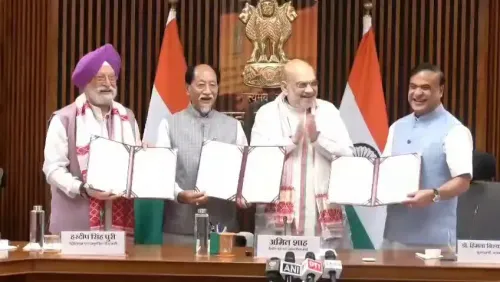
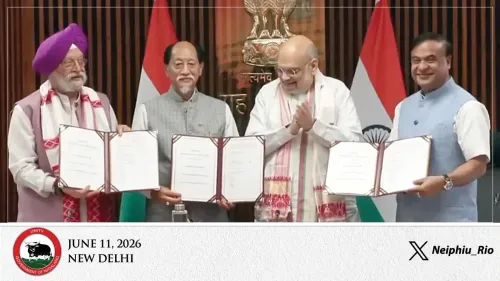
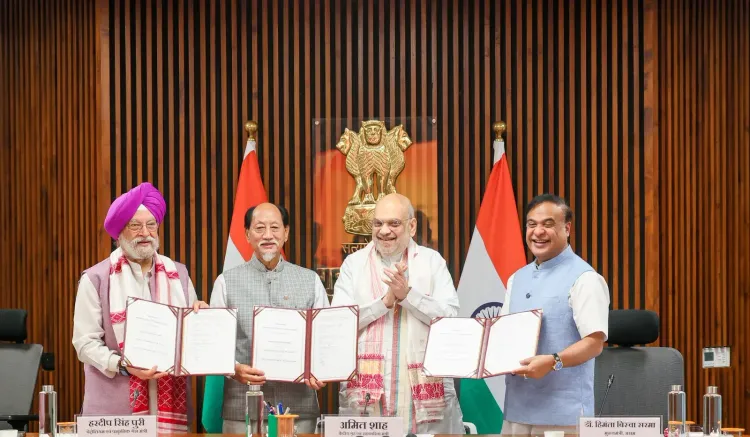
The Ministry of Petroleum and Natural Gas on Friday, 12 June signed a tripartite Memorandum of Understanding (MoU) with the state governments of Assam and Nagaland, establishing a formal cooperation framework to accelerate domestic exploration and production (E&P) of oil and gas in the North East. The agreement was signed in the presence of Home Minister Amit Shah and marks a significant step in India's push to reduce import dependence by unlocking untapped hydrocarbon reserves.
Why the North East Matters for India's Energy Security
Assam alone accounts for approximately 22 per cent of India's crude oil reserves and around 15 per cent of its natural gas reserves, making it one of the country's most hydrocarbon-rich states. Nagaland, meanwhile, holds significant hydrocarbon potential in the Naga-Schuppen Belt of the Assam-Arakan Basin — a geological zone that encompasses both naturally flowing resources and large untapped deposits. Petroleum Minister Hardeep Singh Puri described the E&P outlook for the region as 'extremely promising.'
What the MoU Provides
The tripartite agreement creates a structured framework for inter-governmental cooperation, designed to give investors regulatory certainty, ensure operational continuity, and enable coordinated decision-making across state and central jurisdictions. According to Minister Puri, these conditions are essential for attracting the long-term capital commitments that large-scale hydrocarbon exploration requires.
Notably, the MoU opens a new basin for fresh wildcat exploration — high-risk, high-reward drilling in areas with no prior production history. This signals a deliberate policy shift toward frontier acreage in the region.
Nagaland to Resume Oil Production After 31 Years
One of the most consequential aspects of the agreement is the resumption of mineral oil operations in Nagaland, which has not produced oil and gas commercially for 31 years. Minister Puri stated that 'the North East gave birth to India's petroleum industry; today, it stands ready to power the next chapter of India's energy journey as Nagaland will produce oil and gas again after 31 years.'
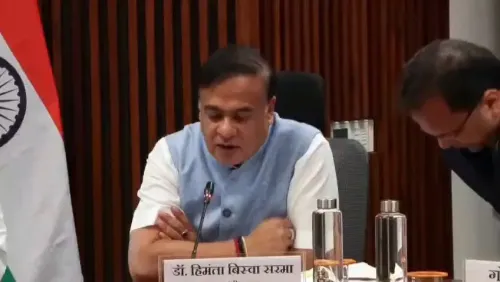
He also acknowledged Nagaland Chief Minister Neiphiu Rio and Assam Chief Minister Himanta Biswa Sarma for 'rising above differences' to advance the regional and national interest — an implicit reference to the longstanding boundary and resource-sharing disputes between the two states.
Expected Economic Impact on the Region
The resumption of E&P operations is projected to generate both direct and indirect employment across the North East Region. Officials indicated that the activity would stimulate local entrepreneurship, strengthen physical infrastructure, and create business opportunities for contractors, service providers, and small enterprises in surrounding communities.
This comes amid a broader Centre-led drive to raise India's domestic crude output, which has stagnated for years as ageing fields in Assam and Gujarat declined faster than new discoveries could compensate. The North East, with its relatively under-explored basins, is increasingly central to that strategy. With wildcat drilling set to commence and a regulatory framework now in place, the pace of activity in the Assam-Arakan Basin will be closely watched by both industry and policymakers.
Point of View
Inter-state disputes, and regulatory paralysis that kept one of India's most prospective hydrocarbon belts effectively off-limits. The tripartite MoU is politically significant precisely because it required Assam and Nagaland to set aside their boundary tensions. Whether that political goodwill translates into actual drilling activity depends on how quickly wildcat exploration can be operationalised and whether private investors — burned by past North East project delays — find the new framework credible. India's domestic crude output has been in structural decline; the North East is one of the few remaining frontiers with genuine upside, but frontier acreage comes with frontier-level execution risk.
NationPress
20 Sept 2026
Frequently Asked Questions
What is the tripartite MoU signed between the Centre, Assam, and Nagaland?
It is a Memorandum of Understanding signed on 12 June 2025 between the Ministry of Petroleum and Natural Gas and the state governments of Assam and Nagaland to create a cooperation framework for accelerating oil and gas exploration and production in the North East. The agreement provides regulatory certainty, operational continuity, and conditions for long-term investment in the region.
Why is Nagaland significant for India's oil and gas sector?
Nagaland holds significant hydrocarbon potential in the Naga-Schuppen Belt of the Assam-Arakan Basin, covering both naturally flowing resources and large untapped deposits. The state is set to resume oil and gas production after a 31-year gap, and the MoU opens a new basin for fresh wildcat exploration.
How much of India's oil and gas reserves does Assam hold?
Assam accounts for approximately 22 per cent of India's crude oil reserves and around 15 per cent of its natural gas reserves, making it one of the country's most strategically important hydrocarbon states.
What economic benefits are expected from the MoU?
The resumption of mineral oil operations is expected to generate direct and indirect employment, stimulate local entrepreneurship, strengthen physical infrastructure, and create opportunities for contractors, service providers, and small businesses across the North East Region.
Who were the key figures present at the MoU signing?
Home Minister Amit Shah was present at the signing. Petroleum Minister Hardeep Singh Puri represented the Centre, while Nagaland Chief Minister Neiphiu Rio and Assam Chief Minister Himanta Biswa Sarma represented their respective state governments.