Puri: Nagaland to produce oil and gas again after 31 years
Synopsis
Union Petroleum Minister Hardeep Singh Puri announced a tripartite MoU between the Centre, Nagaland, and Assam to restart oil and gas production in Nagaland after 31 years, opening the Naga-Schuppen Belt for fresh wildcat exploration and promising jobs and investment across the North East.
Key Takeaways
A tripartite MoU has been signed between the Ministry of Petroleum and Natural Gas , Nagaland , and Assam to resume hydrocarbon exploration and production in Nagaland after 31 years .
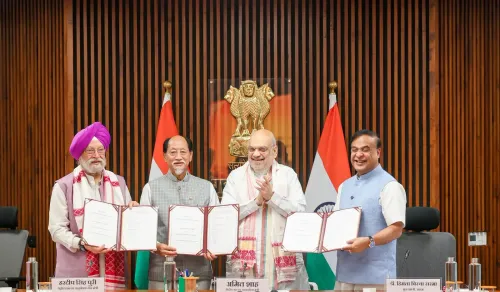
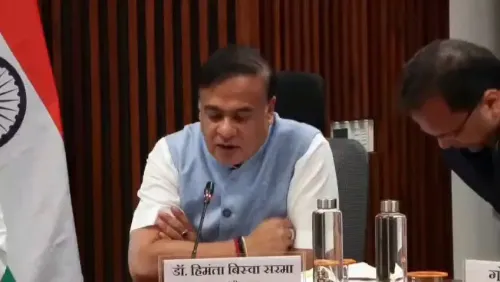
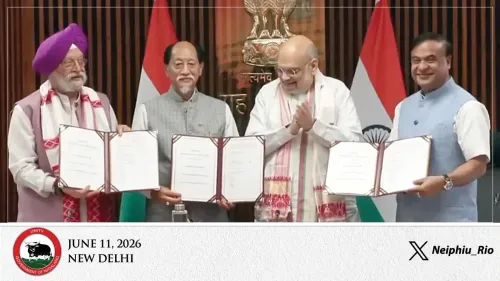
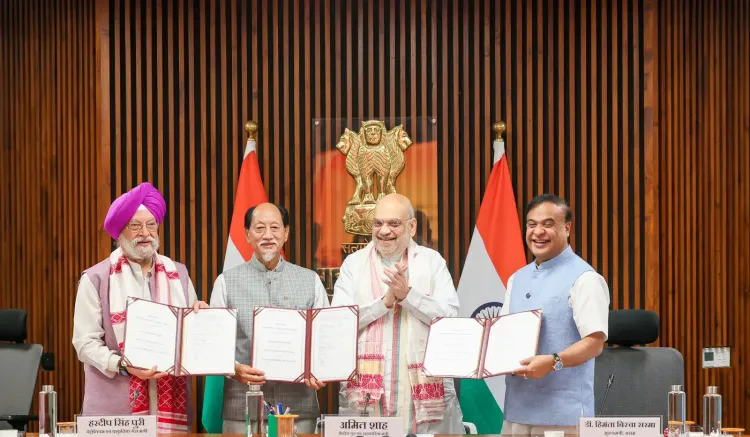
The agreement was signed in the presence of Union Home Minister Amit Shah , with Nagaland CM Neiphiu Rio and Assam CM Himanta Biswa Sarma as signatories.
Assam holds nearly 22% of India's crude oil reserves and about 15% of its natural gas reserves; Nagaland's Naga-Schuppen Belt carries significant untapped hydrocarbon potential.
The MoU opens a new basin for fresh wildcat exploration and is designed to provide regulatory certainty and attract long-term investment.
Resumed operations are expected to generate direct and indirect employment, boost local entrepreneurship, and strengthen infrastructure across the North East Region .
The agreement aligns with India's broader energy security goal of expanding domestic hydrocarbon production under PM Narendra Modi .
Union Petroleum Minister Hardeep Singh Puri announced on Thursday, 11 June 2026 that Nagaland will resume oil and gas production after 31 years, following the signing of a tripartite Memorandum of Understanding between the Ministry of Petroleum and Natural Gas, Nagaland, and Assam — a development he described as opening a new basin for fresh wildcat exploration under PM Narendra Modi's leadership.
Context
Puri declared that the North East 'gave birth to India's petroleum industry' and now 'stands ready to power the next chapter of India's energy journey.' The tripartite MoU was signed in the presence of Union Home Minister Amit Shah, lending significant political weight to the agreement. The pact creates a framework for cooperation between the three parties to enable long-term investment decisions in hydrocarbon exploration and production.
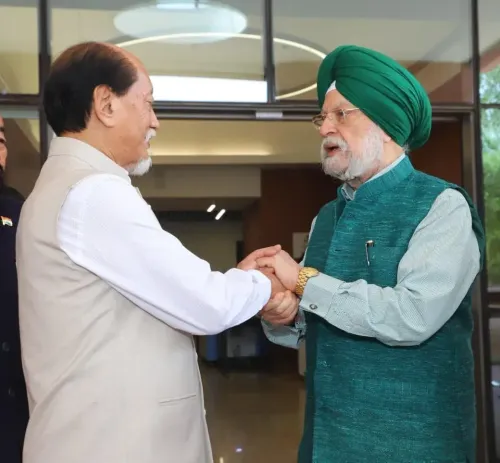
Nagaland Chief Minister Neiphiu Rio and Assam Chief Minister Himanta Biswa Sarma were credited by Puri for rising 'above differences to chart the way forward for the region and the country.' The minister expressed gratitude to both state leaders for their role in bringing the agreement to fruition.
Policy Backdrop
Assam alone accounts for nearly 22% of India's crude oil reserves and around 15% of the country's natural gas reserves. Nagaland possesses significant hydrocarbon potential in the Naga-Schuppen Belt of the Assam-Arakan Basin — a geologically prospective zone with large untapped resources where hydrocarbons are known to occur naturally.
The North East's petroleum legacy stretches back to the 1889 Digboi discovery in Assam, which marked the beginning of India's commercial oil industry. Subsequent policy frameworks, including the Hydrocarbon Vision 2030 for the North East unveiled in 2016 and the Hydrocarbon Exploration and Licensing Policy (HELP) introduced the same year, laid the groundwork for expanding frontier exploration in the region. The HELP regime replaced earlier licensing systems with uniform terms designed to attract fresh investment in underexplored basins.
India imports the bulk of its crude oil requirements, making domestic exploration a strategic priority. The Ministry of Petroleum and Natural Gas has pursued expanded exploration under the Open Acreage Licensing Policy (OALP) bidding rounds, with frontier basins in the North East among the key targets for new wildcat drilling.
Stakeholders and Impact
Puri outlined a broad range of expected benefits from the resumption of mineral oil operations in Nagaland. These include direct and indirect employment generation, stimulus for local entrepreneurship, strengthening of physical infrastructure, and opportunities for contractors, service providers, and small businesses in surrounding communities across the North East Region.
The MoU is designed to provide 'certainty to investors, facilitate operational continuity, enable regulatory coordination and create conditions necessary for long-term investment decisions,' according to Puri's post. Oil exploration companies, including state-run entities such as Oil India Limited and ONGC, which have historically operated in the Assam basin, are among the primary stakeholders who stand to benefit from the inter-state coordination framework.
Local communities in both Nagaland and Assam are expected to see economic activity generated by resumed exploration and eventual production, with the minister emphasising the agreement's potential to contribute 'significantly to the economic development of surrounding communities and the entire NE Region.'
What's Next
The immediate focus will be on translating the MoU into operational reality — specifically, the grant of wildcat drilling permits and the inclusion of Nagaland blocks in future OALP bidding rounds. Progress on these fronts will determine how quickly the renewed exploration framework moves from policy commitment to on-ground activity.
The broader implication is significant: if the Naga-Schuppen Belt yields commercial discoveries, it could materially alter the North East's contribution to India's domestic hydrocarbon output and reduce the country's dependence on crude imports — a central goal of the Modi government's energy security agenda.
Point of View
The agreement serves dual purposes: advancing domestic E&P ambitions to reduce import dependence, and signalling continued developmental focus on the North East ahead of electoral cycles. The presence of Amit Shah at the signing elevates it beyond a routine ministry event, suggesting the Centre views this as a flagship deliverable. Whether the MoU translates into actual drilling activity will depend on how swiftly regulatory clearances and OALP bidding rounds follow.
NationPress
25 Sept 2026
Frequently Asked Questions
Why is Nagaland resuming oil and gas production after 31 years?
A tripartite MoU signed between the Ministry of Petroleum and Natural Gas, Nagaland, and Assam has created a new cooperation framework to enable resumed hydrocarbon exploration and production in Nagaland, which has been inactive for 31 years. The agreement addresses inter-state coordination issues and provides regulatory certainty for investors.
What is the Naga-Schuppen Belt and why does it matter?
The Naga-Schuppen Belt is a geological zone within the Assam-Arakan Basin in Nagaland that is identified as having significant untapped hydrocarbon potential, with areas where oil and gas occur naturally. It is the primary target for fresh wildcat exploration under the new MoU.
Who signed the tripartite petroleum MoU for Nagaland and Assam?
The MoU was signed between the Ministry of Petroleum and Natural Gas, the Government of Nagaland under CM Neiphiu Rio, and the Government of Assam under CM Himanta Biswa Sarma, in the presence of Union Home Minister Amit Shah.
How much of India's crude oil reserves does Assam hold?
Assam accounts for nearly 22% of India's crude oil reserves and around 15% of the country's natural gas reserves, making it one of the most significant hydrocarbon-bearing states in the country.
What benefits will the Nagaland oil MoU bring to local communities?
According to Petroleum Minister Hardeep Singh Puri, the resumption of oil operations will generate direct and indirect employment, stimulate local entrepreneurship, strengthen physical infrastructure, and create opportunities for contractors and small businesses across the North East Region.