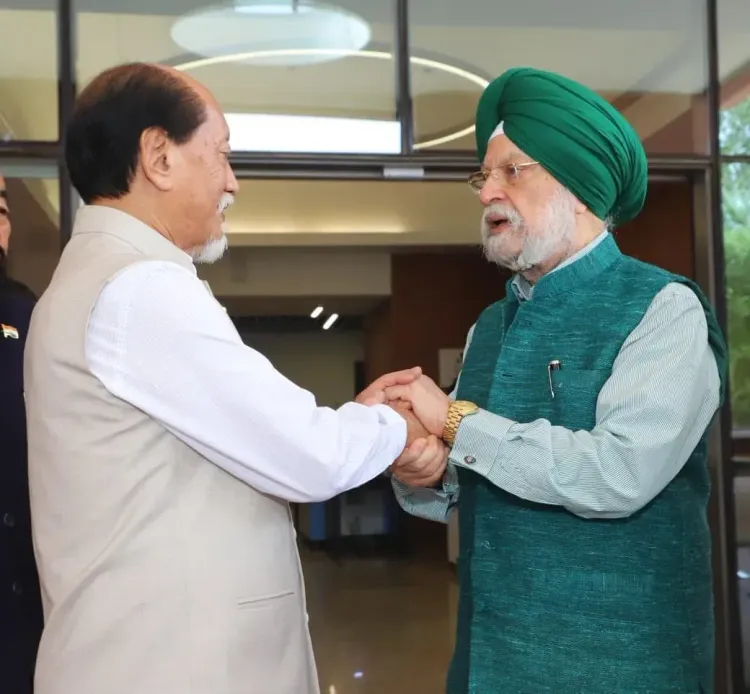
Puri meets Nagaland CM Rio to boost Northeast energy plans
Synopsis
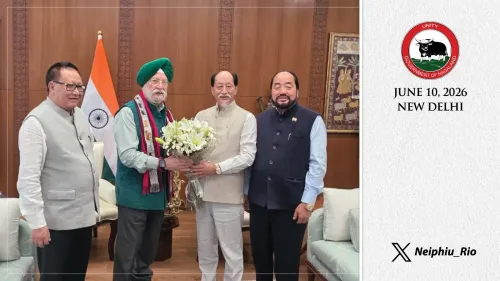
Union Petroleum Minister Hardeep Singh Puri met Nagaland Chief Minister Neiphiu Rio on 10 June 2026 to advance plans for developing the state's hydrocarbon resources. The discussions focused on making Northeast India central to the country's energy security strategy under the Modi government's domestic production push.
Key Takeaways
Union Petroleum Minister Hardeep Singh Puri held discussions with Nagaland Chief Minister Neiphiu Rio on 10 June 2026 .
Talks centred on 'unlocking the vast hydrocarbon potential' of Northeast India to strengthen national energy security.
The engagement builds on the Hydrocarbon Exploration and Licensing Policy (HELP) introduced in 2016 and OALP bidding rounds active since 2017 .
Nagaland possesses identified sedimentary basins with hydrocarbon potential that remain largely under-explored commercially.
The meeting aligns with the Act East Policy framework linking resource development, connectivity, and regional economic integration.
Follow-up steps to watch include new OALP bid-round announcements, joint development agreements, and seismic survey clearances for Nagaland blocks.
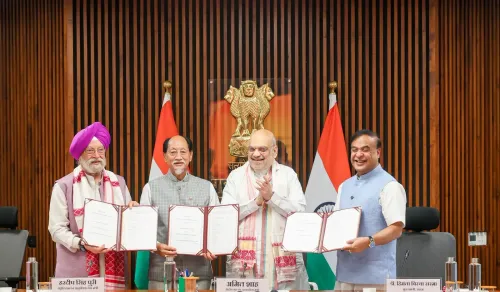
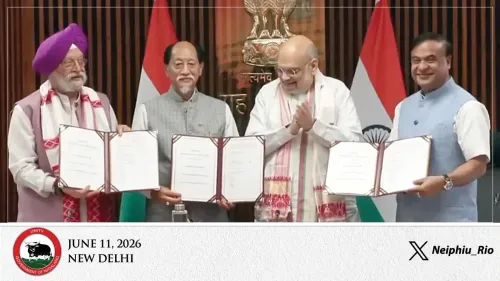
Union Petroleum Minister Hardeep Singh Puri met Nagaland Chief Minister Neiphiu Rio on Wednesday, 10 June 2026, with discussions centred on developing the northeastern state's hydrocarbon resources as part of a broader push to make Northeast India a key pillar of the country's energy security architecture.
Context
Minister Puri described the meeting as focused on 'transforming the Northeast into a key pillar of India's energy future' by 'unlocking its vast hydrocarbon potential.' The minister framed the engagement as an effort to create 'new opportunities for growth, investment and prosperity' while reinforcing national energy security under Prime Minister Narendra Modi.
Nagaland sits atop sedimentary basins that geologists have long identified as carrying hydrocarbon promise, though large-scale commercial extraction has remained limited. Centre-state coordination of the kind signalled by this meeting is considered essential to moving exploration from survey stage to active drilling.
Policy Backdrop
The meeting fits squarely within a policy lineage that dates to the introduction of the Hydrocarbon Exploration and Licensing Policy (HELP) in 2016, which replaced the earlier New Exploration Licensing Policy and was designed to attract fresh capital into under-explored Indian basins, including those in the Northeast.
The Open Acreage Licensing Policy (OALP), launched from 2017 onwards, has since offered exploration blocks across Assam and adjacent northeastern states through successive bidding rounds. Nagaland blocks have featured in this framework, though investor uptake has been uneven given infrastructure constraints and the region's complex terrain.
The broader strategic context is the Act East Policy, under which successive governments have linked hydrocarbon development in the Northeast to wider goals of regional connectivity, economic integration, and reduced dependence on imported crude.
Stakeholders and Impact
For Nagaland, successful hydrocarbon development could translate into royalty revenues, employment, and improved infrastructure — outcomes that state governments in the region have long sought. Chief Minister Rio, who heads a government that has pursued economic development as a priority, has consistently engaged with the Centre on resource and investment matters.
Oil exploration companies operating under OALP licences stand to benefit from clearer state-level cooperation on land access, environmental clearances, and seismic survey logistics — areas where state government support is operationally critical. Broader energy security stakeholders, including the Ministry of Petroleum and Natural Gas, are watching the Northeast as a potential contributor to domestic production targets.
What's Next
Attention will now turn to whether the meeting produces concrete follow-through — including joint development agreements, fresh seismic survey authorisations, or state-level facilitation for upcoming OALP bid rounds that include Nagaland blocks. Any formal announcement from either the PMO or CMO Nagaland in the coming weeks will be an indicator of how quickly the expressed intent translates into actionable policy steps.
With domestic energy production a stated priority of the Modi government, the Northeast's untapped hydrocarbon reserves represent both a strategic opportunity and a test of Centre-state coordination mechanisms that have historically moved slowly in the region.
Point of View
Demonstrating tangible progress in the Northeast on an economic front — beyond connectivity projects — carries political as well as policy value. Nagaland's cooperation is particularly significant because state-level land and environmental facilitation has historically been the bottleneck that stalls exploration timelines. Whether this meeting produces binding commitments or remains at the level of intent will determine its real weight in India's domestic energy calculus.
NationPress
26 Oct 2026
Frequently Asked Questions
Why did Petroleum Minister Hardeep Singh Puri meet Nagaland CM Neiphiu Rio?
The two leaders met on 10 June 2026 to discuss developing Nagaland's hydrocarbon resources and positioning Northeast India as a key contributor to the country's energy security, in line with the Modi government's domestic production goals.
Does Nagaland have oil and gas reserves?
Nagaland sits atop sedimentary basins with identified hydrocarbon potential. While large-scale commercial extraction has been limited, the state has been included in Open Acreage Licensing Policy (OALP) bidding rounds aimed at attracting exploration investment.
What is the OALP and how does it affect Northeast India?
The Open Acreage Licensing Policy, launched from 2017, allows companies to express interest in exploration blocks across India, including in northeastern states like Assam and Nagaland, as part of efforts to boost domestic hydrocarbon production.
What is India's Act East Policy connection to energy development?
The Act East Policy links infrastructure, connectivity, and resource development in Northeast India. Hydrocarbon exploration in the region is seen as part of this broader framework to integrate the Northeast into national economic and energy supply chains.
What should we watch for after the Puri-Rio meeting?
Key developments to follow include announcements on new OALP bid rounds covering Nagaland blocks, joint development agreements between the Centre and the state government, and any clearances for fresh seismic surveys in the region.