CM Rio Pushes for Oil & Gas Resumption in Nagaland

Synopsis
Nagaland Chief Minister Neiphiu Rio on June 12, 2026, publicly reaffirmed his government's pursuit of early resumption of petroleum and natural gas exploration across the state, insisting the effort will be anchored in the constitutional safeguards of Article 371A that protect Naga tribal land and resource rights.
Key Takeaways
CM Neiphiu Rio confirmed on June 12, 2026 , that his government is actively pursuing resumption of oil and gas exploration across Nagaland .
The push is explicitly conditioned on safeguarding Article 371A , the constitutional provision protecting Naga tribal land and resource ownership.
Article 371A was inserted via the 13th Constitutional Amendment in 1962 , ahead of Nagaland's statehood in 1963 .
ONGC is the primary public-sector entity with historical involvement in petroleum exploration in Nagaland .
Any formal exploration agreement would require approval by the Nagaland Legislative Assembly to comply with constitutional provisions.
Resumption of hydrocarbon production could reduce Nagaland's heavy dependence on central fiscal transfers.
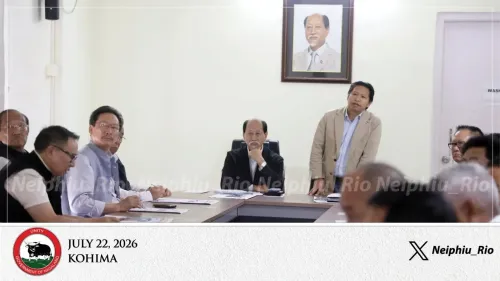
Nagaland Chief Minister Neiphiu Rio on Friday, June 12, 2026, reaffirmed his government's push to resume petroleum and natural gas exploration and production activities across the state, while stressing that any such effort would be pursued in strict conformity with the state's constitutional protections.
Context
In a post on X, Chief Minister Rio stated: 'We are also pursuing for early resumption of petroleum and natural gas exploration and production activities in the entire State while safeguarding our constitutional provisions.' The remark signals an active, ongoing engagement with the Union Ministry of Petroleum and Natural Gas on restarting hydrocarbon activity in Nagaland.
The emphasis on 'constitutional provisions' is a direct reference to Article 371A of the Indian Constitution, which mandates that no act of Parliament affecting Naga customary law, ownership of land and its resources, or social practices shall apply to Nagaland unless the state's Legislative Assembly so decides.
Policy Backdrop
Article 371A was inserted through the 13th Constitutional Amendment in 1962, ahead of Nagaland's formal statehood in 1963, specifically to protect tribal land and resource rights. This provision has historically been the central point of negotiation whenever petroleum exploration has been discussed for the state.
Oil and Natural Gas Corporation (ONGC), the primary public-sector entity with historical involvement in petroleum exploration in Nagaland, has operated in the region in earlier decades. Successive state governments have raised the issue of resumption in consultations with the Union government, reflecting a recurring tension between resource development imperatives and constitutionally entrenched tribal rights.
The broader pattern across Northeast India mirrors this dynamic — states rich in sub-surface resources frequently seek central investment and exploration, while insisting on local consent, revenue-sharing arrangements, and protection of customary land ownership.
Stakeholders and Impact
Naga tribal communities are the primary stakeholders in any decision on petroleum exploration, given that Article 371A effectively gives the state legislature — and by extension the tribal customary framework — a veto over resource extraction laws. Community consent and equitable revenue sharing remain the non-negotiable conditions articulated by successive Nagaland governments.
For the state's economy, the resumption of oil and gas activities could open a significant revenue stream. Nagaland has long relied heavily on central transfers and grants; domestic hydrocarbon production, if structured with adequate safeguards, could reduce that fiscal dependence. Petroleum companies, including ONGC and potential private explorers, stand to gain access to an under-explored basin.
What's Next
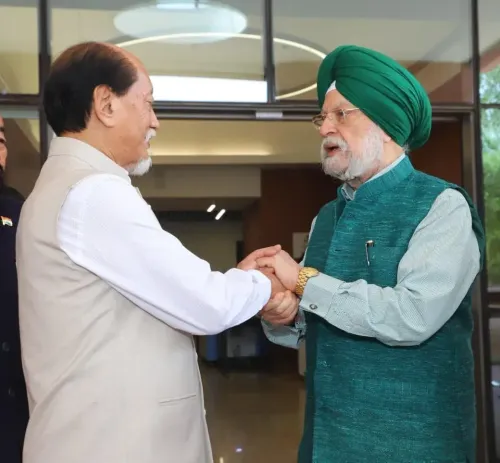
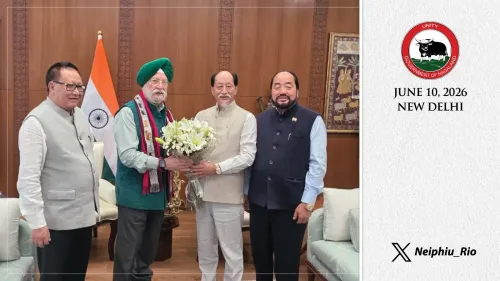
The immediate watch-point is any formal communication from the Nagaland government to the Union Ministry of Petroleum and Natural Gas regarding new exploration blocks or revised revenue-sharing formulas. CM Rio's public reaffirmation suggests the state is actively lobbying for progress at the central level.
If the Union government responds positively, the next step would involve the Nagaland Legislative Assembly deliberating on the terms of any exploration agreement to ensure compliance with Article 371A — a process that will require broad tribal consensus. How that balance is struck could set a precedent for resource governance across constitutionally protected states in Northeast India.
Point of View
He is pre-empting any central push that might bypass tribal consent mechanisms. This reflects a wider Northeast pattern where resource-rich states leverage their special constitutional status as both a shield and a bargaining chip in fiscal negotiations with the Union. The statement also serves a domestic audience, positioning the NDPP-led government as both development-oriented and a guardian of Naga identity.
NationPress
24 Sept 2026
Frequently Asked Questions
Why has oil and gas exploration in Nagaland been suspended?
Exploration activities in Nagaland have faced repeated interruptions due to unresolved questions around tribal land rights under Article 371A, security conditions in earlier decades, and the absence of agreed revenue-sharing frameworks between the state and the Union government.
What is Article 371A and how does it affect oil exploration in Nagaland?
Article 371A is a constitutional provision inserted in 1962 that requires the Nagaland Legislative Assembly's approval before any central law affecting Naga land, resources, or customary practices can apply to the state. This means any petroleum exploration agreement must have explicit state legislative sanction.
Which company does oil and gas exploration in Nagaland?
Oil and Natural Gas Corporation (ONGC) is the primary public-sector entity historically involved in petroleum exploration in Nagaland, though the current operational status of specific blocks is subject to ongoing negotiations.
What would resumption of oil exploration mean for Nagaland's economy?
Resumption could provide Nagaland with a significant domestic revenue stream, potentially reducing its heavy reliance on central government grants and transfers that currently form the backbone of the state's finances.
Who is Neiphiu Rio and what party does he lead?
Neiphiu Rio is the Chief Minister of Nagaland and the leader of the Nationalist Democratic Progressive Party (NDPP). He has served multiple terms and is one of the most prominent political figures in Northeast India.