CM Rio Meets Petroleum Minister Puri on Nagaland Oil Exploration
Synopsis
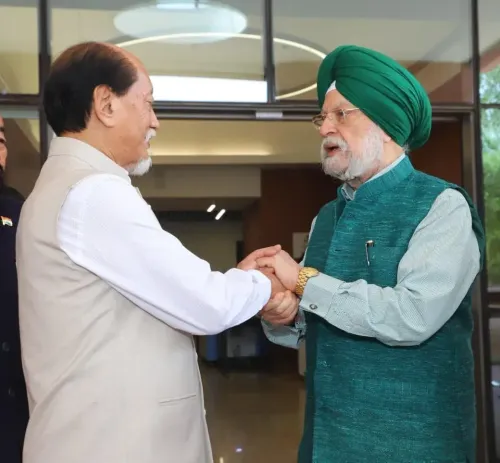
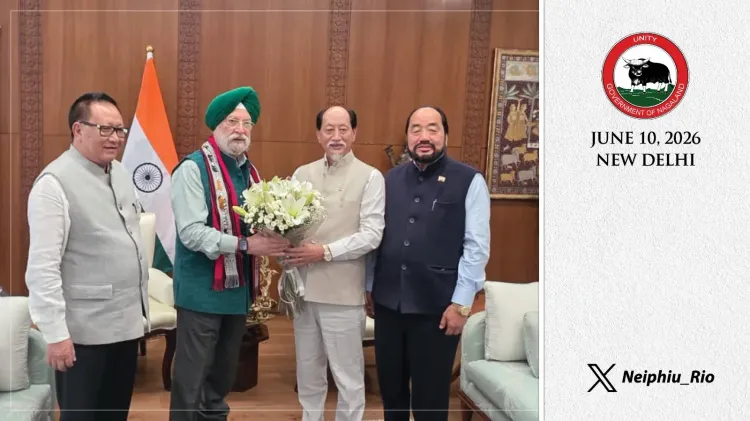
Nagaland Chief Minister Neiphiu Rio, flanked by both Deputy Chief Ministers, met Union Petroleum Minister Hardeep Singh Puri in New Delhi on June 10, 2026, to push for resumption of long-stalled oil exploration in the state and discuss broader development initiatives.
Key Takeaways
CM Neiphiu Rio called on Union Petroleum Minister Hardeep Singh Puri in New Delhi on June 10, 2026 .
Both Deputy CMs T.R.
Zeliang and Yanthungo Patton were part of the delegation, presenting a unified state front.
The discussions centred on resumption of petroleum exploration and production in Nagaland and key state development initiatives.
Nagaland's oil blocks have been largely inactive since the 1990s due to local opposition and revenue-sharing disputes.
The meeting aligns with the national Hydrocarbon Exploration and Licensing Policy (HELP) of 2016 , which targets frontier basins in the Northeast.
Follow-up actions to watch include possible ONGC or OIL partnerships and a potential Nagaland-specific revenue or environmental protocol.
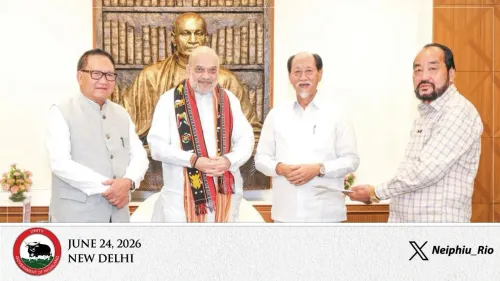
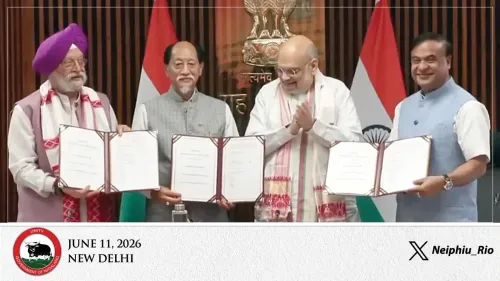
Nagaland Chief Minister Neiphiu Rio called on Union Minister for Petroleum and Natural Gas Hardeep Singh Puri in New Delhi on Wednesday, June 10, 2026, to discuss key development initiatives for the state and the long-pending resumption of petroleum exploration and production in Nagaland. The Chief Minister was accompanied by Deputy Chief Ministers T.R. Zeliang and Yanthungo Patton.
Context
Rio posted on X that the delegation 'discussed key initiatives for the state's development, resumption of petroleum exploration and production in the State,' adding that they 'appreciate the constructive discussions.' The meeting signals a fresh push by Nagaland's leadership to unlock the state's hydrocarbon potential, a subject that has remained largely dormant for decades.
The presence of both Deputy Chief Ministers — Zeliang, representing the Naga People's Front, and Patton, from the BJP — underscores a unified, cross-party stance from the state government on the issue of resource development.
Policy Backdrop
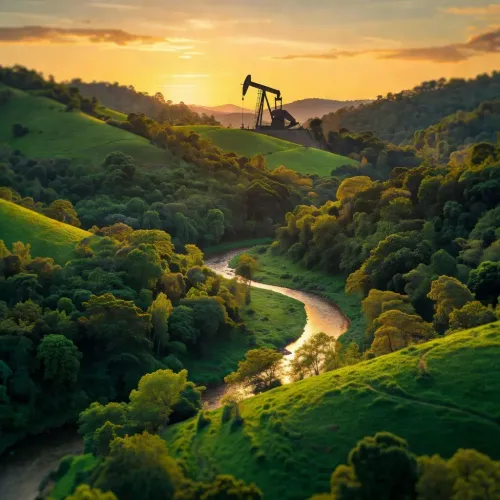
Nagaland sits atop proven sedimentary basins with significant hydrocarbon potential, yet oil blocks in the state have remained largely inactive since the 1990s. The stall has been driven by a combination of local community opposition and longstanding demands for a state-specific revenue-sharing framework that adequately compensates Nagaland for extraction on its soil.
At the national level, the Hydrocarbon Exploration and Licensing Policy (HELP), introduced in 2016, unified the licensing regime across India's frontier basins — explicitly including the Northeast — to attract investment and accelerate domestic production. Successive central governments have prioritised reviving output in these basins to reduce India's dependence on crude imports. The June 10 meeting fits squarely within this ongoing centre-state coordination framework.
Stakeholders and Impact
The primary stakeholders in any resumption of exploration would be Nagaland's communities, who have historically sought greater say in how natural resources on their ancestral lands are developed and how revenues are shared. Public sector undertakings such as ONGC and Oil India Limited (OIL) are the most likely operational partners for any renewed exploration programme in the state.
A successful agreement could generate employment, infrastructure investment, and royalty revenues for one of India's lower-income states. However, any forward movement will require addressing longstanding environmental and land-rights concerns raised by local groups — issues that have historically been the primary obstacle to activation of Nagaland's oil blocks.
What's Next
The immediate focus will be on whether Wednesday's discussions translate into formal decisions on exploration block allocations, possible partnerships with ONGC or OIL, or the drafting of a Nagaland-specific revenue or environmental protocol. Any such framework would require alignment between the state government, the Ministry of Petroleum and Natural Gas, and the relevant public sector entities.
The meeting sets the stage for a potential policy breakthrough in a region where hydrocarbon development has long been a sensitive and unresolved issue. How quickly the centre and state can convert 'constructive discussions' into actionable agreements will determine whether Nagaland's oil sector finally moves from promise to production.
Point of View
NPF, and BJP — presenting a single voice to the Petroleum Ministry is itself a political signal, suggesting Nagaland's ruling coalition is prioritising resource revenue as a shared economic agenda above factional lines. The meeting revives a long-dormant file: Nagaland's hydrocarbon blocks have been a recurring agenda item with the centre for over two decades, and each cycle of 'constructive discussions' has so far stopped short of operational outcomes. The real test is whether this round produces a concrete revenue-sharing or environmental framework, which has historically been the sticking point. If it does, it could become a template for other insurgency-affected Northeast states with untapped resource potential.
NationPress
19 Sept 2026
Frequently Asked Questions
Why is petroleum exploration in Nagaland stalled?
Petroleum exploration in Nagaland has been largely inactive since the 1990s due to local community opposition and unresolved demands for a state-specific revenue-sharing arrangement that gives Nagaland a greater share of proceeds from extraction on its land.
What did CM Rio discuss with Petroleum Minister Hardeep Puri?
CM Neiphiu Rio discussed key development initiatives for Nagaland and the resumption of petroleum exploration and production in the state during the June 10, 2026 meeting in New Delhi.
Who accompanied Nagaland CM Rio to meet Hardeep Puri?
Deputy Chief Ministers T.R. Zeliang of the Naga People's Front and Yanthungo Patton of the BJP accompanied CM Rio to the meeting with Union Petroleum Minister Hardeep Singh Puri.
What is the HELP policy and how does it affect Nagaland?
The Hydrocarbon Exploration and Licensing Policy (HELP), introduced in 2016, unified India's licensing regime for oil and gas exploration with a focus on frontier basins including those in Northeast India, making it the primary national framework under which Nagaland's blocks could be revived.
Which companies could explore for oil in Nagaland?
Public sector undertakings ONGC and Oil India Limited (OIL) are the most likely partners for any renewed petroleum exploration programme in Nagaland, given their existing mandates in the Northeast region.