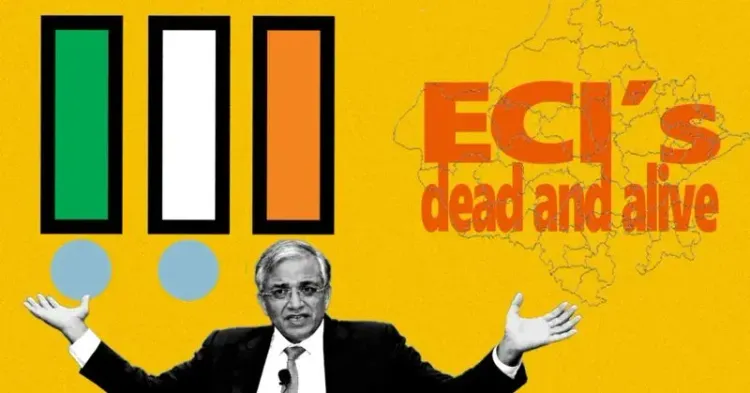
Tharoor Flags ECI Data Failure: Dead Voters Active in Rajasthan Rolls
Synopsis
Congress MP Dr. Shashi Tharoor has called out the Election Commission of India after nearly 2 lakh voters declared dead during its Special Intensive Revision were found still listed as 'active' in Rajasthan's Panchayat Electoral Rolls, exposing a critical data disconnect between national and state election bodies.
Key Takeaways
Nearly 2 lakh voters declared deceased by ECI through its Special Intensive Revision (SIR) were still listed as 'active' in Rajasthan's Panchayat Electoral Rolls .
Shashi Tharoor publicly accused the ECI of 'incompetence and malfeasance' in a post on November 9, 2026 .
The discrepancy stems from separate, unsynchronised data systems maintained by the ECI and State Election Commissions for different tiers of elections.
The Representation of the People Act, 1950 mandates periodic revision of electoral rolls to remove deceased and ineligible voters.
The ECI and Rajasthan State Election Commission now face pressure to reconcile the rolls or risk High Court petitions on voter data integrity.
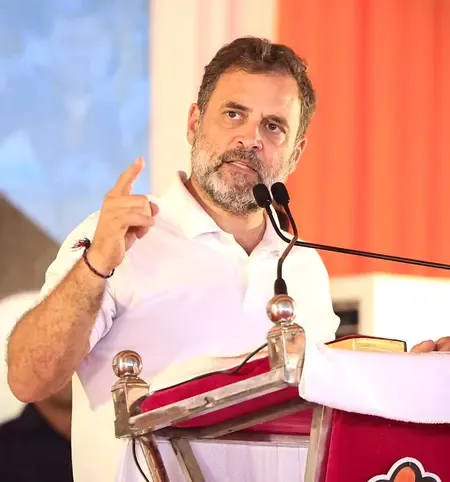
Nearly two lakh voters declared dead by the Election Commission of India during its Special Intensive Revision process were still listed as 'active' in Rajasthan's Panchayat Electoral Rolls — a discrepancy that strikes at the heart of India's voter data integrity. Congress MP Dr. Shashi Tharoor called out the ECI sharply on Monday, November 9, 2026, citing the finding as evidence of what he termed 'incompetence and malfeasance' at the country's apex election authority.
The Dead Voter Anomaly in Rajasthan's Panchayat Rolls
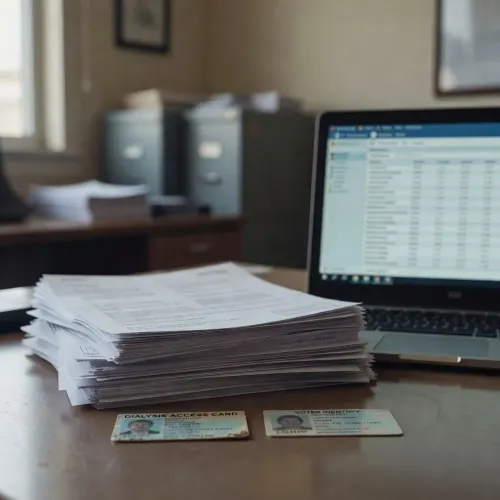
The core allegation is stark: voters struck off parliamentary and assembly rolls as deceased — through ECI's own Special Intensive Revision, or SIR — were simultaneously being carried as valid, 'active' electors in panchayat rolls used for local body polls. That means names the ECI itself had certified as dead were still eligible to be voted against in village governance elections.
The discrepancy is rooted in a structural fault line in Indian election administration. The Election Commission of India, a constitutional body under Article 324, manages parliamentary and state assembly rolls. Panchayat elections, however, fall under the jurisdiction of State Election Commissions — entirely separate bodies with their own data systems. When ECI deletes an entry, that deletion does not automatically propagate to the panchayat rolls. The two databases, in many states, do not speak to each other.
Tharoor's Attack on ECI Accountability
Tharoor's post pointedly tagged @ECISVEEP — the official ECI handle — framing the revelation not as an administrative oversight but as a governance failure of a more serious kind. The phrase 'incompetence and malfeasance' is a deliberate escalation, combining poor execution with an implied suggestion of wrongdoing. It is the language of a formal charge, not a routine complaint.
The Representation of the People Act, 1950 mandates periodic revision of electoral rolls to remove deceased, relocated, or duplicate voters. The existence of nearly 2 lakh such ghost entries in a single state's local body rolls raises pointed questions about how thoroughly that mandate is being followed — and whether the reconciliation mechanisms between national and state election bodies are fit for purpose.
A Recurring Fault Line in Indian Electoral Data
This is not the first time opposition leaders have raised the alarm over mismatches between ECI-managed rolls and panchayat rolls. The parallel data infrastructure is a known vulnerability: state election commissions in many states rely on older, independently maintained databases that are not synced in real time with ECI's National Voters' Service Portal. The result, critics argue, is an electoral ecosystem where the same person can be simultaneously 'dead' and 'alive' depending on which tier of government is holding the poll.
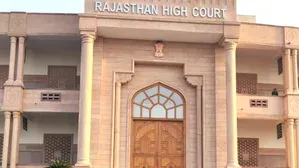
The immediate pressure now falls on both the ECI and the Rajasthan State Election Commission to either refute the numbers or announce a reconciliation exercise. If neither acts, petitions before the Rajasthan High Court on voter roll accuracy — a remedy that opposition leaders have used before — become a credible next step.
India's democracy runs on its voter rolls. When the most basic entry — alive or dead — cannot be agreed upon across two arms of the same state, the question is not just bureaucratic. It is foundational.
Point of View
The episode revives a long-standing structural argument: India's tiered election administration — with ECI managing national and state polls and separate State Election Commissions overseeing panchayat elections — creates data silos that no current law compels either body to bridge. For the opposition, every such gap is both a governance indictment and a mobilising issue at the grassroots level where panchayat elections directly shape political patronage.
NationPress
9 Nov 2026
Frequently Asked Questions
Why were dead voters still listed as 'active' in Rajasthan Panchayat Electoral Rolls?
The ECI and State Election Commissions maintain separate, unsynchronised voter databases. When ECI removes a voter as deceased from parliamentary or assembly rolls through its Special Intensive Revision, that deletion does not automatically update the panchayat rolls managed by the Rajasthan State Election Commission — leaving the entry marked 'active' in local body polls.
What is the Special Intensive Revision (SIR) conducted by ECI?
Special Intensive Revision is an ECI exercise to thoroughly update electoral rolls by physically verifying entries, removing deceased voters, adding new eligible voters, and correcting errors — mandated under the Representation of the People Act, 1950.
What action can be taken to fix this discrepancy in Rajasthan?
The ECI and Rajasthan State Election Commission can undertake a formal data reconciliation exercise. If no corrective action is taken, affected parties or political groups can file petitions before the Rajasthan High Court challenging the accuracy of the panchayat electoral rolls.
What did Shashi Tharoor say about the Election Commission of India?
Tharoor stated that the 'incompetence and malfeasance' of the ECI 'seems to know no bounds,' pointing to the finding that nearly 2 lakh voters declared dead by ECI's SIR were still listed as 'active' in Rajasthan's Panchayat Electoral Rolls.
Is this a known problem across India or specific to Rajasthan?
This is a known structural issue across India. Many states maintain separate voter databases for ECI-managed polls and panchayat elections. Mismatches between these systems have been raised periodically by opposition leaders in multiple states, not only Rajasthan.