CM Assam: Centre, Assam, Nagaland Sign Oil Pact
Synopsis
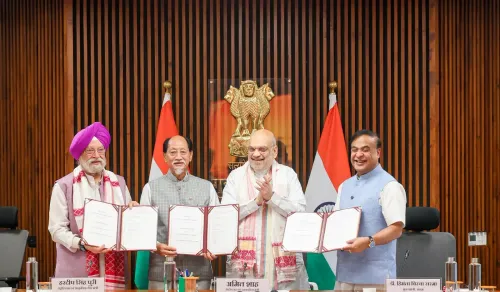
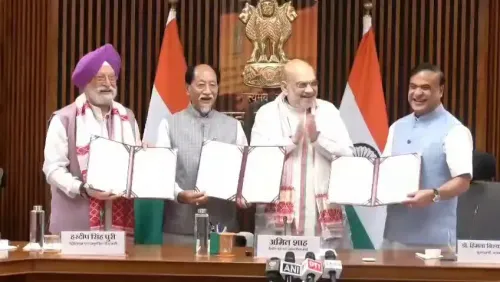
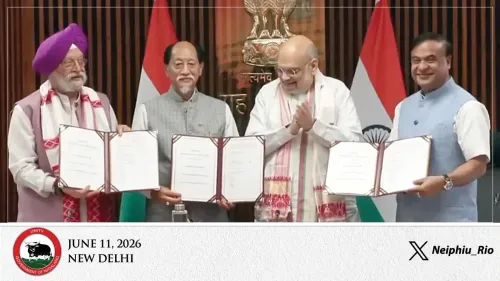
The Centre, Assam, and Nagaland have signed a tripartite agreement to unlock oil and gas exploration along their long-disputed inter-state boundary. Mediated by Union Home Minister Amit Shah, the pact ends decades of jurisdictional deadlock and aligns with India's push to raise domestic crude output and cut import dependence.
Key Takeaways
The Centre, Assam, and Nagaland signed a tripartite agreement on June 12, 2026 to enable hydrocarbon exploration along their disputed inter-state boundary.
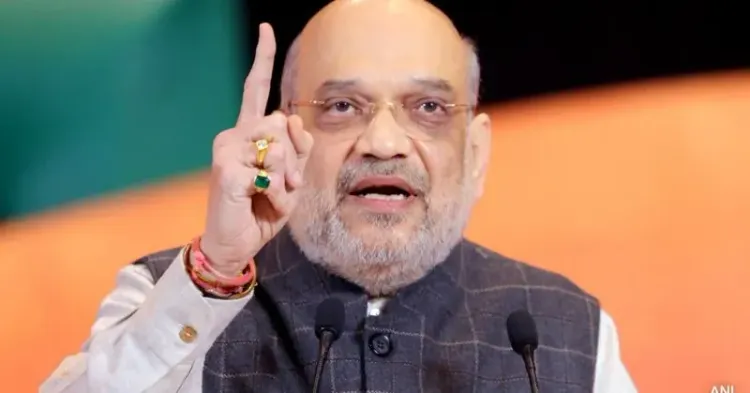
Union Home Minister Amit Shah mediated the talks between the central government and the two state governments.
The boundary dispute has persisted since Nagaland's statehood in 1963 , keeping potentially rich oil blocks idle for decades.
The agreement operates within the Hydrocarbon Exploration and Licensing Policy (HELP) 2016 framework and may feed into the next OALP bidding round.
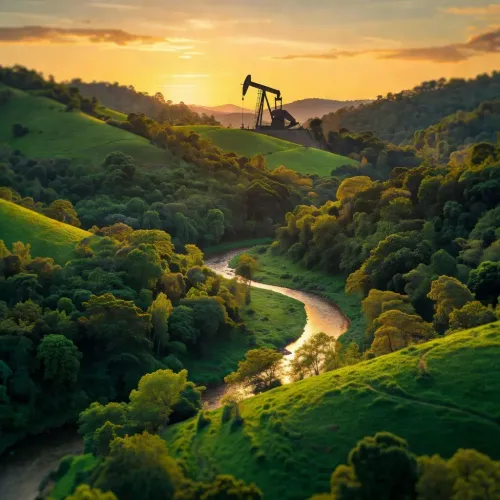
Assam hosts India's oldest commercial oilfield at Digboi , and the pact could significantly expand the region's proven and explorable reserves.
Next steps include joint seismic surveys, environmental clearances, and finalisation of a revenue-sharing formula between the two states.
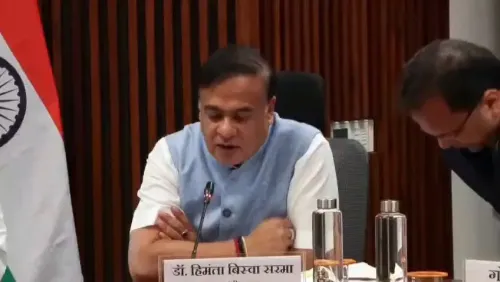
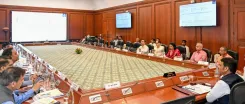
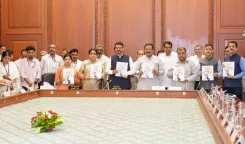
The Chief Minister's Office of Assam announced on Friday, June 12, 2026, that the Centre, Assam, and Nagaland have signed a landmark tripartite agreement to unlock hydrocarbon resources along the inter-state boundary, marking a significant step toward energy security and regional economic growth.
Context
The agreement addresses a long-standing impasse over oil and gas exploration in zones straddling the Assam-Nagaland border — a boundary that has remained disputed since Nagaland's creation as a state in 1963. Decades of jurisdictional uncertainty had kept potentially rich hydrocarbon blocks idle, even as Assam hosts India's oldest commercial oilfield at Digboi, producing crude since the late nineteenth century.
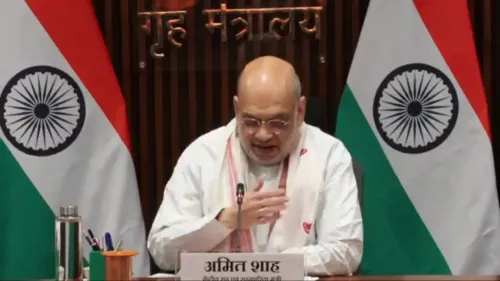
Union Home Minister Amit Shah mediated the tripartite talks between the central government and the two state governments, lending political weight to a resolution that had eluded successive administrations. The pact now clears a formal pathway for exploration companies to operate in areas previously off-limits due to competing state claims.
Policy Backdrop
The agreement sits within the framework of the Hydrocarbon Exploration and Licensing Policy (HELP), introduced in 2016, which replaced the earlier New Exploration Licensing Policy to offer uniform licensing terms and revenue-sharing arrangements designed to attract both domestic and international operators.
The Supreme Court had, over the years, directed status-quo maintenance in oil-bearing border areas pending resolution of the boundary dispute, effectively freezing exploration activity. This tripartite pact represents a negotiated workaround — or a definitive settlement of terms — that could allow those blocks to enter the next round of the Open Acreage Licensing Policy (OALP) bidding cycle.
The move also aligns with the national priority of raising domestic crude output and reducing India's heavy dependence on imported oil, a goal that has gained urgency amid global energy price volatility.
Stakeholders and Impact
Border communities in both Assam and Nagaland stand to benefit from royalty revenues, employment, and infrastructure investment that typically accompany active oilfield development. Oil exploration and production companies — both public-sector undertakings and private operators — gain access to blocks that were commercially attractive but legally inaccessible.
The agreement is also significant for Nagaland, which has had limited hydrocarbon revenue compared to its neighbour. A defined revenue-sharing formula between the two states — the specifics of which are yet to be publicly detailed — will be critical to sustaining inter-state cooperation over the long term.
Environmentalists and local advocacy groups in the region are expected to scrutinise the pace and terms of environmental clearances, given the ecologically sensitive character of the Northeast India landscape.
What's Next
Immediate next steps include the rollout of joint seismic surveys to map subsurface reserves, followed by applications for environmental clearances from the Ministry of Environment, Forest and Climate Change. The blocks could subsequently be included in an upcoming OALP bidding round, inviting competitive bids from exploration firms.
The broader implication is that this model of central mediation to unlock inter-state resource disputes may be replicated across other contested boundary zones in the Northeast, potentially opening additional hydrocarbon and mineral blocks that have sat dormant for decades.
Point of View
The government signals that resource-unlocking in the region is now a Cabinet-level priority, not merely an administrative exercise. The deal also serves the BJP's dual electoral interest in both Assam and Nagaland, where delivering economic dividends from the Northeast's natural wealth is a recurring campaign promise. If the revenue-sharing formula and environmental clearances are handled transparently, this pact could become a template for resolving similar resource-boundary deadlocks elsewhere in the region.
NationPress
26 Oct 2026
Frequently Asked Questions
What is the Assam-Nagaland hydrocarbon agreement signed in June 2026?
It is a tripartite pact between the Centre, Assam, and Nagaland that allows oil and gas exploration in areas along their disputed inter-state boundary, which had been blocked by jurisdictional uncertainty since Nagaland became a state in 1963.
Who mediated the Assam-Nagaland oil exploration deal?
Union Home Minister Amit Shah mediated the tripartite talks between the central government and the governments of Assam and Nagaland.
Why was oil exploration blocked on the Assam-Nagaland border?
A long-running boundary dispute between the two states, dating to Nagaland's creation in 1963, led the Supreme Court to order status-quo maintenance in oil-bearing border areas, effectively freezing exploration activity for decades.
What policy framework governs the new Assam-Nagaland oil agreement?
The agreement aligns with the Hydrocarbon Exploration and Licensing Policy (HELP) introduced in 2016, which provides uniform licensing and revenue-sharing terms for oil and gas exploration across India.
What happens next after the Assam-Nagaland hydrocarbon pact is signed?
The immediate next steps are joint seismic surveys to map reserves, environmental clearances from the Union environment ministry, and possible inclusion of the newly accessible blocks in an upcoming Open Acreage Licensing Policy (OALP) bidding round.