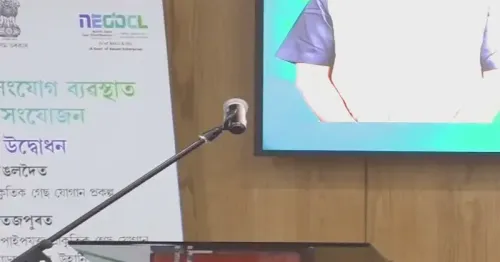
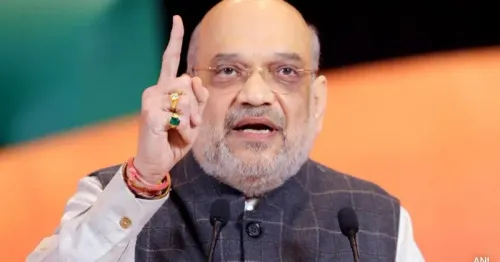
Assam CM Office: North Bank to get domestic natural gas
Synopsis
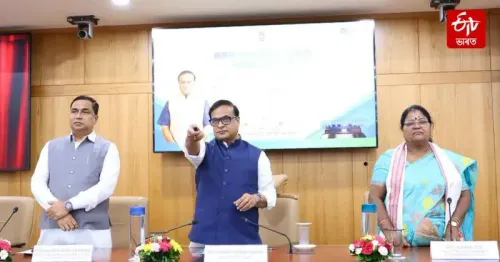
The Chief Minister's Office of Assam announced on 25 June 2026 that North Bank Assam will receive domestically produced natural gas from Upper Assam through a NEGDCL-GAIL pact, aiming to bridge a long-standing energy access gap in the region north of the Brahmaputra.
Key Takeaways
North Bank Assam is set to receive domestically produced natural gas sourced from Upper Assam 's mature oil and gas fields.
A pact between NEGDCL and GAIL (India) Limited — a Maharatna PSU — underpins the supply arrangement.
The North Bank has historically lagged behind the south bank in pipeline gas access despite Assam's significant hydrocarbon output.
The initiative aligns with the Hydrocarbon Vision 2030 for the North East , a central policy framework from 2016 .
Key beneficiaries include North Bank households, transport users, and industrial clusters currently without reliable gas supply.
Pipeline completion timelines, city gas distribution rollout, and PNGRB regulatory approvals will determine the pace of implementation.
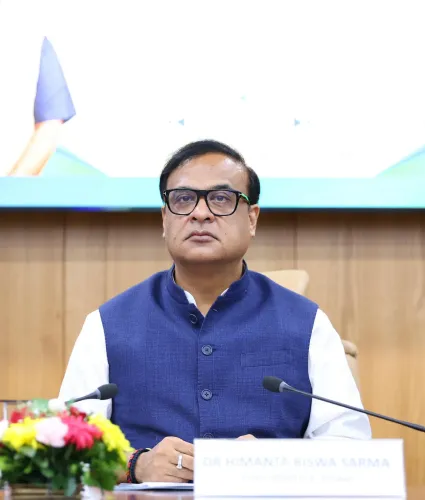
The Chief Minister's Office of Assam announced on Thursday, 25 June 2026 that North Bank Assam is set to receive domestically produced natural gas sourced from Upper Assam, marking a significant step in extending energy infrastructure to a region historically underserved by pipeline connectivity.
Context
North Bank Assam — the territory lying north of the Brahmaputra river — has long lagged behind the south bank in access to industrial and household natural gas, despite sitting in a state that hosts some of India's oldest hydrocarbon fields. The announcement signals a move to bridge that gap using gas produced domestically within the state itself, from the mature oil and gas fields of Upper Assam.
The post references a pact between NEGDCL (North East Gas Distribution Company Limited) and GAIL (India) Limited to supply natural gas across Assam's North Bank. GAIL, a Maharatna public sector undertaking, is India's primary natural gas transmission company and has been instrumental in extending pipeline networks across the Northeast.
Policy Backdrop
The move aligns with the Hydrocarbon Vision 2030 for the North East, a 2016 policy framework that outlined plans to monetise locally produced gas and build distribution infrastructure across Assam and neighbouring states. Successive central governments have sought to raise natural gas's share in India's overall energy mix, with the Northeast treated as a priority corridor given its domestic production potential.
Upper Assam districts contain mature oil and gas fields operated primarily by Oil India Limited and ONGC since the colonial era. Routing that output northward across the Brahmaputra to supply the North Bank would represent a direct monetisation of in-state reserves for in-state consumption — a model that state and central planners have long advocated.
Stakeholders and Impact
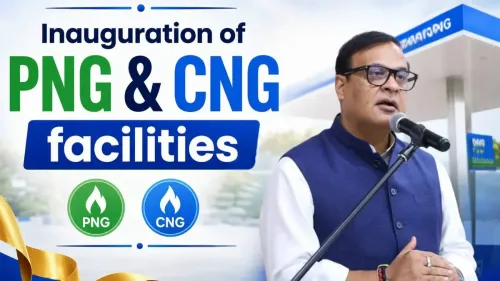
The primary beneficiaries of expanded gas access on the North Bank would be households currently dependent on costlier or less clean cooking fuels, as well as industrial clusters that have been constrained by the absence of reliable pipeline supply. City gas distribution networks, once established, typically enable compressed natural gas (CNG) for transport and piped natural gas (PNG) for homes and businesses.
GAIL's involvement brings institutional weight and technical capacity to the project. The company has executed several gas infrastructure projects in coordination with state agencies and upstream producers in Assam, giving the NEGDCL-GAIL partnership a credible execution track record to draw on.
What's Next
The critical milestones to watch will be the timeline for pipeline construction and commissioning, the rollout of city gas distribution licences on the North Bank, and the pace at which industrial and residential connections are made. Regulatory approvals from the Petroleum and Natural Gas Regulatory Board (PNGRB) will also shape the speed of implementation.
If executed on schedule, the project could materially improve energy access and industrial competitiveness across North Bank districts, while also providing a template for similar intra-state gas routing efforts elsewhere in the Northeast.
Point of View
With the Assam government keen to demonstrate tangible energy dividends for a region that has produced oil and gas for over a century yet remained pipeline-poor. Routing Upper Assam's domestic output northward to the North Bank is politically significant: it frames the project as self-reliant regional development rather than dependence on imported or inter-state gas. The involvement of GAIL adds institutional credibility, but the real test will be execution speed — Northeast infrastructure projects have historically faced delays due to terrain, logistics, and regulatory sequencing. If delivered, this could become a model for intra-state gas monetisation across other Northeast states.
NationPress
23 Sept 2026
Frequently Asked Questions
What is the NEGDCL-GAIL natural gas agreement for North Bank Assam?
NEGDCL (North East Gas Distribution Company Limited) and GAIL (India) Limited have signed a pact to supply domestically produced natural gas from Upper Assam to North Bank Assam, aiming to extend pipeline energy access to the region north of the Brahmaputra river.
Where does the natural gas for North Bank Assam come from?
The natural gas will be sourced from Upper Assam, which contains mature oil and gas fields operated primarily by Oil India Limited and ONGC — making it a domestic, in-state supply rather than imported or inter-state gas.
Why has North Bank Assam lacked natural gas access until now?
North Bank Assam lies north of the Brahmaputra river and has historically been underserved by gas pipeline infrastructure compared with the south bank, despite Assam being one of India's oldest hydrocarbon-producing states.
What is the Hydrocarbon Vision 2030 for the North East?
The Hydrocarbon Vision 2030 for the North East is a 2016 central government policy framework that outlined plans to monetise locally produced natural gas and build distribution infrastructure across Assam and neighbouring northeastern states.
What is GAIL's role in Assam's gas infrastructure?
GAIL (India) Limited is a Maharatna public sector undertaking and India's primary natural gas transmission company. It has executed multiple gas infrastructure projects in the Northeast in coordination with state agencies and upstream producers in Assam.