Can India’s Deep-Sea Areas Yield 7.16 Million Tonnes of Fishery Resources?
Synopsis
India’s Exclusive Economic Zone holds a staggering potential of 7.16 million tonnes of deep-sea fishery resources, as revealed by NITI Aayog. This untapped resource can significantly boost seafood exports, create jobs, and ensure ecological sustainability. Discover how India plans to harness this potential and lead in sustainable fishing.
Key Takeaways
India's EEZ has a potential yield of 7.16 million tonnes.
Responsible fishing can boost exports and employment.
Six key policy interventions are proposed.
Three-phase plan for sustainable deep-sea fisheries.
Community involvement is emphasized for fleet development.
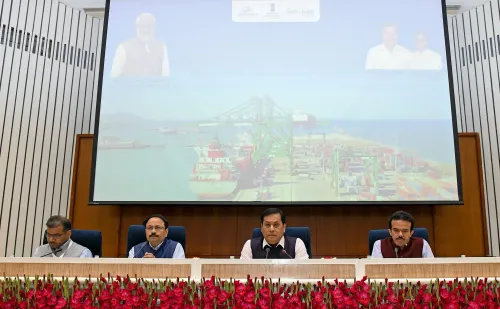
New Delhi, Oct 13 (NationPress) India’s Exclusive Economic Zone (EEZ) boasts an estimated potential yield of 7.16 million tonnes of deep-sea fishery resources that remain significantly underutilized, as stated in a recent report by NITI Aayog titled 'India’s Blue Economy: Strategy for Harnessing Deep-Sea and Offshore Fisheries' released on Monday.
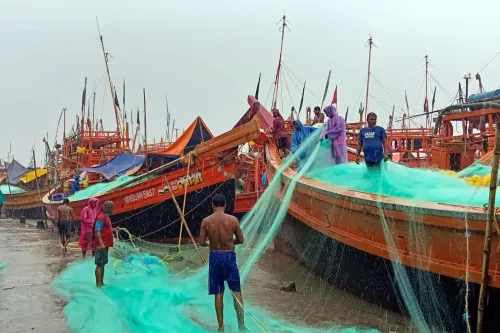
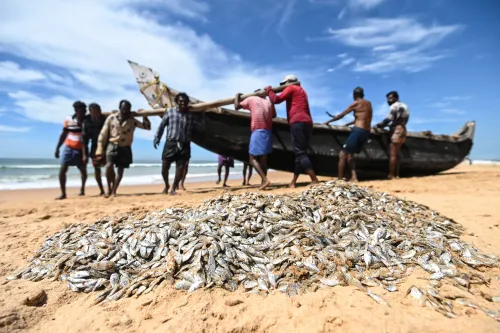
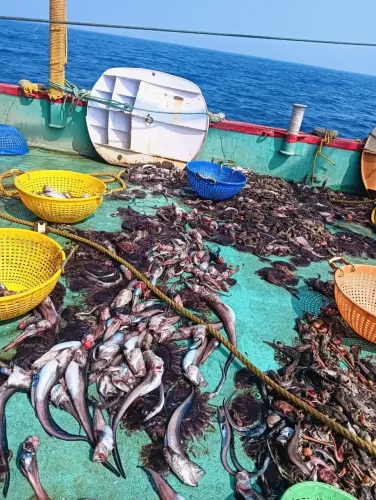
The report underscores that the responsible use of deep-sea and offshore fisheries can boost seafood exports, create job opportunities, and alleviate pressure on coastal fisheries, while promoting ecological sustainability.
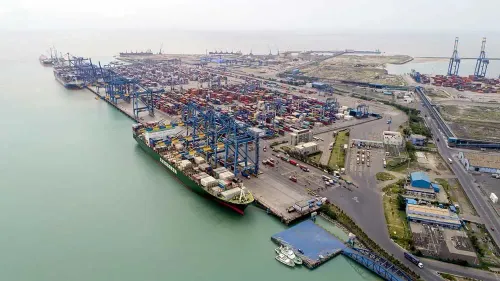
India’s EEZ extends over 2 million sq. km of deep waters beyond the continental shelf, coupled with a coastline of 11,098 km across nine coastal states and four Union Territories, presenting vast opportunities to expand marine fisheries into deeper waters.
This comprehensive framework details the deep-sea fishing sector within the EEZ and international waters, accessed via regional fisheries agreements. It adopts a science-oriented, technology-driven, socially inclusive, and ecologically sustainable strategy to tap into India’s deep-sea fisheries potential.
The report outlines six essential policy interventions aimed at revitalizing regulations; enhancing institutional capacity; modernizing fleets and infrastructure; promoting sustainable fisheries management; mobilizing resources and finances; and boosting local community engagement and partnerships.
Given the capital-intensive nature of deep-sea fishing, the report emphasizes inclusive fleet development by backing fisher cooperatives and cluster-based approaches, facilitating collective ownership, operations, and access to advanced technology. Additionally, it presents investment priorities and monitoring mechanisms necessary for long-term ecological and economic sustainability.
An indicative costing framework for three phases is also included in the report, considering the convergence of Centrally sponsored and Central sector schemes related to fisheries—Phase 1: Foundation and initial growth (3 years| 2025-28); Phase 2: Scaling up for global competitiveness (4 years| 2029-32); and Phase 3: Achieving global leadership in sustainable deep-sea fisheries (8 years and beyond | 2033 onwards).
With the sector's robust growth trajectory, this roadmap aims to strengthen governance, foster innovation, and enhance stakeholder participation. Through integrated interventions in policy reform, infrastructure development, sustainability, financing, and community empowerment, the initiative aspires to position India as a global leader in sustainable deep-sea fisheries, ensuring prosperity for coastal communities and significantly contributing to the nation's Blue Economy vision.
Alongside the report's release, NITI Aayog hosted a workshop attended by 18 institutions. The technical session on 'Strategy of States and Way Forward towards Harnessing Deep-Sea Fisheries and Export' featured presentations from coastal states including Goa, Gujarat, Lakshadweep, Maharashtra, Odisha, and Tamil Nadu. This was followed by a panel discussion on 'Advancing Resource Management through Regulatory Reforms, Research, Financing, and Capacity Building' featuring distinguished panellists.
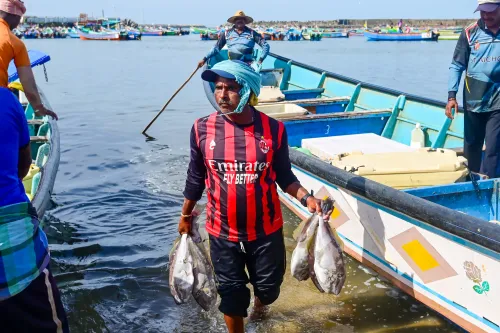
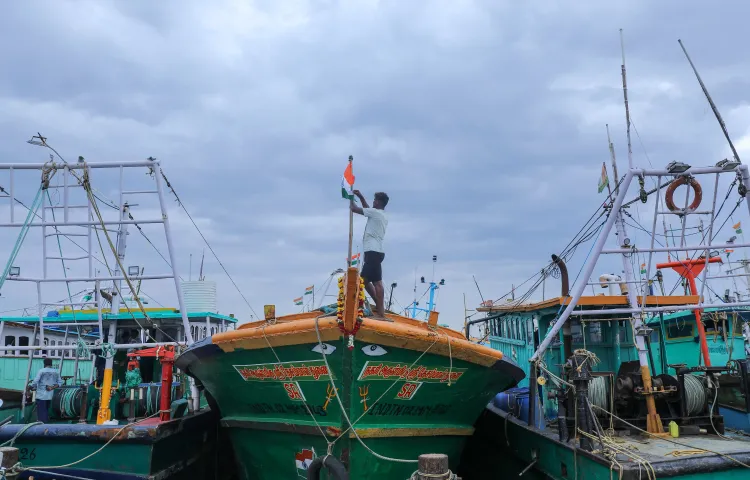
India stands as the second-largest fish-producing nation globally, contributing 8 percent to global production. The fisheries sector supports nearly 30 million livelihoods and significantly impacts exports, with fishery products generating Rs 60,523 crore in FY 2023–24.
Point of View
I view this report as a pivotal step towards harnessing India's marine resources responsibly. The focus on sustainable practices and community involvement indicates a commitment to ecological balance while boosting economic growth. It's essential that these initiatives are backed by adequate policies and resources to realize their full potential.
NationPress
25 Sept 2026
Frequently Asked Questions
What is the estimated potential yield of India's deep-sea fishery resources?
India's deep-sea fishery resources have an estimated potential yield of 7.16 million tonnes according to the NITI Aayog report.
How can deep-sea fishing benefit India?
Deep-sea fishing can enhance seafood exports, create employment opportunities, and relieve pressure on coastal fisheries while promoting ecological sustainability.
What are the phases outlined for developing India's deep-sea fisheries?
The report outlines three phases: Phase 1 focuses on foundational growth (2025-28), Phase 2 aims for global competitiveness (2029-32), and Phase 3 targets global leadership in sustainable fisheries (2033 and beyond).
Who participated in the NITI Aayog workshop?
The workshop held by NITI Aayog saw participation from 18 institutions, including presentations from several coastal states like Goa and Gujarat.
What is the significance of India's fisheries sector?
India is the second-largest fish-producing country globally, supporting nearly 30 million livelihoods and contributing significantly to the country's exports.