PM Modi Highlights India's Pioneering Women's Voting Rights in 2003 Speech
Synopsis
On International Women’s Day, a video from PM Modi’s 2003 speech showcases India's early provision of voting rights for women in 1947, contrasting it with the struggles faced by women in established democracies. This historic context emphasizes women’s empowerment and their significant roles in governance.
Key Takeaways
India granted women the right to vote in 1947, ahead of many democracies.
The Nari Shakti Vandan Adhiniyam reserves 33% of seats for women in legislative bodies.
PM Modi highlighted the importance of women's roles in public life.
Historical context shows women's voting rights in other nations came after extensive struggles.
Women's empowerment is vital for societal progress.
New Delhi, March 8 (NationPress) India bestowed women with universal voting rights upon achieving Independence in 1947, a significant advancement that predates similar actions in numerous historic democracies, where women faced lengthy battles to attain their rights. This pivotal moment was underscored in a video shared by the ‘Modi Archive’ on International Women’s Day.
As highlighted in the Modi Archive post on X, "While many of the world’s oldest democracies spent over a century to grant women the right to vote, India implemented universal suffrage in 1947. This occurred even before the formulation of the legislation, national mission, and policy frameworks, including the Nari Shakti Vandan Adhiniyam, which reserves 33% of parliamentary seats for women."
The post reminded us that even in 2003, when he was the Chief Minister of Gujarat, PM Modi posed a crucial inquiry regarding the involvement of women in public spheres.
"Two decades ago, a Chief Minister was already challenging: Why should women's influence be limited to the home? Why not expand it to the Gram Sabha, the district, or every decision-making space? The year was 2003. The occasion was Women’s Day. The leader was Narendra Modi," the post elaborated.
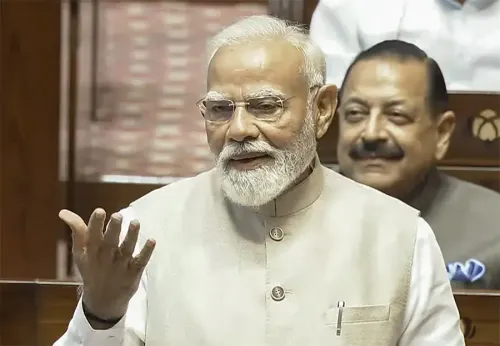
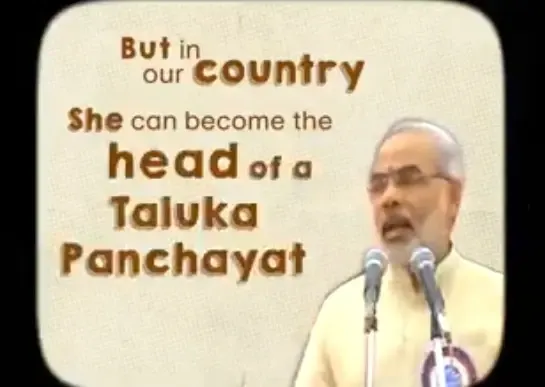
The video shared by the ‘Modi Archive’ features then-CM Modi speaking about the status of women in India and questioning the prevalent narratives that suggest women in Western nations are far more empowered.
“A narrative exists in our nation regarding various countries, implying that women there have surpassed us and can achieve anything they desire,” he remarked, noting that many individuals in India, lacking full awareness of the nation's strengths and traditions, often fall prey to such narratives.
“Those who fail to appreciate the power of this nation can easily be swayed by this perception and start to believe that the condition of women in India is notably poor,” he stated.
Reflecting on historical progress, PM Modi pointed out in his 2003 address that women in several established democracies had to engage in prolonged fights for their voting rights.
“Sisters, we gained our independence in 1947. With independence, women in our country naturally received the right to vote. This left the entire world astonished,” PM Modi remarked.
He also highlighted that in nations such as the United States, women had to wage long struggles to obtain their voting rights, even after over a century of democratic governance.
In contrast, India not only granted voting rights to women at independence but also facilitated their participation in grassroots governance. Women have held positions such as Sarpanch, as well as leadership roles in Taluka and District Panchayats.
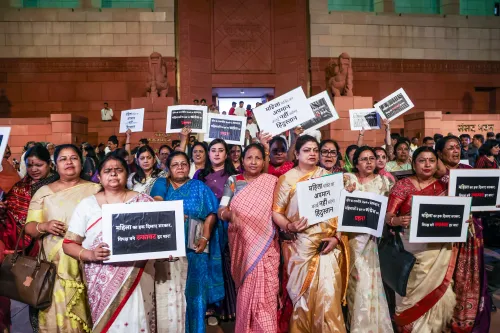
The post also referenced the recent passage of the Nari Shakti Vandan Adhiniyam, which ensures 33% reservation for women in both Parliament and state Legislative Assemblies.
During his 2003 speech, CM Modi asserted that women's strength has consistently been a crucial element of India’s societal structure. However, he emphasized that this strength should transcend domestic confines and evolve into a formidable force in public life.
“In India, women's power represents a significant strength within social contexts. Yet in the future, this strength must transform into a broader societal force,” he concluded.
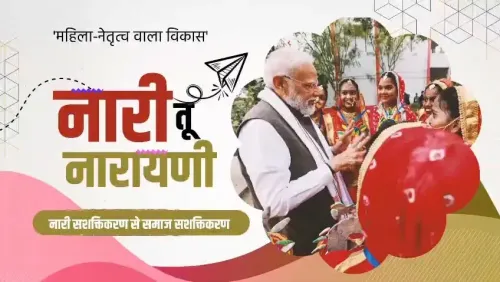
He further advocated for empowering women through self-help groups and community endeavors, suggesting that such initiatives could spark a movement of women's leadership throughout villages.
The ultimate goal, he stated, was to enhance awareness and ensure that the advantages of social welfare and prosperity reach every segment of society via the active involvement of women in governance and public affairs.
Point of View
Particularly the early granting of voting rights in 1947. It emphasizes the importance of women's roles in public life and governance, positioning these developments within a broader global context.
NationPress
19 Sept 2026
Frequently Asked Questions
When did India grant women the right to vote?
India granted women universal suffrage in 1947, at the time of Independence.
How does India's timeline for women's voting rights compare globally?
India implemented women's voting rights much earlier than many established democracies, where women often struggled for decades.
What is the Nari Shakti Vandan Adhiniyam?
The Nari Shakti Vandan Adhiniyam is a legislative act that provides for 33% reservation for women in Parliament and state Legislative Assemblies.
What role did PM Modi emphasize for women in public life?
PM Modi highlighted the need for women's strength to extend beyond domestic roles into public decision-making.
How did PM Modi address women's empowerment in his 2003 speech?
In his 2003 speech, PM Modi advocated for women's participation in governance and challenged the narratives that portray women in Western nations as more empowered.