What Economic Reforms in India Are Shaping Inclusive Growth in 2025?
Synopsis
Discover how India's 2025 economic reforms are driving inclusive growth through significant changes in taxation, labor laws, and rural employment. This transformative approach aims to empower citizens, enhance business efficiency, and stimulate the economy.
Key Takeaways
Economic reforms in 2025 focus on inclusive growth.
Significant tax reforms benefit middle-class families.
Labor law consolidation enhances worker protections.
Rural employment guarantees increased to 125 days.
Export Promotion Mission empowers MSMEs.
New Delhi, Dec 30 (NationPress) The economic reforms implemented by the government in 2025 represent a significant transition toward outcome-driven governance. These reforms aim to minimize obstacles for citizens and businesses, improve transparency and efficiency, and establish a robust foundation for sustained and inclusive economic growth.
By streamlining taxation, modernizing labor laws, empowering MSMEs, increasing rural employment, and promoting digital payments, these initiatives collectively build trust, resilience, and enhance global competitiveness in India's economy, as stated in an official announcement made on Tuesday.
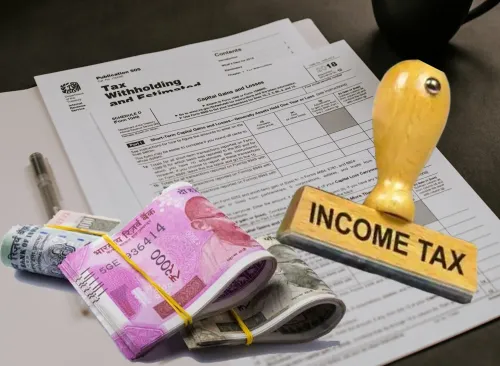
As a significant relief for Indian families and individual taxpayers, the Union Budget 2025-26 introduced notable reforms in direct taxation, ensuring that annual incomes up to Rs 12 lakh are free from income tax under the new framework, with effective exemptions rising to Rs 12.75 lakh for salaried individuals due to the standard deduction. This change reaffirms the government's dedication and provides millions of middle-class households with increased disposable income, thereby stimulating consumption, savings, and investment.
In July 2024, the government announced a thorough revision of the Income-tax Act, 1961, resulting in the New Income Tax Act, 2025 — a groundbreaking development aimed at simplifying terminology, eliminating outdated provisions, and restructuring key components.
The new Act enhances digital-first enforcement, introduces faceless tax administration, consolidates compliance measures like Tax Deducted at Source (TDS) under one section, empowers the government to launch technology-driven schemes, and improves dispute-resolution mechanisms.
In a historic reform, the government merged 29 existing labor laws into four comprehensive Labor Codes: the Code on Wages, 2019, the Industrial Relations Code, 2020, the Code on Social Security, 2020, and the Occupational Safety, Health and Working Conditions Code, 2020.
This new framework not only enhances ease of doing business but also expands wage security, social protection, and workplace safety for all workers, including women, migrants, gig, and platform workers.
The reforms broaden the safety net for India's workforce, with nearly 10 million gig and platform workers receiving yearly social security assistance. Women workers gain from guaranteed leave provisions, maternity benefits, and improved workplace safety.
Rural employment reforms anchored by the enactment of the Viksit Bharat-Guarantee for Rozgar and Ajeevika Mission (Gramin) Act, 2025 replace the Mahatma Gandhi National Rural Employment Guarantee Act (MGNREGA) with a contemporary statutory framework that enhances livelihood security and links employment with community development. Employment guarantees have been increased to 125 days of wage employment per rural household in a financial year from the previous 100 days.
To prevent Quality Control Orders (QCOs) from disrupting domestic production, the government has phased their implementation in a manner that is friendly to MSMEs through the Bureau of Indian Standards (BIS).
Under the BIS Support Measures for MSMEs, businesses have received concessions on annual marking fees, the requirement for in-house laboratories has been made optional with access to accredited or shared labs, inspection and testing processes have been made more adaptable, and product certification guidelines have been made publicly accessible to ease compliance.
The latest next-generation GST reforms represent a crucial step towards simpler taxation, less burden on citizens, and enhanced ease of doing business. They significantly bolster GST's role as a citizen-centric, business-friendly, and growth-oriented tax system.
The transition to a two-slab GST regime (5 percent and 18 percent) simplifies the tax structure, reduces classification disputes, and lowers compliance costs, thus improving the ease of doing business, particularly for MSMEs and small traders.
Broad-ranging GST rate reductions on essential goods, household items, healthcare products, educational materials, housing inputs, and services directly alleviate inflationary pressures and enhance household affordability.
In a significant boost for India's trade competitiveness, the Union Cabinet has approved the Export Promotion Mission (EPM) as a flagship structural reform with an allocation of Rs 25,060 crore for FY 2025–26 to FY 2030–31. EPM signifies a strategic shift from fragmented export support schemes to a unified, outcome-oriented, and digitally driven framework, aimed at empowering MSMEs, first-time exporters, and labor-intensive sectors.
The Mission combines financial support (Niryat Protsahan), including affordable trade finance and credit enhancement, with non-financial enablers (Niryat Disha) such as quality compliance, branding, logistics, and market access.
Point of View
I believe that these reforms reflect a pivotal moment in India's economic history. With a focus on inclusivity and growth, the government's efforts are commendable and necessary for the nation’s future. These changes empower the workforce and enhance the overall economic environment, aligning with the aspirations of every Indian citizen.
NationPress
5 Oct 2026
Frequently Asked Questions
What are the key features of the New Income Tax Act, 2025?
The New Income Tax Act simplifies tax provisions, removes outdated regulations, and enhances digital enforcement, making tax compliance easier for taxpayers.
How does the reform impact rural employment?
The reforms increase the employment guarantee to 125 days per rural household and integrate employment with community development, enhancing livelihood security.
What changes were made to labor laws?
The government consolidated 29 labor laws into four Labor Codes, improving workplace safety and protections for various worker categories, including gig and platform workers.
How are MSMEs supported under these reforms?
MSMEs benefit from reduced compliance burdens, flexible inspection processes, and financial support through initiatives like the BIS Support Measures.
What is the Export Promotion Mission?
The Export Promotion Mission aims to streamline export support for MSMEs and first-time exporters with a comprehensive, digitally-driven framework.