Will 2026 Break New Records with ‘Make in India’ and PLI Schemes?
Synopsis
India's electronics and semiconductor sectors are on a transformative journey, shifting from intention to execution. With the 'Make in India' initiative and PLI schemes in place, 2026 is expected to usher in unprecedented growth, establishing India as a global leader in electronics manufacturing.
Key Takeaways
Electronics production in India has skyrocketed over the past decade.
The PLI scheme has been pivotal in boosting manufacturing and exports.
India is set to become a global leader in electronics manufacturing.
Job creation is a significant aspect of the modified clusters.
Focus on localization and innovation will drive success in the electronics sector.
New Delhi, Dec 26 (NationPress) India's journey in the electronics and semiconductor sectors has transitioned from mere intention to active implementation, achieving remarkable milestones this year. Looking ahead, 2026 is poised to set new benchmarks, thanks to the robust frameworks of ‘Make in India’ and the Production-Linked Incentive (PLI) schemes, positioning India as a competitive and reliable destination for electronics manufacturing on a global scale.
Government reports reveal that electronics output has surged from approximately Rs 1.9 lakh crore in 2014-15 to around Rs 11.3 lakh crore by 2024–25. Similarly, electronics exports have jumped from Rs 38,000 crore to over Rs 3.27 lakh crore during this period.
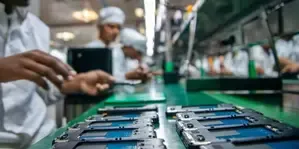
In 2014-15, India boasted only two mobile manufacturing units, a number that has skyrocketed to nearly 300 today. Mobile device production has escalated from Rs 18,000 crore to Rs 5.45 lakh crore, while exports have soared from Rs 1,500 crore to nearly Rs 2 lakh crore.
The electronics export figures have notably increased from Rs 38,000 crore to more than Rs 3.27 lakh crore within the same timeframe.
Meanwhile, the Modified Electronics Manufacturing Clusters (EMC 2.0), spread across 10 states with projected investments of Rs 1,46,846 crore, are anticipated to create around 1.80 lakh jobs.
Over the last decade, India's manufacturing foundation, particularly in electronics and mobile devices, has notably expanded, establishing the country as a net exporter in various critical sectors.
Pankaj Mohindroo, Chairman of the ICEA, stated that this year has been pivotal for 'Make in India', with the PLI framework solidifying India’s position as a competitive and trusted hub for electronics manufacturing.
“The PLI initiative has enhanced scale, increased localization, boosted exports, and integrated India into global value chains. As we move into 2026, maintaining policy consistency, expediting approvals, and focusing on component ecosystems will be vital for transitioning India from volume-led manufacturing to high-value, innovation-driven production,” he noted in a statement.
Ashok Chandak, President of the India Electronics and Semiconductors Association (IESA) and SEMI India, pointed out that the narrative of India's electronics growth is no longer episodic; it is now structural.
He emphasized that policymakers, along with global and Indian industry leaders, are unified in their efforts to create resilient, sustainable, and globally competitive value chains.
“As highlighted in discussions throughout 2025 — concerning policies and incentives, electronics value addition, skill development, academic partnerships, and industry collaboration — the upcoming phase must prioritize execution, joint R&D, and technology transfer. The increased utilization of locally manufactured semiconductors and components will be crucial for deeper value addition and the long-term prosperity of India's electronics industry,” Chandak remarked.
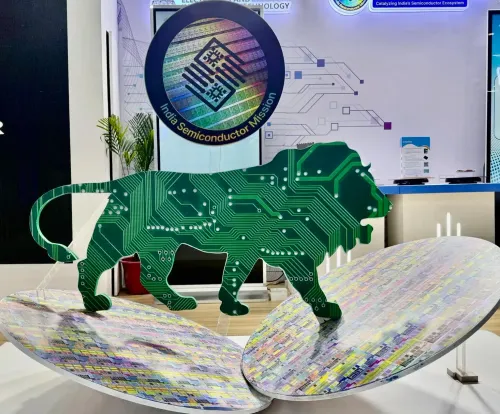
India’s semiconductor trajectory has also progressed from intent to active execution, signaling a clear structural transformation.
There is now alignment among policymakers, industry leaders, and ecosystem participants towards developing robust and competitive semiconductor value chains.
Key priorities discussed in 2025, including semiconductor policies and incentives, workforce development, fabrication plants, advanced packaging, and OSAT, highlight the necessity for collaborative R&D, technology transfer, and well-defined scaling pathways.
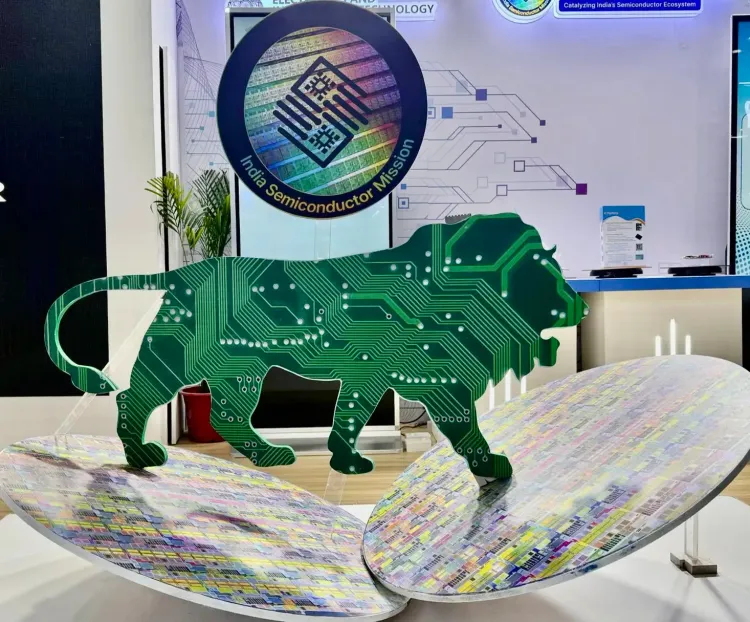
Under the Semicon India Programme, ten units have received approval with an investment of Rs 1.6 lakh crore, which encompasses silicon fabrication, silicon carbide fabrication, advanced packaging, and memory packaging.
“In the next three years, disciplined execution and localization across design, manufacturing, and advanced packaging will be essential to produce chips for high-volume electronic products consumed domestically,” Chandak asserted.
The government has also initiated a production-linked incentive scheme (PLI) for large-scale electronics manufacturing of mobile devices and specific components, attracting investments of Rs 14,065 crore by October 2025.
To bolster IT Hardware manufacturing, the government introduced PLI for IT Hardware aimed at promoting the production of laptops, tablets, servers, and ultra-small form factor (USFF) devices. The PLI for IT hardware has drawn investments of Rs 846 crore as of October 2025.
Point of View
The advancements in India's electronics and semiconductor industries signify a pivotal moment for the country. The alignment of government policies and industry efforts showcases a clear commitment to building a sustainable and competitive manufacturing ecosystem. This strategic focus on localization and innovation will not only boost the economy but also position India as a global leader in technology.
NationPress
3 Oct 2026
Frequently Asked Questions
What is the 'Make in India' initiative?
The 'Make in India' initiative is a government program aimed at encouraging companies to manufacture their products in India and incentivizing foreign investments.
How has electronics production changed in India?
Electronics production in India has increased significantly, rising from Rs 1.9 lakh crore in 2014-15 to Rs 11.3 lakh crore projected by 2024-25.
What is the Production-Linked Incentive (PLI) scheme?
The PLI scheme is designed to boost manufacturing in specific sectors by providing financial incentives to companies based on their production levels.
How many jobs are expected to be generated by the Modified Electronics Manufacturing Clusters?
The Modified Electronics Manufacturing Clusters (EMC 2.0) are expected to create approximately 1.80 lakh jobs across 10 states.
What investments have been made under the Semicon India Programme?
Under the Semicon India Programme, ten units have been approved with an investment of Rs 1.6 lakh crore for various semiconductor technologies.