How Did the Centre Propel India's EV Revolution in 2025?
Synopsis
In 2025, India's electric vehicle landscape transformed dramatically as the government initiated record investments and successful schemes like PM E-DRIVE. The Ministry of Heavy Industries unveiled incentives for millions of EVs, enabling a robust ecosystem for sustainable transport. Discover how these initiatives are shaping India's future in electric mobility.
Key Takeaways
The Ministry of Heavy Industries has accelerated India's EV transition.
Record investments were made under the PLI Scheme.
The PM E-DRIVE initiative aims to promote EV adoption.
Over 28 lakh EVs received incentives.
India is positioning itself as a global EV manufacturing hub.
New Delhi, Jan 13 (NationPress) The Ministry of Heavy Industries (MHI) significantly advanced India's shift towards the wider use of electric vehicles in 2025, achieving a landmark in investments through its Production Linked Incentive Scheme for the automotive sector along with the effective rollout of the PM E-DRIVE initiative, as stated in an official announcement on Tuesday.
During the fiscal year 2024-25, claims amounting to Rs 1,999.94 crore were allocated under the PLI–Auto Scheme. By December 31, 2025, over 13.61 lakh electric vehicles benefited from incentives, comprising more than 10.42 lakh two-wheelers, over 2.38 lakh three-wheelers, 79,540 electric cars, and 1,391 electric buses, according to the report.
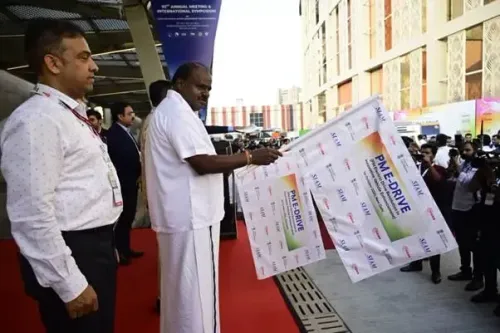
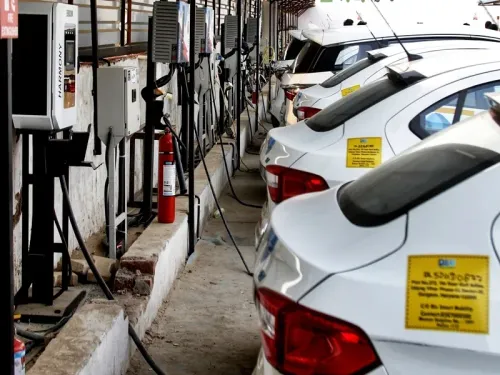
The PM E-DRIVE Scheme, which was initiated on September 29, 2024, has an investment provision of Rs 10,900 crore. Its objective is to foster rapid adoption of electric vehicles (EVs), enhance charging infrastructure, and facilitate the development of a robust EV manufacturing ecosystem in India.
Among the allocations, Rs 3,679 crore has been earmarked for subsidies to promote over 28 lakh EVs, including 24.79 lakh two-wheelers, 3.28 lakh three-wheelers, and 5,643 e-trucks. Additionally, Rs 4,391 crore is designated for the deployment of 14,028 e-buses via public transport agencies.
As of December 31, 2025, claims totaling Rs 1,703.32 crore have been processed, and more than 21.36 lakh vehicles have been sold under the initiative.
Moreover, Convergence Energy Services Limited (CESL), a government-owned entity, has successfully finalized a contract for 10,900 e-buses, which is among the largest procurements to date, serving five major metropolitan areas: Delhi, Ahmedabad, Surat, Hyderabad, and Bengaluru in phase one.
The ministry is also implementing the Scheme to Promote Manufacturing of Electric Cars (SMEC), announced on March 15, 2024, designed to draw global investments, position India as a manufacturing hub for electric vehicles, and enhance domestic value addition (DVA). Approved applicants are mandated to invest a minimum of Rs 4,150 crore (equivalent to $500 million) within a three-year period. This initiative supports the Make in India initiative by promoting local manufacturing and job creation while complementing the PLI-Auto scheme, as per the statement.
Point of View
I observe that the initiatives taken by the Ministry of Heavy Industries mark a pivotal moment for India's automotive sector. The government's proactive approach in driving electric vehicle adoption not only aligns with global sustainability goals but also reinforces India's ambition to become a manufacturing hub for EVs. Ensuring the success of these schemes will be crucial for the country's economic and environmental future.
NationPress
7 Oct 2026
Frequently Asked Questions
What is the PM E-DRIVE initiative?
The PM E-DRIVE initiative is a government scheme launched to accelerate the adoption of electric vehicles in India, facilitating the establishment of charging infrastructure and enhancing the EV manufacturing ecosystem.
How much investment was made under the PLI Scheme?
In 2025, the government allocated a record investment of Rs 1,999.94 crore under the Production Linked Incentive Scheme for the automotive sector.