India ships Banganapalle mangoes to Singapore by sea for first time
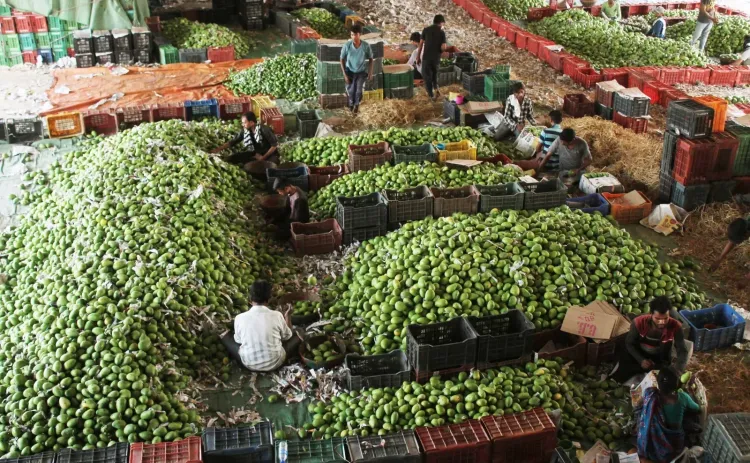
Synopsis
For the first time, India has shipped Banganapalle mangoes to Singapore entirely by sea — and the fruit arrived in excellent condition. The 5 MT pilot, which fetched farmers nearly double the domestic price, could rewrite the economics of India's fresh produce exports by replacing costly air freight with scalable maritime logistics.
Key Takeaways
APEDA facilitated India's first commercial sea shipment of Banganapalle mangoes to Singapore , confirmed on 25 June 2025 .
The 5 MT consignment, exported by Osum Food Solutions , departed on 11 June and arrived on 24 June .
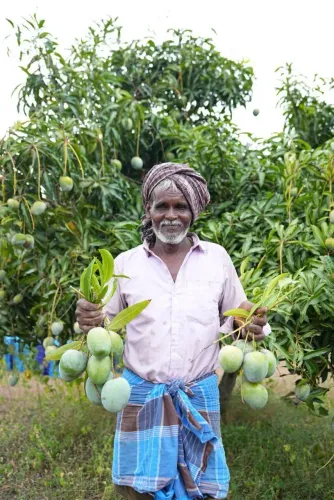
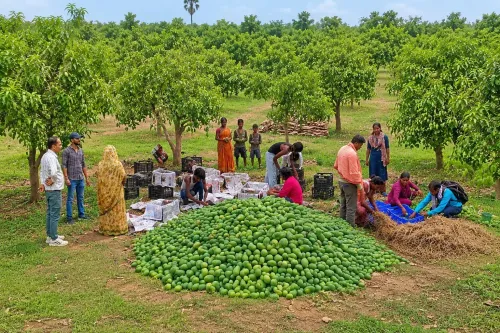
Mangoes were sourced from GAP-certified orchards in Andhra Pradesh and packed at an APEDA-recognised packhouse in Karnataka .
Export price realised was approximately ₹50 per kg , nearly double the domestic price of ₹25–₹26 per kg .
Singapore importer EC-Links Pte Ltd reported excellent fruit quality, including sweetness, uniform ripening, and strong shelf life.
ICAR–CISH, Lucknow provided critical technical support for the cold-chain and post-harvest management protocols.
India has achieved a landmark in horticultural trade: the Agricultural and Processed Food Products Export Development Authority (APEDA) has facilitated the country's first commercial sea shipment of Banganapalle mangoes to Singapore, the Commerce Ministry confirmed on 25 June 2025. The milestone opens a cost-effective, scalable export corridor for one of India's most prized mango varieties.
The Consignment at a Glance
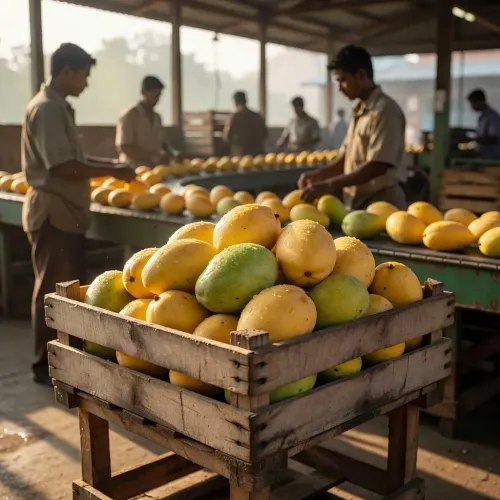
The shipment, comprising 5 metric tonnes (MT) of Banganapalle mangoes, was exported by Osum Food Solutions on 11 June and arrived in Singapore on 24 June — a transit of roughly 13 days. The mangoes were sourced from Good Agricultural Practices (GAP)-certified orchards in Andhra Pradesh and processed and packed at an APEDA-recognised packhouse in Karnataka. The ICAR–Central Institute for Subtropical Horticulture (CISH), Lucknow, played a key role in the exercise.
Quality Verdict from Singapore
Upon arrival, the Singapore importer, EC-Links Pte Ltd, reported excellent fruit quality, specifically appreciating the mangoes for their sweetness, uniform ripening, shelf life, and overall phytosanitary condition. The consignment met all import requirements prescribed by Singapore, demonstrating the effectiveness of scientific post-harvest management and cold-chain logistics over a sea route.
Economic Impact on Farmers
The export generated a significant income boost for growers. Domestic market prices for Banganapalle mangoes ranged between ₹25 and ₹26 per kilogram, while the export consignment realised approximately ₹50 per kilogram — nearly doubling farm-gate returns. This price premium underscores the commercial incentive for farmers in Andhra Pradesh to meet international quality standards.
Why Sea Freight Changes the Equation
Fresh fruit exports from India have historically relied on air freight, which is faster but significantly more expensive and less environmentally sustainable. The success of this sea shipment demonstrates that robust cold-chain infrastructure and scientific handling practices can preserve quality over maritime transit. APEDA has been actively promoting sea freight for fresh produce through market development initiatives, infrastructure support, and capacity-building for exporters. Notably, this is the first time Banganapalle mangoes — known for their golden-yellow colour, fibreless pulp, pleasant aroma, and rich sweetness — have completed a commercial sea journey to an international market.
What Comes Next
The successful shipment is expected to encourage wider adoption of maritime transport for Indian horticultural exports, potentially lowering costs and expanding market access across Southeast Asia and beyond. The initiative aligns with the government's broader objective of boosting agricultural exports and enhancing farmers' incomes. APEDA is expected to scale up similar sea-freight pilots to other high-value fruit varieties and destination markets in the coming months.
Point of View
The addressable export market expands dramatically. The doubling of farm-gate returns is the headline that should reach growers in Andhra Pradesh — but sustained scale-up will depend on whether cold-chain infrastructure beyond pilot conditions can be replicated commercially. APEDA's record on follow-through after successful pilots is mixed, and the real test will be whether this becomes a repeatable corridor or a one-off showcase.
NationPress
24 Sept 2026
Frequently Asked Questions
What is the significance of India's first sea shipment of Banganapalle mangoes to Singapore?
It is the first time Banganapalle mangoes have been exported to Singapore via sea freight rather than air, demonstrating that cold-chain logistics can preserve quality over a 13-day maritime transit. The milestone opens a more cost-effective and scalable export route for Indian fresh produce.
Who facilitated the Banganapalle mango sea export to Singapore?
APEDA (Agricultural and Processed Food Products Export Development Authority) facilitated the shipment, with Osum Food Solutions as the exporter and ICAR–CISH, Lucknow providing technical support. The Commerce Ministry confirmed the details on 25 June 2025.
How much did farmers earn from the Singapore export compared to domestic sales?
The export consignment fetched approximately ₹50 per kilogram, nearly double the domestic market price of ₹25–₹26 per kilogram, significantly enhancing farm-gate returns for Andhra Pradesh growers.
What quality standards did the Banganapalle mango shipment have to meet?
The mangoes were sourced from GAP-certified orchards and packed at an APEDA-recognised packhouse in Karnataka, meeting all phytosanitary and quality requirements prescribed by Singapore. Singapore importer EC-Links Pte Ltd confirmed excellent fruit quality upon arrival.
Will India expand sea freight exports of mangoes to other markets?
APEDA has indicated plans to encourage wider adoption of maritime transport for horticultural exports following this successful pilot. The authority has been building capacity among exporters and investing in cold-chain infrastructure to make sea freight commercially viable at scale.