Indian mangoes reach Singapore by sea, slashing export costs by 90%
Synopsis
India just cracked the logistics barrier that kept premium mangoes off global shelves at scale. A sea shipment of Banganapalle mangoes from Andhra Pradesh to Singapore — at ₹13–20 per kg versus ₹250 by air — is not just a supply-chain milestone. It is a potential reset for a $4–5 million Southeast Asian market and a pathway to the UAE's $20–25 million mango import market, all while doubling farm-gate prices for growers.
Key Takeaways
5 metric tonnes of Banganapalle mangoes were exported to Singapore by Osum Food Solutions , departing on 11 June and arriving on 24 June 2025 .
Sea freight costs are estimated at ₹13–20 per kg , versus ₹150–250 per kg by air — a reduction of roughly 90% .
Farm-gate export price realised was approximately ₹50 per kg , nearly double the domestic rate of ₹25–26 per kg .
ICAR-CISH , Lucknow, developed the sea shipment protocol with APEDA , extending mango shelf life to up to 30 days .
Target markets include Singapore , Malaysia , Hong Kong (combined imports: $4–5 million ) and the UAE (valued at $20–25 million ).
Singapore importer EC-Links Pte Ltd confirmed excellent fruit quality on arrival, meeting all phytosanitary requirements.
India's fresh mango exports crossed a significant logistics threshold on 25 June 2025, as a commercial sea shipment of Banganapalle mangoes successfully reached Singapore — a development that could reshape the economics of Indian horticultural exports to Southeast Asia and the Middle East. The milestone was announced by the Agriculture Ministry and the Commerce Ministry on Thursday.
The Shipment: Key Details
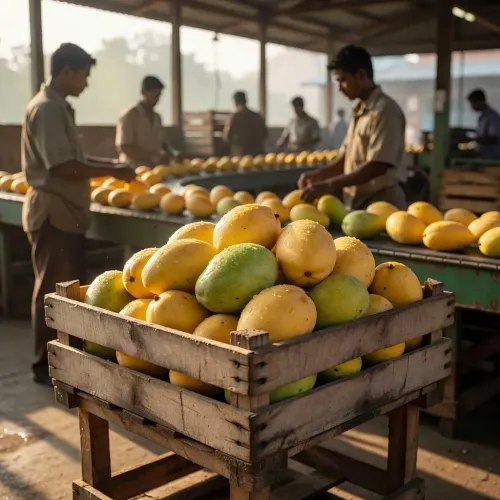
The consignment, comprising 5 metric tonnes of premium Banganapalle mangoes, was exported by Osum Food Solutions on 11 June and arrived in Singapore on 24 June — a transit of roughly 13 days. A separate consignment of 4.3 tonnes of Banganappalli mangoes from Andhra Pradesh was also shipped via reefer container as part of the initiative.
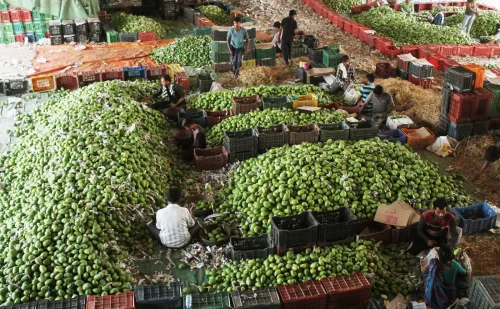
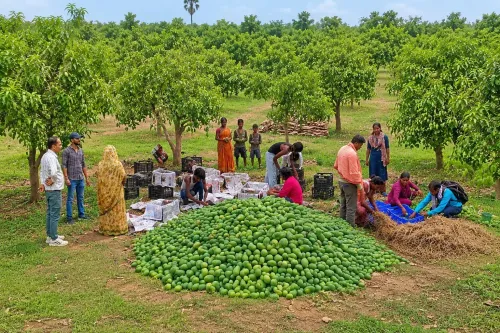
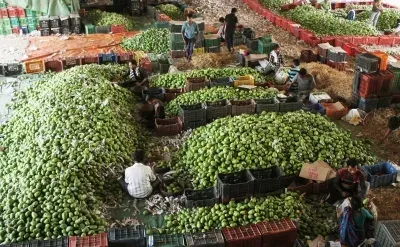
The mangoes were sourced from Good Agricultural Practices (GAP)-certified orchards in Andhra Pradesh and packed at an APEDA-recognised packhouse in Karnataka. Upon arrival, Singapore-based importer EC-Links Pte Ltd reported excellent fruit quality, citing sweetness, uniform ripening, extended shelf life, and satisfactory phytosanitary condition.
The Cost Breakthrough
The economics of this shipment are striking. Sea freight logistics costs are estimated at ₹13–20 per kg, compared to ₹150–250 per kg via air — a reduction of roughly 90%. This cost compression is expected to make Indian mangoes competitively priced in markets where they have historically struggled against cheaper regional alternatives.
The export also delivered direct farm-gate benefits: while domestic market prices for the variety ranged between ₹25 and ₹26 per kg, the export consignment realised approximately ₹50 per kg — nearly doubling returns for growers.
The Science Behind the Protocol
The sea shipment protocol was developed by the ICAR-Central Institute for Subtropical Horticulture (ICAR-CISH), Lucknow, in collaboration with the Agricultural and Processed Food Products Export Development Authority (APEDA). The protocol integrates an end-to-end quality assurance system covering residue-free production, scientific harvesting, grading, packing, and post-harvest management.
Exported fruits underwent Hot Water Treatment (HWT) and CISH-Met Wash — an ICAR-CISH-developed technology that enhances shelf life, minimises disease incidence, and maintains fruit quality over long transit distances. ICAR-CISH has successfully extended mango shelf life to up to 30 days under sea shipment conditions, making the logistics window commercially viable.
Market Opportunity and Strategic Significance
The success of this shipment is expected to open or deepen access to several high-value markets. Current Indian mango imports in Singapore, Malaysia, and Hong Kong are estimated at $4–5 million, while the UAE market — already a significant buyer — is valued at $20–25 million. Affordable sea freight could make India a more competitive supplier across all these geographies.
Banganapalle, prized for its golden-yellow colour, fibreless pulp, pleasant aroma, and rich sweetness, is among India's most recognised export mango varieties. Kesar, another premium variety, also enjoys strong consumer demand in Singapore, according to the Agriculture Ministry.
APEDA has been actively promoting sea freight for fresh produce exports through market development initiatives, infrastructure support, and exporter capacity-building. This shipment is expected to encourage wider adoption of maritime logistics for horticultural exports — and to strengthen India's position as a reliable, high-quality supplier in global agricultural markets.
Point of View
The arithmetic finally works. The harder question is whether cold-chain infrastructure across Andhra Pradesh and Karnataka can scale to meet demand, or whether this remains a well-publicised pilot that stalls at the packhouse. APEDA's track record on market development is solid; its record on scaling logistics infrastructure is patchier. The UAE's $20–25 million mango import market is the real prize — and it will only open at scale if the protocol moves beyond a handful of certified orchards.
NationPress
24 Sept 2026
Frequently Asked Questions
What is the significance of India's mango sea shipment to Singapore?
It is the first successful commercial sea shipment of premium Banganapalle mangoes from India to Singapore, demonstrating that fresh mangoes can be transported by sea without quality loss. The shipment cuts logistics costs by roughly 90% compared to air freight, making Indian mangoes more price-competitive in international markets.
How much does sea freight cost compared to air freight for mango exports?
Sea freight logistics costs are estimated at ₹13–20 per kg, compared to ₹150–250 per kg via air shipment. This dramatic reduction is expected to make Indian mango exports commercially viable at scale in Southeast Asian and Middle Eastern markets.
How did ICAR-CISH make the sea shipment possible?
The ICAR-Central Institute for Subtropical Horticulture (ICAR-CISH) in Lucknow, in collaboration with APEDA, developed a scientific sea shipment protocol that includes Hot Water Treatment (HWT) and CISH-Met Wash technology. This protocol extends mango shelf life to up to 30 days under sea shipment conditions, covering the full transit window.
Which mango varieties were exported, and where were they sourced?
Banganapalle (also written Banganappalli) mangoes were exported, sourced from GAP-certified orchards in Andhra Pradesh and processed at an APEDA-recognised packhouse in Karnataka. The variety is prized for its golden-yellow colour, fibreless pulp, and rich sweetness, and enjoys strong demand in Singapore.
What markets could benefit from this sea shipment breakthrough?
The development targets Singapore, Malaysia, and Hong Kong — where current Indian mango imports are estimated at $4–5 million — as well as the UAE, a larger market valued at $20–25 million. Affordable sea freight is expected to make India a more competitive supplier across all these geographies.