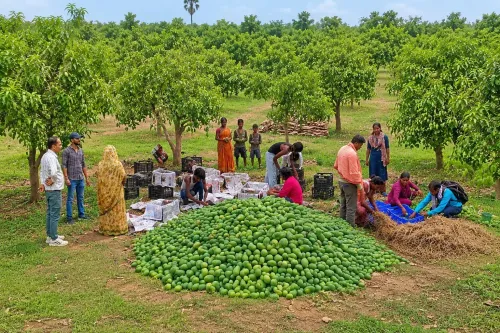
UP mangoes reach Dubai by sea: 12.5 tonnes in landmark export route

Synopsis
For the first time under a formal protocol, 12.5 tonnes of UP's prized Dashehari and Langra mangoes completed a 25-day sea voyage to Dubai with 90% marketable yield — proof that India's most perishable export can travel by sea without sacrificing quality, and with farmers pocketing ₹15–20 more per kilogram than conventional air-freight channels deliver.
Key Takeaways
12.5 tonnes of Dashehari and Langra mangoes from Amroha, Uttar Pradesh were exported to Dubai via a 40-foot refrigerated container by sea.
The consignment reached Dubai on 17 July , completing a 25-day harvest-to-market transit after being harvested on 22 June .
Nearly 90% of the mangoes arrived in marketable condition, validating the METWASH technology developed by ICAR-CISH, Lucknow .
The export was carried out by Shehnaz Export with Attashi Global and supplied to Lulu Group, UAE , under a protocol jointly developed by ICAR-CISH and APEDA .
Mango farmers received an additional ₹15–20 per kilogram compared to conventional export channels, owing to lower sea-freight costs.
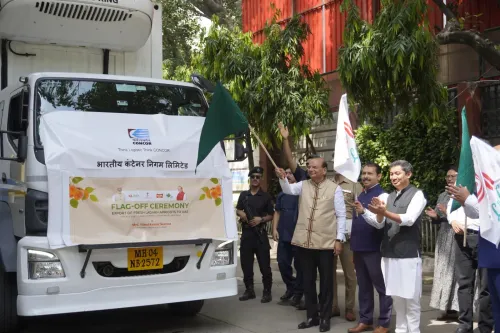
Dashehari and Langra mangoes from Uttar Pradesh's Amroha have reached Dubai via sea freight for the first time under a structured export protocol, with 12.5 tonnes of premium fruit arriving in marketable condition — a development the Ministry of Agriculture & Farmers Welfare described on 22 July as a significant milestone for India's fresh fruit export sector.
The consignment, shipped in a 40-foot refrigerated container, was exported by Shehnaz Export, Amroha, in partnership with Attashi Global, and supplied to Lulu Group in the United Arab Emirates — one of the Gulf region's largest retail chains.
The Technology Behind the Shipment
The sea-route protocol was jointly developed by ICAR–Central Institute for Subtropical Horticulture (ICAR-CISH), Lucknow, and the Agricultural and Processed Food Products Export Development Authority (APEDA). Mangoes were harvested on 22 June and processed using scientific post-harvest management practices recommended by ICAR-CISH.
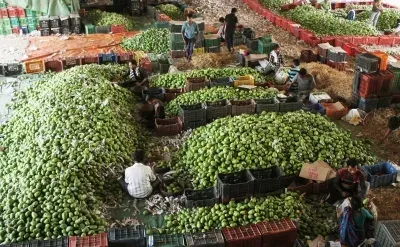
A key element was the application of METWASH technology, developed by ICAR-CISH to enhance shelf life. The fruit was subsequently graded and packed at the Amroha Pack House before being loaded into a refrigerated container maintained under a continuous cold-chain system throughout transit.
25-Day Journey, 90% Marketable Yield
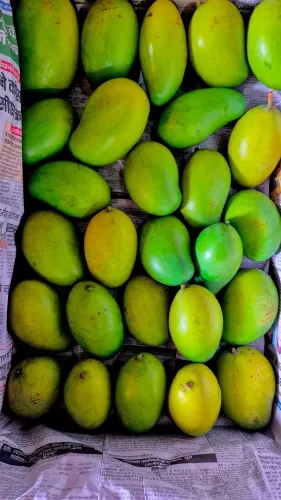
Despite weather-related delays caused by Western Disturbances, the consignment reached Dubai on 17 July, completing a 25-day harvest-to-market transit period. Notably, nearly 90% of the mangoes arrived in marketable condition — a result officials say validates both the METWASH technology and the end-to-end cold-chain protocol.
This is a meaningful benchmark: mango exports are highly perishable and quality retention across a multi-week sea voyage has historically been the central barrier to scaling this route.
Why Sea Freight Changes the Economics
Traditionally, Indian mango exports to international markets have depended almost entirely on air cargo, which substantially inflates logistics costs and compresses the margins available to farmers. The sea-route alternative is considerably cheaper, and officials say this cost saving has directly translated into better farm-gate prices.
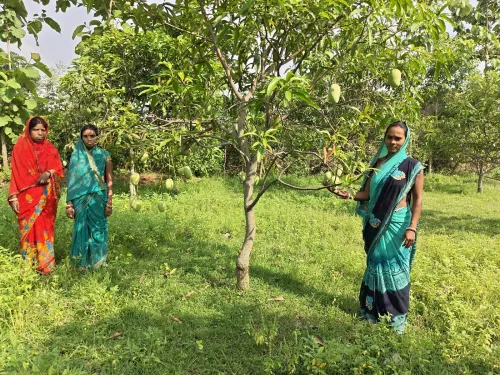
According to official statements, mango growers received an additional income of approximately ₹15–20 per kilogram compared to conventional export channels — a meaningful uplift for smallholder farmers in the Amroha belt, where Dashehari and Langra cultivation is concentrated.
Broader Implications for Indian Mango Exports
India is the world's largest mango producer, yet its share of global mango trade remains disproportionately small, partly because of the cost of air freight. This shipment, if it can be replicated at scale, points toward a more commercially viable export model. This comes amid broader government efforts to boost agricultural exports and improve farmer incomes through value-chain interventions.
APEDA and ICAR-CISH are expected to use the data from this consignment to refine the protocol further, with the aim of expanding the sea-route model to other mango-growing states and additional Gulf and European markets in subsequent seasons.
Point of View
But because it is a proof-of-concept with a replicable protocol. The real question is whether APEDA and ICAR-CISH can standardise the cold-chain and METWASH process across multiple exporters and states before the next mango season. A 90% marketable yield after 25 days at sea is a credible result; turning it into a scalable supply chain is the harder task. The ₹15–20 per kilogram premium reaching farmers is also a compelling incentive story — but only if procurement infrastructure in Amroha and similar clusters can absorb higher volumes without quality slippage.
NationPress
21 Oct 2026
Frequently Asked Questions
What makes this mango export to Dubai significant?
This is the first shipment under a formal sea-route protocol developed by ICAR-CISH and APEDA, demonstrating that premium Indian mangoes can travel by sea for 25 days and still arrive with nearly 90% marketable yield. It establishes a cost-effective alternative to air freight, which has historically limited the scale of Indian mango exports.
Which varieties of mangoes were exported and from where?
The export comprised Dashehari and Langra mangoes sourced from Amroha in Uttar Pradesh. These are among the most prized North Indian mango varieties, harvested on 22 June and processed before shipment.
What is METWASH technology and how does it help?
METWASH is a post-harvest treatment technology developed by ICAR–Central Institute for Subtropical Horticulture (ICAR-CISH) in Lucknow to enhance the shelf life of mangoes. It was applied to the fruit before packing and cold-chain transit, and is credited with helping 90% of the consignment reach Dubai in marketable condition.
How much more did farmers earn through this sea-route export?
Mango farmers received approximately ₹15–20 per kilogram more than through conventional export channels, according to official statements. The saving on sea freight compared to air cargo allowed exporters to pay higher procurement prices to growers.
Who were the commercial partners in this export?
The consignment was exported by Shehnaz Export, Amroha, in partnership with Attashi Global, and supplied to Lulu Group in the UAE — one of the Gulf region's largest retail chains.