Jharkhand tribal women's Amrapali mangoes reach Dubai via APEDA export push
Synopsis
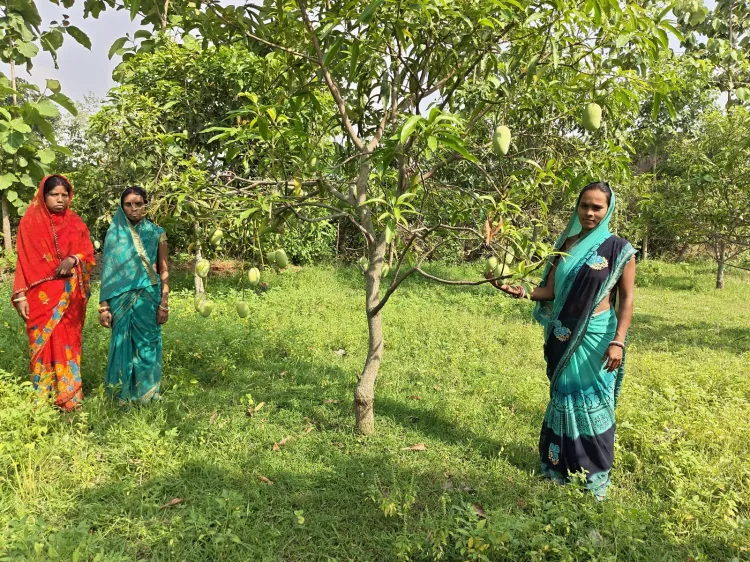
Tribal women farmers in Jharkhand's Gumla and Deoghar districts are now stocking shelves at Lulu stores in Dubai — earning nearly 180% more than local market rates. APEDA's facilitation of this two-metric-tonne Amrapali mango export is a rare instance of a government-backed supply chain genuinely closing the income gap for marginalised smallholders.
Key Takeaways
APEDA facilitated the export of 2 metric tonnes of Amrapali mangoes from Jharkhand's tribal belt to Dubai , flagged off on 3 July .
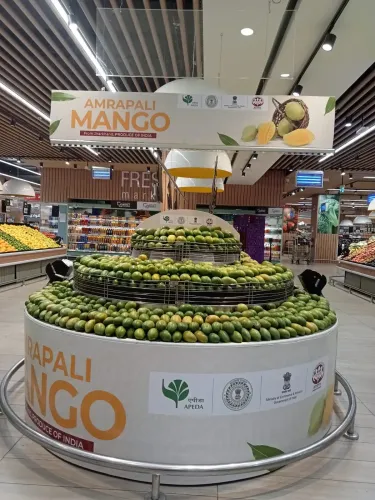
The consignment is retailed at Lulu stores in Dubai , exported by M/s Fair Exports (India) Pvt.
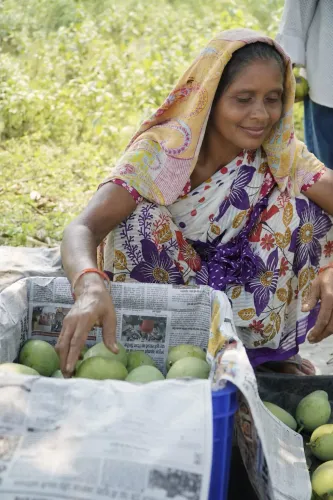
Three women-led FPCs in Gumla and Deoghar districts supplied the mangoes, collectively representing over 50,000 member farmers .
Participating farmers earned nearly 180% higher returns than prevailing local market prices.
Orchards were developed under the Birsa Harit Gram Yojana , in convergence with MGNREGA .
APEDA ran capacity-building programmes for eight FPCs in May and a women-entrepreneur session on 19 September 2025 in Deoghar.
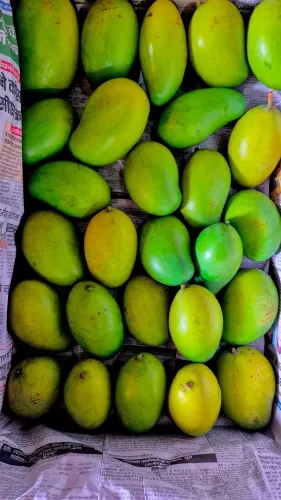
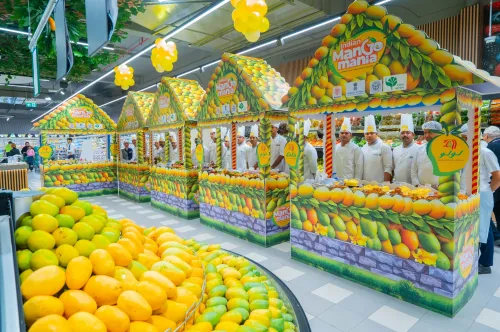
The Agricultural and Processed Food Products Export Development Authority (APEDA) has facilitated the export of two metric tonnes (MT) of Amrapali mangoes sourced from women-led Farmer Producer Companies (FPCs) in Jharkhand's tribal belt to Dubai, according to an official statement issued on Tuesday, 7 July. The consignment, flagged off on 3 July, will be retailed across Lulu stores in Dubai, marking a significant step in connecting tribal women farmers with premium international markets.
The Consignment and Its Sources
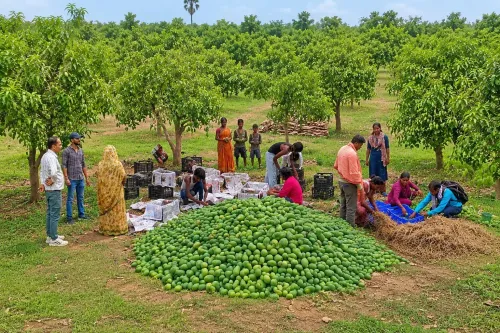
The shipment was exported by M/s Fair Exports (India) Pvt. Ltd. and draws from three women-led FPCs promoted by Palash – Jharkhand State Livelihood Promotion Society (JSLPS). One metric tonne was sourced from MVM Baghima Palkot Producer Company Limited and Raidih Agri Producer Company Limited, both APEDA-registered entities in Gumla district. The remaining one metric tonne came from Mohanpur Ajeevika Mahila Kisan Producer Society in Deoghar district. The orchards were developed by tribal women farmers under the Birsa Harit Gram Yojana, implemented in convergence with MGNREGA and backed by the Jharkhand government.
Economic Impact on Tribal Farmers
The export has delivered tangible income gains for participating farmers. Members of the women-led FPCs reportedly realised nearly 180 per cent higher returns compared to prevailing local market prices — a striking illustration of what direct export-market access can mean for smallholder producers. Collectively, the three FPCs have more than 1,500 shareholders each and represent over 50,000 member farmers, extending the financial benefits of this initiative well beyond the immediate participants.
APEDA's Capacity-Building Groundwork
The export did not happen in isolation. In May, APEDA organised a dedicated capacity-building programme in the Palkot area of Gumla district, sensitising members and Board of Directors of eight FPCs on international quality standards, post-harvest handling, and export procedures. Representatives from district offices of Agriculture, Horticulture, JSLPS, the District Industries Centre (DIC), and other line departments participated alongside farmers.
Further outreach followed on 19 September 2025, when APEDA's Regional Office, Kolkata, conducted an export-oriented capacity development programme for women entrepreneurs and self-help groups at Baswariya village in Devipur block, Deoghar district. The session covered APEDA's mandate, its Financial Assistance Scheme, export procedures, and institutional support available to women producers seeking to enter global agricultural trade.
Broader Significance
This comes amid a sustained policy push to integrate tribal and women-led agricultural collectives into export value chains — a segment historically dominated by large commercial exporters. Notably, the Amrapali variety's success in a premium Gulf retail format such as Lulu stores signals viable demand for Indian tribal-origin produce at the higher end of the market. Whether this pilot can be scaled to larger volumes and more FPCs across Jharkhand's tribal districts will be the real measure of the initiative's long-term impact.
Point of View
However symbolically powerful, is a proof-of-concept, not a transformation. The real question is whether APEDA and JSLPS can replicate this pipeline at scale across Jharkhand's hundreds of tribal FPCs, or whether this remains a well-photographed flagship shipment. The Birsa Harit Gram Yojana-MGNREGA convergence model is worth watching: if it reliably produces export-grade produce, it could become a template for other tribal-belt states. The bottleneck will be consistent post-harvest infrastructure, not farmer willingness.
NationPress
6 Oct 2026
Frequently Asked Questions
What is the APEDA Amrapali mango export from Jharkhand to Dubai?
APEDA facilitated the export of 2 metric tonnes of premium Amrapali mangoes sourced from three women-led Farmer Producer Companies in Jharkhand's Gumla and Deoghar districts to Dubai, where they are being retailed at Lulu stores. The consignment was flagged off on 3 July and exported by M/s Fair Exports (India) Pvt. Ltd.
Which farmer producer companies supplied the mangoes?
MVM Baghima Palkot Producer Company Limited and Raidih Agri Producer Company Limited in Gumla district supplied one metric tonne, while Mohanpur Ajeevika Mahila Kisan Producer Society in Deoghar district supplied the remaining one metric tonne. All three are women-led FPCs promoted by Palash–JSLPS.
How much more did tribal farmers earn from this export?
Members of the participating women-led FPCs reportedly realised nearly 180% higher returns compared to prevailing local market prices, according to the official statement. The three FPCs collectively represent over 50,000 member farmers.
What government schemes supported these tribal orchards?
The orchards were developed under the Birsa Harit Gram Yojana, implemented in convergence with MGNREGA and supported by the Jharkhand government. APEDA supplemented this with capacity-building programmes covering international quality standards and export procedures.
What capacity-building did APEDA provide to these FPCs?
APEDA organised a programme in the Palkot area of Gumla district in May, training members and directors of eight FPCs on quality standards, post-harvest handling, and export procedures. A separate session for women entrepreneurs and self-help groups was held on 19 September 2025 at Baswariya village in Deoghar district.