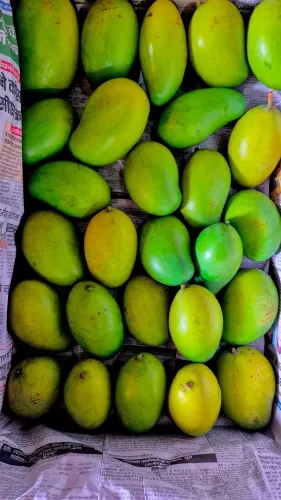
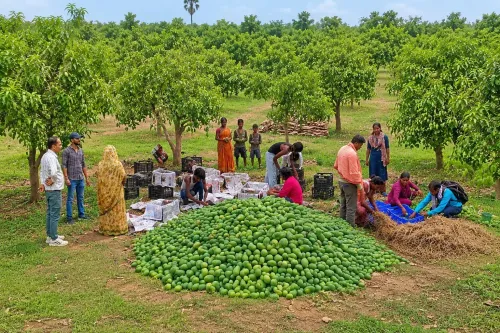
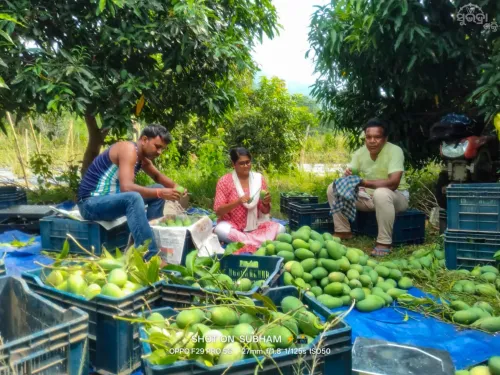
Goyal: Simdega Women Farmers to Export Amrapali Mangoes to UK
Synopsis
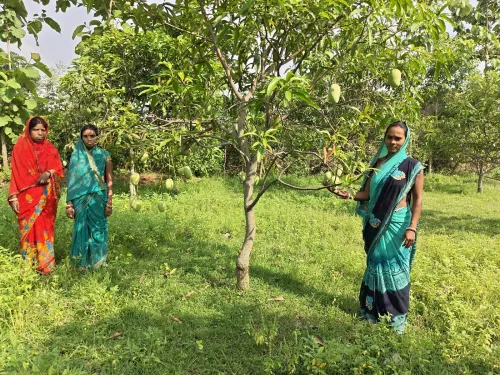
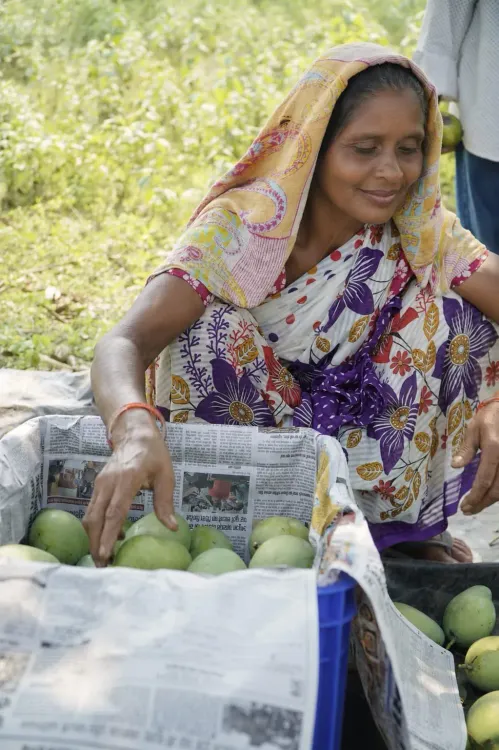
Women farmers from Simdega, Jharkhand, have cultivated Amrapali mangoes set to reach the United Kingdom, Commerce Minister Piyush Goyal announced on 6 June 2026, citing APEDA's role in delivering better prices and global market access for tribal agrarian communities.
Key Takeaways
Union Commerce Minister Piyush Goyal on 6 June 2026 highlighted a women farmer producer company from Simdega, Jharkhand exporting Amrapali mangoes to the United Kingdom .
APEDA facilitated the export, handling supply-chain linkages, quality standards, and market access for the women-led collective.
The development aligns with India's Agricultural Export Policy of 2018 , which targets agricultural shipments of USD 60 billion through cluster development and diversification.
The central scheme to build 10,000 Farmer Producer Organisations , launched in 2020 , underpins the collective model used by the Simdega women farmers.
The UK is a longstanding market for Indian mangoes, governed by phytosanitary protocols and seasonal trade windows.
Progress on the India-UK bilateral trade agreement could further ease market access for Indian horticultural exports.
Union Commerce and Industry Minister Piyush Goyal on Saturday, 6 June 2026 highlighted a women-led farmer producer company from Simdega, Jharkhand that has cultivated Amrapali mangoes now set to reach the United Kingdom, calling it a powerful example of 'Local Goes Global.'
Context
In his post on X, Goyal wrote: 'Local Goes Global ka sashakt udaharan' [A powerful example of Local Goes Global], drawing attention to the achievement of a women farmer producer company from Simdega in eastern Jharkhand. The minister credited the continuous efforts of APEDA — the Agricultural and Processed Food Products Export Development Authority — for facilitating the shipment, stating it is delivering 'better prices for farmers, a new identity for women, and fresh momentum for India's agricultural exports.'
Simdega is a predominantly tribal and agrarian district in Jharkhand where horticulture, including mango cultivation, forms a key part of the rural economy. The Amrapali variety, a hybrid mango developed in India, is prized for its consistent quality and shelf life — traits that make it suitable for long-haul export markets such as the United Kingdom.
Policy Backdrop
The development is rooted in two converging policy frameworks. India's Agricultural Export Policy of 2018 set an ambitious target of raising agricultural shipments to USD 60 billion through cluster development, value addition, and market diversification. A parallel central scheme launched in 2020 aims to establish 10,000 Farmer Producer Organisations (FPOs) across the country to improve collective bargaining and market access for small and marginal farmers.
APEDA, operating under the Ministry of Commerce and Industry, has been a central instrument in linking these farmer collectives — especially women-led ones in eastern India — directly to overseas buyers. The authority handles phytosanitary compliance, quality certification, and buyer facilitation that are prerequisites for accessing regulated markets like the UK.
Stakeholders and Impact
The beneficiaries of this shipment are the women members of the farmer producer company in Simdega, who gain both economic returns through better farm-gate prices and social recognition through participation in formal export supply chains. For the broader horticulture export ecosystem, it signals that tribal and agrarian districts in eastern India — historically underrepresented in export trade — can be integrated into global value chains.
The United Kingdom has been a longstanding destination for Indian mango exports, with established seasonal trade windows and phytosanitary protocols. Indian mango varieties including Alphonso and Amrapali enjoy demand among the South Asian diaspora and mainstream retail consumers in the UK.
What's Next
Attention will now turn to the progress of the India-UK bilateral trade agreement, which, if concluded, could ease tariff and regulatory barriers for Indian agricultural products including mangoes on a more permanent basis. Domestically, the scale-up of women-led FPOs in Jharkhand and neighbouring eastern states under the 10,000-FPO scheme will determine how replicable the Simdega model proves to be. The 2026 mango export season will serve as an early indicator of whether APEDA's supply-chain investments in the region can yield consistent, scalable results.
Point of View
Women's economic empowerment, and regional equity in eastern India. By spotlighting a tribal district rather than the traditional mango belts of Maharashtra or Uttar Pradesh, Goyal is signalling that the 'Local Goes Global' pitch extends beyond established export clusters. The post arrives at a moment when India-UK trade negotiations are ongoing, lending diplomatic subtext to what appears to be a routine agricultural milestone. If the Simdega model scales, it could become a template for integrating marginalised agrarian communities into formal global value chains — a test of whether policy intent translates into durable supply-chain infrastructure.
NationPress
20 Oct 2026
Frequently Asked Questions
Which mangoes from Jharkhand are being exported to the UK?
Amrapali mangoes grown by a women farmer producer company in Simdega district, Jharkhand are being exported to the United Kingdom, as highlighted by Commerce Minister Piyush Goyal on 6 June 2026.
What is APEDA and what role does it play in mango exports?
APEDA, the Agricultural and Processed Food Products Export Development Authority, is a statutory body under the Ministry of Commerce and Industry established in 1985. It facilitates agricultural exports by supporting supply-chain linkages, phytosanitary compliance, and market access for farmer collectives including FPOs.
What is a Farmer Producer Organisation (FPO) in India?
An FPO is a registered collective of farmers that enables small and marginal growers to pool resources, negotiate better prices, and access formal markets. A central government scheme launched in 2020 aims to establish 10,000 such FPOs across India.
What is India's Agricultural Export Policy target?
India's Agricultural Export Policy, announced in 2018, set a target of raising agricultural shipments to USD 60 billion through diversification, value addition, and the development of export clusters linked to farmer collectives.
Why is the India-UK trade deal relevant to mango exports?
An India-UK bilateral trade agreement, currently under negotiation, could reduce tariff and regulatory barriers for Indian agricultural products including mangoes, potentially expanding market access and volumes beyond what existing seasonal trade windows allow.