What Does India's Engagement with the Indo-Mediterranean and IMEC Route Mean?
Synopsis
The arrival of INSV Kaundinya in Muscat after an 18-day journey symbolizes India's rich maritime heritage and its strategic ties with the Indo-Mediterranean and IMEC route. This event highlights a blend of cultural history and contemporary diplomacy, marking a significant moment in maritime relations.
Key Takeaways
INSV Kaundinya revives ancient maritime heritage.
Significant cultural and symbolic dimensions to India's maritime engagement.
Convergence of political and maritime narratives in Muscat.
Historical depth enriches modern strategic choices.
Oman as a pivotal node in Indian Ocean networks.
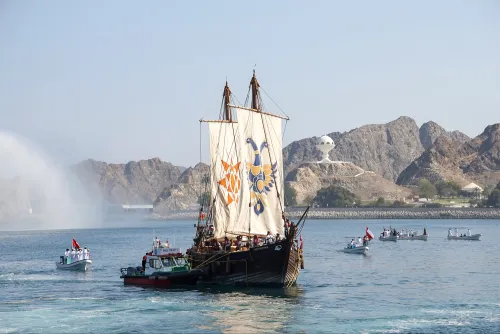
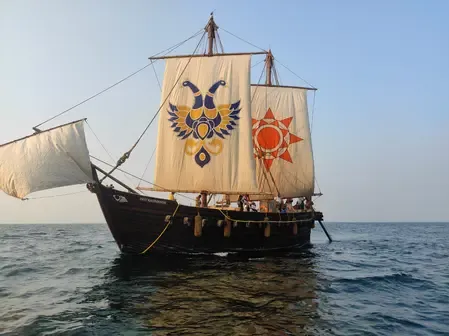
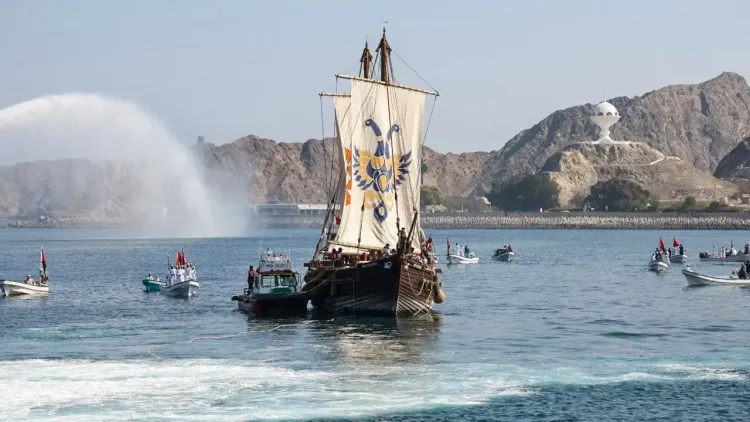
Rome, Feb 1 (NationPress) The arrival of the Indian Naval Sailing Vessel (INSV) Kaundinya in Muscat after an 18-day journey from Gujarat to Oman not only rekindles India's ancient maritime legacy but also carries significant cultural and symbolic weight in its interactions with the Indo-Mediterranean region and economic routes like the India–Middle East–Europe Economic Corridor (IMEC), according to a recent report.
During Italian Prime Minister Giorgia Meloni's official visit to Muscat, the Omani capital was simultaneously welcoming the INSV Kaundinya, marking a historic convergence of political and maritime significance. This meeting of two distinct yet intertwined journeys—one of governance and the other of seafaring—paints a narrative that connects historical memory with future strategy in the Indian Ocean, as highlighted by the Indo-Mediterranean Initiative CNKY.
The report emphasized that India’s involvement with the Indo-Mediterranean and routes like the IMEC extends beyond merely modern infrastructure or contemporary trade pathways. There is a profound cultural and symbolic significance that delves deep into ancient history, enriching current strategic decisions. The INSV Kaundinya represents not just a naval asset but a tangible revival of India's maritime heritage.
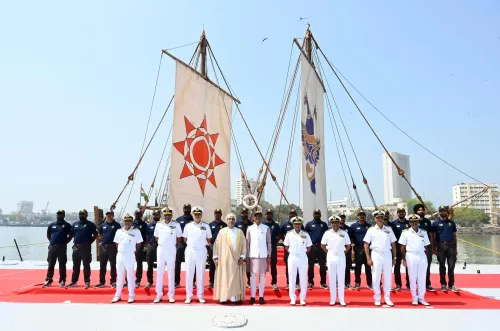
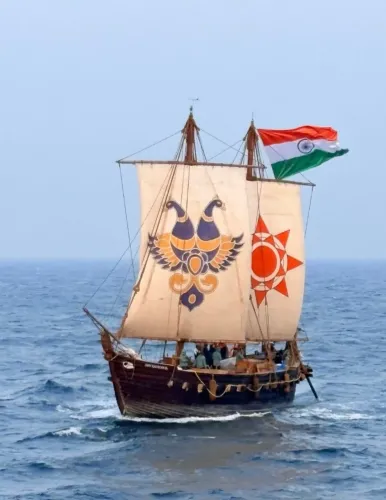
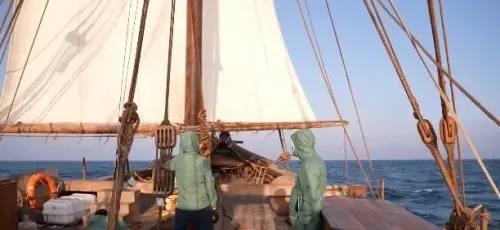
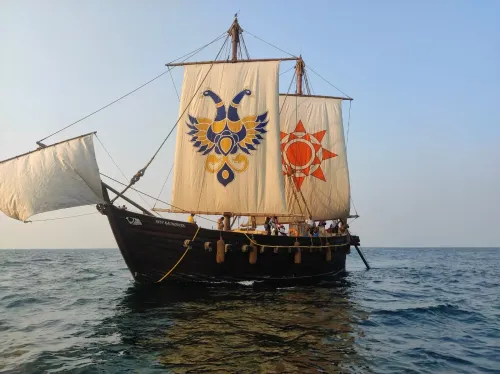
Crafted entirely using traditional stitched-plank methods and inspired by designs of ancient Indian vessels, the ship serves as a bridge connecting modern India to its pre-industrial maritime history. This initiative, spearheaded by economist and historian Sanjeev Sanyal, aims to revive awareness of India’s longstanding seafaring legacy. Unlike contemporary ships, the INSV Kaundinya was constructed without nails or metal fastenings. It was officially inducted into the Indian Navy at the Karwar naval base in Karnataka after its launch in February 2025.
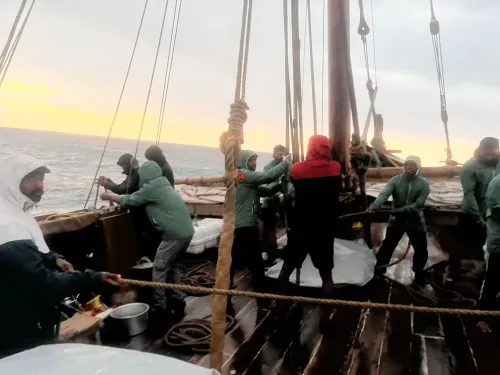
The Kaundinya's inaugural international journey commenced in December last year from Porbandar in Gujarat, following ancient trade routes to Muscat. Throughout the crossing of the Arabian Sea, Sanyal provided regular updates, sharing experiences of shifting winds and daily challenges. In one update, he noted the sighting of a modern aircraft carrier—a stark reminder of the coexistence of various layers of maritime power. The INSV Kaundinya was warmly welcomed in Muscat by local and diplomatic representatives. Historically, Oman has been a pivotal hub within Indian Ocean networks, continuing to serve as a crossroads for diplomacy, commerce, and maritime security.
The CNKY report stated, 'If the Kaundinya encapsulates India’s millennia-old maritime narrative, Meloni signifies Italy’s forward-looking approach.' As Italy's first female prime minister, she has repositioned Rome as a more assertive player in Europe and the broader Mediterranean, with an increasing focus on the Indo-Pacific. In Oman, India and Italy were symbolically united as complementary pillars of the Indo-Mediterranean—a region that has evolved from being merely geographic to becoming strategically vital.
'This convergence was not orchestrated, but rather a meaningful coincidence. In a time of heightened global instability, the Kaundinya’s journey serves as a reminder that the oceans—once conduits of exchange and connection—continue to shape global relations. The Indo-Mediterranean thus tells an ancient story that remains profoundly relevant today,' the report concluded.
Point of View
It is essential to recognize the significance of India's maritime heritage and its strategic engagement with the Indo-Mediterranean region. The arrival of INSV Kaundinya not only revives historical ties but also positions India as a key player in contemporary global maritime diplomacy. This event encapsulates the essence of India's rich cultural legacy while paving the way for future collaborations.
NationPress
24 Sept 2026
Frequently Asked Questions
What is INSV Kaundinya?
INSV Kaundinya is an Indian Naval Sailing Vessel that symbolizes India’s ancient maritime heritage and engages with modern maritime routes such as the IMEC.
What was the significance of its arrival in Muscat?
The arrival in Muscat represents a symbolic convergence of India’s maritime history with contemporary diplomatic efforts, particularly with Italy.
Who led the initiative to build INSV Kaundinya?
The initiative to build INSV Kaundinya was led by economist and historian Sanjeev Sanyal.
What techniques were used to construct the ship?
The ship was constructed using traditional stitched-plank techniques, reflecting ancient Indian shipbuilding practices.
What routes does the IMEC connect?
The India–Middle East–Europe Economic Corridor (IMEC) connects India with the Middle East and Europe, enhancing trade and economic relationships.