Is the INSV Kaundinya Celebrating India's Maritime Heritage as it Reaches One-Third of Its Voyage?
Synopsis
The INSV Kaundinya is on an extraordinary journey, celebrating India's rich maritime heritage as it sails from Porbandar to Muscat. With one-third of its voyage complete, this ancient stitched ship relies solely on wind and traditional techniques, highlighting our historical connections to the Gulf. Join us as we explore this magnificent expedition!
Key Takeaways
INSV Kaundinya is on its maiden voyage from Porbandar to Muscat .
It is a stitched ship built using ancient techniques.
The vessel relies solely on wind and sails for propulsion.
The voyage represents a revival of India's maritime heritage .
It retraces ancient trade routes that connected India with Oman and beyond.
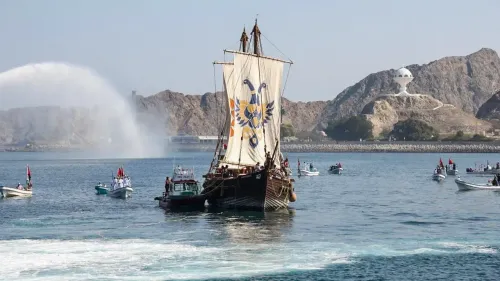
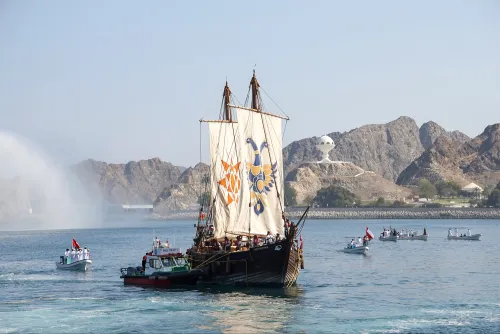
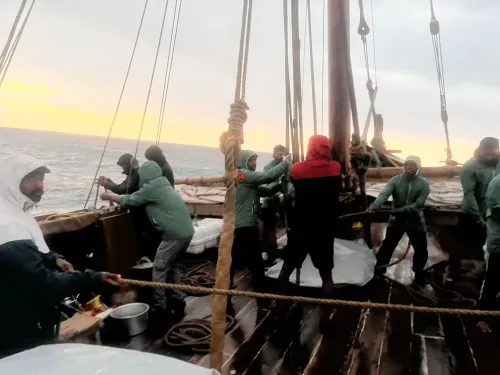
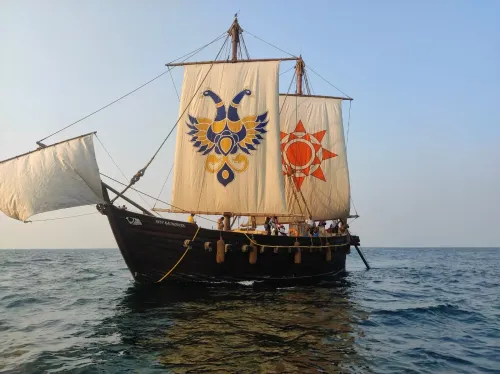
New Delhi, Jan 4 (NationPress) The Indian Navy's INSV Kaundinya, which set sail on its inaugural journey from Porbandar in Gujarat to Muscat in Oman, is navigating confidently through the vast ocean and is reported to have covered approximately one-third of its total distance.
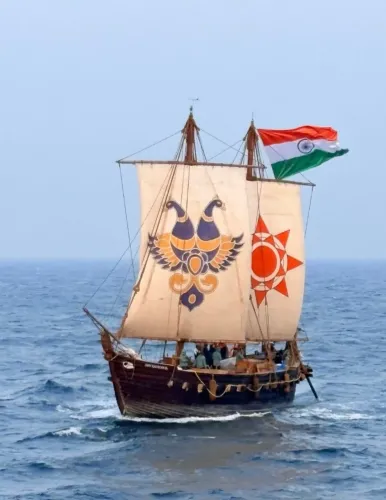
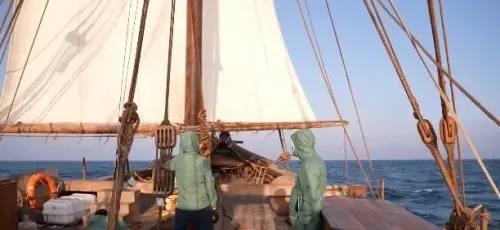
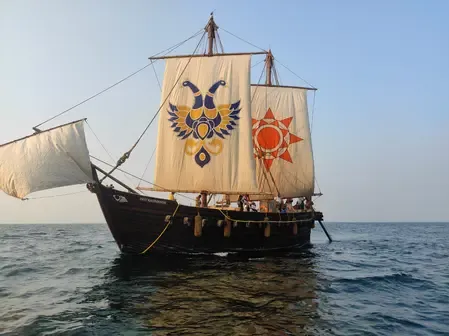
In contrast to contemporary ships, the INSV Kaundinya is a 'stitched' vessel, lacking an engine, metal nails, and modern propulsion systems.
This remarkable ship relies solely on the wind, sails, and a traditional shipbuilding technique that dates back to the fifth century.
Providing updates on this unique journey, Sanjeev Sanyal, a member of Prime Minister Modi's Economic Advisory Council, noted, "The seas are calm and the northeastern wind is favorable. We had a good sail last night. I was able to catch some sleep once the rolling subsided. Today, we expect to cross one-third of the distance, hoping the incoming westerly winds remain gentle and do not push us off course again."
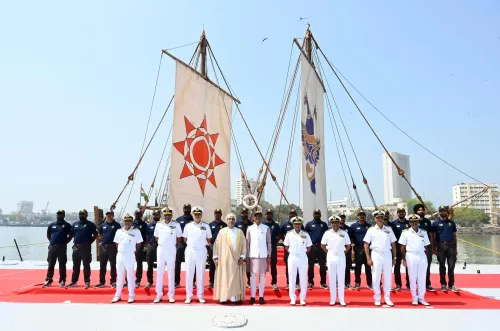
When the Kaundinya began its voyage about a week ago, Prime Minister Narendra Modi lauded the designers, artisans, shipbuilders, and the Indian Navy for their unwavering dedication in bringing this project to fruition.
The Prime Minister expressed his best wishes for the crew via the social media platform X, saying, "I wish the crew a safe and unforgettable journey as they retrace our historical connections with the Gulf region and beyond."
He added, "It's wonderful to see the INSV Kaundinya embarking on her maiden voyage from Porbandar to Muscat, Oman. Constructed using the ancient Indian stitched-ship method, this vessel showcases India's rich maritime heritage."
This historic journey represents a significant milestone in India's ongoing efforts to rediscover, appreciate, and celebrate its ancient maritime legacy through an active ocean expedition.
Notably, the maritime route connecting India to Oman and Southeast Asia once served as a vital trade corridor, utilized by Indian sailors and merchants to exchange spices, textiles, and ideas with regions in West Asia, Africa, and Southeast Asia.
By retracing these sea lanes, the INSV Kaundinya is reawakening India's ancient maritime pathways.
Point of View
I see the INSV Kaundinya's voyage as a pivotal moment in celebrating India's maritime legacy. This expedition not only showcases our rich history but also emphasizes the importance of preserving traditional shipbuilding techniques. By retracing ancient trade routes, we reconnect with our past and reinforce our cultural identity.
NationPress
7 Oct 2026
Frequently Asked Questions
What is the significance of the INSV Kaundinya's voyage?
The INSV Kaundinya's voyage is significant as it celebrates India's rich maritime heritage and revives ancient trade routes that were once vital for commerce and cultural exchange.
How is the INSV Kaundinya constructed?
The INSV Kaundinya is constructed using a traditional 'stitched' shipbuilding technique that dates back to the fifth century, relying solely on wind and sails for propulsion.
Who is overseeing the expedition?
The expedition is being overseen by members of the Indian Navy, with updates shared by Sanjeev Sanyal, a member of Prime Minister Modi's Economic Advisory Council.
What route is the INSV Kaundinya taking?
The INSV Kaundinya is taking the historical maritime route from Porbandar in Gujarat to Muscat in Oman.
Why is this voyage important for India?
This voyage is important for India as it highlights the country's maritime traditions, fosters a sense of cultural identity, and promotes awareness of its ancient maritime trade history.