How Will India Strengthen Self-Reliance in Rare Earth Manufacturing?
Synopsis
India's new initiative to enhance the manufacturing of Rare Earth Permanent Magnets aims to reduce import dependency and bolster the economy. With a significant financial investment and ambitious production goals, this scheme seeks to position India as a leader in advanced materials manufacturing.
Key Takeaways
Scheme aims to boost manufacturing of Rare Earth Permanent Magnets.
Financial outlay of Rs 7,280 crore.
Target capacity of 6,000 MTPA .
Partnerships with mineral-rich countries .
Supports Atmanirbhar Bharat vision.
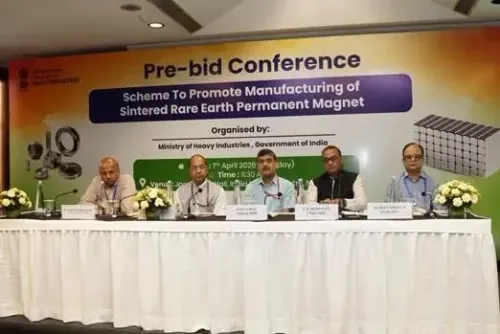
New Delhi, Dec 27 (NationPress) The initiative aimed at boosting the production of sintered Rare Earth Permanent Magnets (REPM) is designed to improve India’s role in the international advanced-materials supply chains while simultaneously decreasing reliance on imports, according to a government announcement made on Saturday.
This scheme, with a financial commitment of Rs 7,280 crore, aspires to foster sustained industrial development by developing a capacity of 6,000 metric tonnes per annum for integrated REPM production, encompassing the entire process from rare-earth oxides to completed magnets, as stated in an official release.
The proposal is structured to boost competitiveness, attract technology-driven investments, and facilitate long-term scalability, all while aiding in energy transition objectives and aligning with India’s Net Zero 2070 vision.
By cultivating domestic capabilities and fortifying downstream connections, this government initiative aims to create jobs, enhance industrial capacity, and support the vision of Atmanirbhar Bharat.
The scheme will allocate a total of 6,000 MTPA of domestic manufacturing capacity among five beneficiaries via global competitive bidding, with each being eligible for up to 1,200 MTPA.
It includes Rs 6,450 crore in sales-linked incentives over five years and a Rs 750 crore capital subsidy, to be executed over seven years with a two-year gestation period, followed by five years of incentive payments, as confirmed by the government.
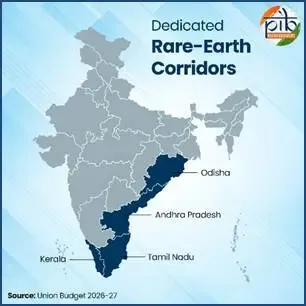
Additionally, the Ministry of Mines has established bilateral agreements with mineral-abundant countries like Australia, Argentina, Zambia, Peru, Zimbabwe, and Mozambique. India also engages in multilateral frameworks such as the Minerals Security Partnership (MSP) and the Indo-Pacific Economic Framework (IPEF) to develop resilient critical minerals supply chains.
Official statistics revealed that India heavily relied on China for permanent magnet imports during the period from 2022–23 to 2024–25, with import dependence varying between 59.6 percent and 81.3 percent in value terms and 84.8 percent to 90.4 percent in quantity.
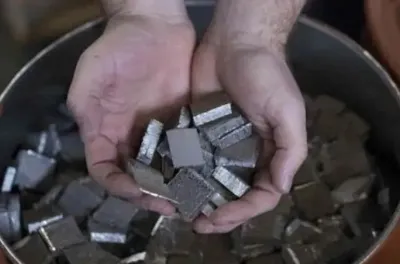
REPMs are essential for the operation of electric vehicle motors, wind turbine generators, consumer and industrial electronics, aerospace and defense systems, and precision sensors.
aar/na
Point of View
This initiative reflects India's significant commitment to self-reliance and economic resilience. The focus on advanced materials manufacturing aligns with global trends and sustainability goals, demonstrating a proactive approach to reducing import dependencies while fostering local industries.
NationPress
3 Oct 2026
Frequently Asked Questions
What is the goal of the Rare Earth manufacturing scheme?
The scheme aims to boost India's manufacturing of Rare Earth Permanent Magnets to reduce import dependence and enhance participation in global advanced-materials value chains.
What is the financial outlay for this scheme?
The scheme has a financial commitment of Rs 7,280 crore.
How much manufacturing capacity is expected to be established?
The scheme aims to establish a manufacturing capacity of 6,000 metric tonnes per annum.
Which countries has India partnered with for mineral resources?
India has entered into bilateral agreements with countries including Australia, Argentina, Zambia, Peru, Zimbabwe, and Mozambique.
What industries will benefit from REPMs?
REPMs are essential for electric vehicles, wind turbines, consumer electronics, aerospace, defense systems, and precision sensors.