Is India Ready for the High Seas Treaty Set for 2026 Enforcement?
Synopsis
India is taking significant steps towards ratifying the High Seas Treaty, a groundbreaking agreement aimed at protecting marine biodiversity. With the treaty set to take effect on January 17, 2026, stakeholders are assessing readiness and implications for fisheries and ocean governance.
Key Takeaways
India is developing a framework for the High Seas Treaty.
The treaty aims to protect marine biodiversity.
It will come into force on January 17, 2026.
76 countries have ratified the agreement.
Consultations are assessing India's readiness for implementation.
Kochi Dec 12 (NationPress) India has initiated the development of a national framework to facilitate the ratification and future execution of the High Seas Treaty, a pivotal global accord scheduled to take effect on January 17, 2026.
The Agreement on the Conservation and Sustainable Use of Marine Biological Diversity of Areas Beyond National Jurisdiction (BBNJ Agreement), which was adopted in March 2023 under UNCLOS (the United Nations Convention on the Law of the Sea), is recognized as a landmark achievement in the quest to safeguard marine biodiversity in international waters.
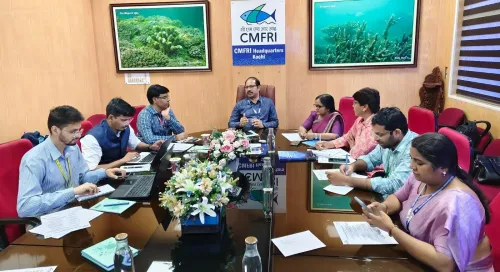
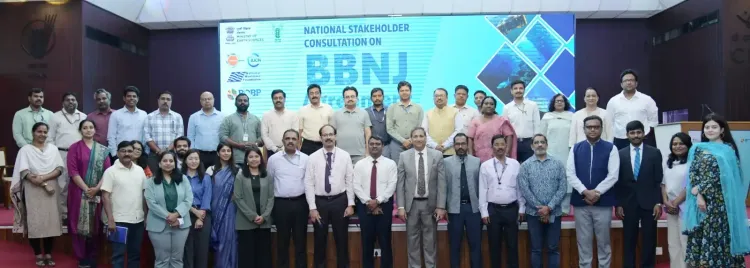
During a national stakeholder consultation convened in Kochi on Friday, the Ministry of Earth Sciences (MoES), in collaboration with the ICAR–Central Marine Fisheries Research Institute (CMFRI), the Centre for Marine Living Resources and Ecology (CMLRE), and numerous domestic and international partners, assessed India's preparedness to implement the Treaty.
India stands among the 145 signatories, with 76 countries having ratified the agreement to date.
The meeting united policymakers, legal experts, scientists, and representatives from the fisheries sector and maritime stakeholders to evaluate the scientific, legal, and institutional necessities for compliance.
Participants concurred that the Treaty’s enforcement represents a critical juncture in global ocean governance, holding the potential to ensure fair access to high-seas resources and bolster conservation efforts amid escalating challenges posed by climate change, overfishing, and pollution.
Senior advocate Sanjay Upadhyay, who inaugurated the consultation, pointed out that the BBNJ Agreement presents both India and other coastal nations with a strategic opportunity to address longstanding governance deficiencies in areas beyond national jurisdiction.
He highlighted intricate issues such as ownership of marine genetic resources and environmental accountability, asserting that the Treaty offers a structured approach to navigate these complexities while safeguarding national interests.
Bay of Bengal Programme Inter-Governmental Organisation (BOBP-IGO) Director, Dr. P. Krishnan, underscored India’s robust scientific and technological capabilities in ocean research.
He urged the scientific community to enhance its involvement in ocean governance and high-seas management, labeling the treaty as an opportunity to “integrate science, policy, and law.”
CMFRI Director Dr. Grinson George remarked that the Agreement has direct implications for India's fisheries, as ecological shifts in the high seas can influence fish availability within the nation’s Exclusive Economic Zone.
Even with India's emphasis on nearshore and small-scale fisheries, he noted that activities in international waters significantly impact resource distribution closer to shore.
The recommendations from this consultation will be compiled to shape India’s domestic strategy ahead of the upcoming Conference of the Parties scheduled for August 2026.
Point of View
India's proactive measures in preparing for the High Seas Treaty underscore its commitment to sustainable ocean governance. This initiative not only addresses ecological concerns but also positions India favorably in the global discourse on marine biodiversity conservation.
NationPress
25 Sept 2026
Frequently Asked Questions
What is the High Seas Treaty?
The High Seas Treaty, or BBNJ Agreement, is a global accord aimed at the conservation and sustainable use of marine biological diversity in areas beyond national jurisdiction, set to be enforced on January 17, 2026.
How many countries have ratified the treaty?
As of now, 76 out of the 145 signatories have ratified the High Seas Treaty.
What are the implications of the treaty for India?
The treaty offers India an opportunity to address governance gaps in marine resource management, impacting fisheries and environmental accountability.
What are the key discussions taking place during consultations?
Discussions are focused on assessing scientific, legal, and institutional requirements for compliance with the treaty.
When is the next Conference of the Parties scheduled?
The next Conference of the Parties is scheduled for August 2026.