Is India Pioneering a New Era in Clean Energy with the SHANTI Bill?

Synopsis
Discover how India's SHANTI Bill is set to redefine the clean-energy landscape, promoting self-reliance and innovation in nuclear energy. This legislation is not just a milestone; it marks a pivotal movement towards sustainable growth, investment, and advanced technologies, positioning India as a leader in the global energy sector.
Key Takeaways
The SHANTI Bill marks a significant shift in India's clean energy strategy.
It encourages private sector involvement in the nuclear energy sector.
Supports self-reliance in nuclear capacity by 2047.
Enhances energy resilience and security for industries.
Aligns with global best practices in nuclear governance.
New Delhi, Dec 19 (NationPress) India has embarked on a bold and determined journey into the clean-energy arena with the recent approval of the Sustainable Harnessing and Advancement of Nuclear Energy for Transforming India bill (SHANTI Bill) by both houses of Parliament, stated Pralhad Joshi, Union Minister for New and Renewable Energy, on Friday.
The minister emphasized that this initiative marks a significant transformation in the nation's energy and technology landscape.
"India is crafting a bold clean-energy strategy with the SHANTI Bill, indicating a clear shift in our energy and technology framework," Joshi expressed on the X social media platform.
"By establishing a comprehensive, modern regulatory structure and facilitating private involvement in nuclear energy, the Bill enhances our long-term energy resilience and security," he added.
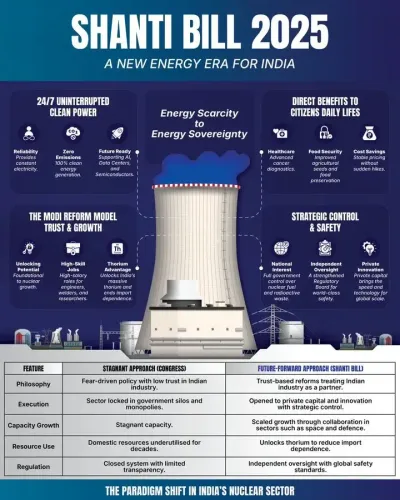
Describing the bill as a transformative force for various sectors, he mentioned that it guarantees stable, clean energy for industries that are energy-intensive and prepared for the future, fosters advanced manufacturing and emerging technologies such as AI, and accelerates the deployment of clean energy—unlocking fresh avenues for industry, investment, and a skilled workforce while strengthening India’s sustainable development and global competitiveness.
The SHANTI Bill, 2025, which has successfully passed through both the Lok Sabha and the Rajya Sabha, aims to achieve self-sufficiency in the nuclear sector and fulfill India’s clean energy objectives by 2047.
This proposed legislation seeks to establish an environment conducive to clean, dependable energy while upholding the enduring commitment to the peaceful application of atomic energy.
It also reflects India’s dedication to adhering to global best practices in nuclear governance.
The Bill permits responsible participation from private entities and joint ventures to address resource limitations, reduce gestation periods, and support the national goal of achieving 100 GW of nuclear capacity by 2047, without compromising national security or public welfare.
This legislation consolidates and streamlines provisions from the Atomic Energy Act of 1962 and the Civil Liability for Nuclear Damage (CLND) Act, while now granting statutory recognition to the Atomic Energy Regulatory Board, integrating it into the foundational legislation.
The Bill opens the nuclear industry to privatization, a strategic move aimed at attaining self-reliance and fulfilling India’s 2047 clean energy aspirations. This follows the successful privatization of the space sector, which experienced notable expansion.
The new Bill will engage private partners under specified conditions for exploration activities. However, uranium mining beyond certain thresholds will remain exclusively under government control.
Point of View
The SHANTI Bill reflects India's proactive approach to clean energy. It not only aims for self-reliance in the nuclear sector but also signifies a commitment to sustainable growth and global competitiveness. As India charts this new course, the balance between private sector involvement and public safety remains crucial.
NationPress
19 Sept 2026
Frequently Asked Questions
What is the SHANTI Bill?
The SHANTI Bill, or Sustainable Harnessing and Advancement of Nuclear Energy for Transforming India Bill, is a legislation aimed at advancing India's nuclear energy sector while ensuring clean and reliable energy for various industries.
How does the SHANTI Bill impact private sector participation?
The SHANTI Bill introduces a modern regulatory framework that encourages responsible private investment and joint ventures in the nuclear energy sector, promoting growth and innovation.
What are the key goals of the SHANTI Bill?
Key goals include achieving self-reliance in the nuclear sector, meeting India's clean energy targets by 2047, and enhancing long-term energy resilience and security.
How does the SHANTI Bill align with global practices?
The Bill reflects India's commitment to global best practices in nuclear governance, ensuring that the use of atomic energy remains peaceful and responsible.
What is the significance of the SHANTI Bill for industries?
The Bill is expected to provide reliable, clean power to energy-intensive industries and support advanced manufacturing and emerging technologies, thereby unlocking new opportunities for growth.