Is India Among the Top 5 for Private Infrastructure Investment?
Synopsis
India's ranking as a top 5 nation for private infrastructure investment by the World Bank underscores its commitment to growth. The Economic Survey reveals significant increases in public capital expenditure, diverse financing methods, and ongoing advancements in transportation and energy sectors. Discover how these developments are shaping India's economic landscape.
Key Takeaways
India ranked among top 5 for private infrastructure investment.
Public capital expenditure has increased nearly 4.2 times since FY18.
Infrastructure financing diversifying beyond bank credit.
National Highway network expanded by 60% .
Renewable energy capacity over 253.96 GW by Nov 2025.
New Delhi, Jan 29 (NationPress) The World Bank has placed India in the top 5 nations worldwide for private investment in infrastructure within the realm of low- and middle-income economies. Infrastructure remains pivotal to India's developmental agenda, as indicated by the Economic Survey 2025-26, highlighting a consistent rise in public capital expenditure since FY15.
The Survey attributes this progress to the establishment of multimodal planning via PM GatiShakti, alongside the National Logistics Policy and digital platforms that have effectively lowered transaction costs and execution risks.
Capital expenditure has surged nearly 4.2 times, jumping from Rs 2.63 lakh crore in FY18 to Rs 11.21 lakh crore in FY26 (BE). The effective capital expenditure for FY26 (BE) is projected at Rs 15.48 lakh crore, reinforcing infrastructure's role as a vital growth catalyst, acknowledging the significant multiplier effects it creates within the economy.
Furthermore, India's infrastructure financing is evolving, diversifying away from traditional bank loans, with NBFC credit to the commercial sector experiencing a robust CAGR of 43.3% during FY20–FY25.
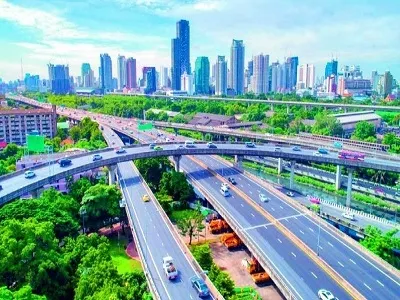
The National Highway network has expanded by approximately 60%, growing from 91,287 kms in FY14 to 1,46,572 kms in FY26 (up to December).
Operational High-Speed Corridors have seen a dramatic rise, increasing nearly 10-fold from 550 kms in FY14 to 5,364 km in FY26 (up to December).
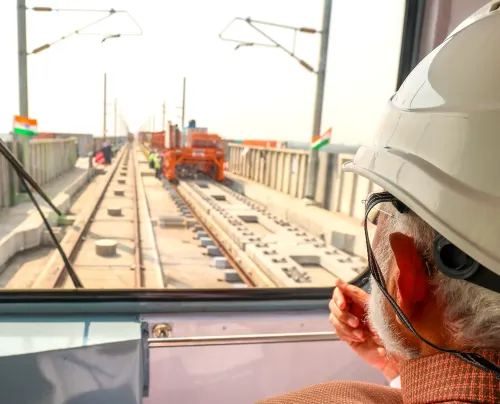
Additionally, the rail network reached 69,439 route km (as of March 2025), with a target of adding 3,500 km in FY26, achieving an impressive 99.1% electrification rate by October 2025.
Key initiatives include Economic Railway Corridors, Mumbai-Ahmedabad High Speed Rail, Dedicated Freight Corridors, Station Redevelopment, and track upgrades.
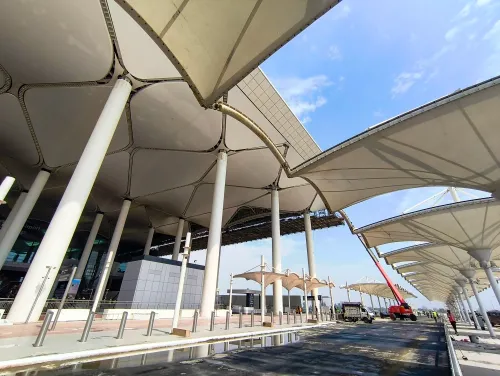
In aviation, the number of airports has increased from 74 in 2014 to 164 in 2025.
Domestic airports handled 412 million passengers last fiscal, with projections to rise to 665 million by FY31.
Moreover, air cargo volume escalated from 2.53 MMT in FY15 to 3.72 MMT in FY25, according to the Survey.
Thanks to initiatives like Maritime India Vision 2030 and Maritime Amrit Kaal Vision 2047, Indian ports have achieved nearly global standards in average container vessel turnaround time, with seven ports now ranking among the top 100 in the World Bank’s Container Port Performance Index 2024.
As of November 2025, 32 National Waterways are operational, covering 5,155 kms, with cargo operations on 29 NWs, cruise operations on 15 NWs, and passenger services on 23 NWs. The shipbuilding sector received Rs 69,725 crore in September 2025 to enhance the country’s shipbuilding and maritime ecosystem.
Importantly, the power sector has seen consistent capacity growth, with installed capacity rising 11.6% (YoY) to 509.74 GW as of November 2025. Renewable energy now accounts for approximately 49.83% of total power generation capacity, positioning India as third globally in overall RE and installed solar capacity, and fourth in installed wind capacity.
The Survey indicates that total renewable energy capacity has more than tripled over the past decade, soaring from 76.38 GW in March 2014 to 253.96 GW by November 2025.
Point of View
I affirm that India's position among the top 5 nations for private infrastructure investment signifies a pivotal shift in its economic landscape. This recognition highlights our commitment to sustainable growth through infrastructure development, a crucial driver for enhancing overall economic stability and social welfare. We must continue to support and innovate in this sector to maintain our competitive edge globally.
NationPress
20 Sept 2026
Frequently Asked Questions
What does the World Bank's ranking signify for India?
The World Bank's ranking indicates India's growing attractiveness for private investments in infrastructure, reflecting confidence in its economic policies and growth potential.
How has India's capital expenditure changed over the years?
India's capital expenditure has increased significantly, nearly 4.2 times from Rs 2.63 lakh crore in FY18 to Rs 11.21 lakh crore in FY26.
What are some key initiatives in India's infrastructure development?
Key initiatives include PM GatiShakti, Economic Railway Corridors, and the Mumbai-Ahmedabad High Speed Rail project, among others.
How is renewable energy contributing to India's infrastructure?
Renewable energy now constitutes around 49.83% of India's total power generation capacity, significantly enhancing its infrastructure capabilities.
What improvements have been made in India's transportation sector?
India has seen substantial growth in its National Highway network and operational High-Speed Corridors, along with an increase in airport numbers and passenger handling.