India's villages 99.92% banked: 58.77 crore Jan Dhan accounts open
Synopsis
India has brought banking within 5 km of virtually every inhabited village — 99.92% coverage — backed by 17.36 lakh Business Correspondents and 58.77 crore Jan Dhan accounts holding ₹3,12,414 crore. The milestone marks a structural shift in rural finance, but converting account access into active credit use remains the harder task ahead.
Key Takeaways
99.92% of India's inhabited villages — 6,00,868 out of 6,01,328 — now have a banking outlet within 5 km , as of data on the Jan Dhan Darshak App .
The network comprises over 1.81 lakh bank branches , 17.36 lakh Business Correspondents , and 1.65 lakh IPPB centres (as of 17 July 2026 ).
Total PMJDY accounts stand at 58.77 crore , with a combined deposit balance of ₹3,12,414 crore .
The RBI mandates that at least 25% of new bank branches open in unbanked rural areas.
The Kisan Rin Portal , launched in September 2023 , enables Aadhaar-based credit verification for Kisan Credit Card borrowers.
The India Digital Payment Intelligence Corporation (IDPIC) uses AI and machine learning to share real-time fraud alerts with banks.
India has achieved near-universal banking access, with 99.92 per cent of inhabited villages — 6,00,868 out of 6,01,328 — now covered by a banking outlet within a 5-kilometre radius, the Lok Sabha was informed on Monday, 3 August 2026. The figure, drawn from data uploaded by banks on the Jan Dhan Darshak (JDD) App, counts branches, Business Correspondents, and India Post Payments Bank (IPPB) centres as qualifying outlets.
Scale of the Banking Infrastructure
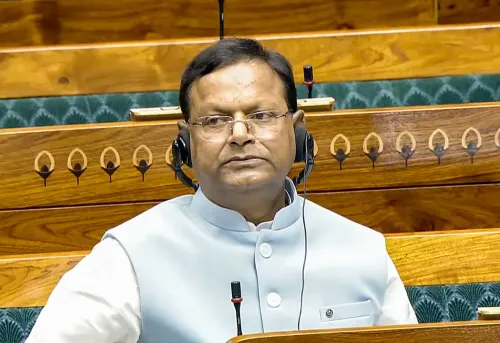
The coverage rests on a network of over 1.81 lakh bank branches, 17.36 lakh Business Correspondents (BCs), and 1.65 lakh IPPB centres, as of 17 July 2026. Collectively, these form one of the largest last-mile financial delivery systems in the world. Minister of State for Finance Pankaj Chaudhary disclosed the figures in a written reply to a parliamentary question.
Under the Pradhan Mantri Jan-Dhan Yojana (PMJDY), a total of 58.77 crore accounts are now active across the country, holding a combined balance of ₹3,12,414 crore. The programme, launched in 2014, was designed to bring the unbanked population into the formal financial system.
Regulatory Push for Rural Branch Expansion
The Reserve Bank of India (RBI) has permitted commercial banks, small finance banks, payments banks, local area banks, and regional rural banks to open branches anywhere in India without prior approval — on the condition that at least 25 per cent of new branches are located in unbanked rural areas. This policy has been a key driver of the geographic spread seen in recent years.
Digital Credit and Agriculture Loan Reforms
Alongside physical access, the government has rolled out a suite of digital tools to improve agricultural credit delivery. The Jan Samarth Portal serves as a one-stop platform linking government-sponsored loan and subsidy schemes, enabling digital evaluation and faster loan sanctions. NABARD's e-KYC application and the KRISHIKA platform developed by the Department of Agriculture and Farmers Welfare further support beneficiary identification and loan processing.
The Kisan Rin Portal (KRP), launched in September 2023 by the Department of Agriculture and Farmers Welfare, enables Aadhaar-based beneficiary verification and faster digital claim settlements under the Modified Interest Subvention Scheme (MISS) for loans availed through the Kisan Credit Card (KCC).
Cybersecurity and Fraud Prevention Measures
With digital payments expanding rapidly, the government and the RBI have introduced several safeguards. The India Digital Payment Intelligence Corporation (IDPIC) has been set up — in consultation with the RBI — to share real-time fraud intelligence with banks and financial institutions using Artificial Intelligence (AI), Machine Learning, and Big Data Analytics.
The RBI issued Master Directions on Digital Payment Security Controls in February 2021, mandating a common minimum security standard across internet banking, mobile banking, and card payment channels. Additionally, the RBI has deployed an AI-based tool called 'MuleHunter' to identify money mules, and has advised banks and financial institutions to adopt it.
The Indian Cyber Crime Coordination Centre (I4C), operating under the Ministry of Home Affairs (MHA), actively monitors digital lending apps. Citizens can report cyber incidents — including fake and illegal loan apps — through the National Cybercrime Reporting Portal or by calling the helpline number 1930.
As banking infrastructure deepens and digital layers multiply, the government's next challenge will be converting account ownership into active, sustained financial participation — particularly among rural women and marginal farmers.
Point of View
But the metric counts proximity to an outlet — not the quality or frequency of use. With 58.77 crore PMJDY accounts holding an average balance of roughly ₹5,300, the question of dormancy and thin credit uptake in rural India remains unanswered. Business Correspondents, who carry the bulk of last-mile delivery, operate under thin margins and high attrition — a structural fragility the headline number obscures. Financial inclusion's next frontier is not a branch within 5 km; it is a loan processed, a claim settled, and a fraud prevented.
NationPress
18 Sept 2026
Frequently Asked Questions
What does India's 99.92% village banking coverage mean?
It means that 6,00,868 of India's 6,01,328 inhabited villages have at least one banking outlet — a bank branch, Business Correspondent, or India Post Payments Bank centre — within a 5-kilometre radius, according to data on the Jan Dhan Darshak App presented to Parliament on 3 August 2026.
How many Jan Dhan accounts are open in India in 2026?
As of the latest parliamentary disclosure, there are 58.77 crore Pradhan Mantri Jan-Dhan Yojana (PMJDY) accounts in India, holding a combined balance of ₹3,12,414 crore.
What is the Jan Dhan Darshak App?
The Jan Dhan Darshak (JDD) App is a digital platform on which banks upload data about banking outlets across India. It allows citizens and officials to locate the nearest banking touchpoint and is used by the government to track financial inclusion progress.
What is the Kisan Rin Portal and who does it help?
The Kisan Rin Portal (KRP), launched in September 2023 by the Department of Agriculture and Farmers Welfare, enables Aadhaar-based beneficiary verification and faster digital claim settlements under the Modified Interest Subvention Scheme (MISS) for farmers availing loans through the Kisan Credit Card (KCC).
How is India protecting citizens from digital payment fraud?
The government has set up the India Digital Payment Intelligence Corporation (IDPIC) to share real-time fraud alerts with banks using AI and machine learning. The RBI's MuleHunter tool identifies money mules, while the National Cybercrime Helpline '1930' and the cybercrime portal allow citizens to report fraud and illegal loan apps.