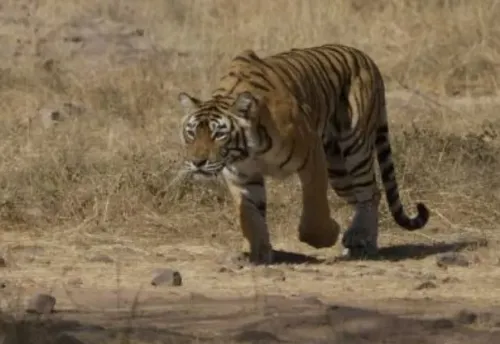
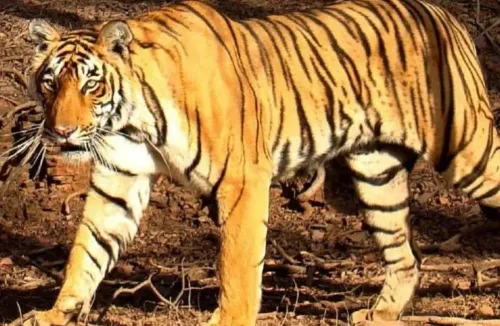
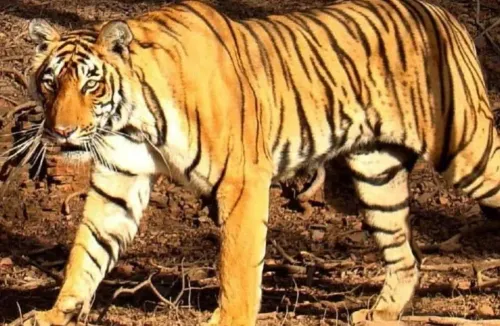
Injured tigress captured near Chamarajanagar after days of fear in villages
Synopsis
A drone-guided overnight operation by Karnataka's Forest Department ended days of terror in Chamarajanagar's Maddur village when a 12-year-old, reportedly injured tigress was safely captured. Coming alongside a first tiger sighting near Hampi in nearly 50 years, the incidents signal that Karnataka's expanding tiger population is pushing deeper into human-use landscapes — a conservation win with a community-safety price tag.
Key Takeaways
A 12-year-old tigress was captured near Maddur, Chamarajanagar on 26 August after straying into residential and agricultural areas for several days.
The animal reportedly has a chest injury , possibly from a fight with another tiger, which may have driven it toward human settlements.
A drone camera was used to track the tigress before a prolonged overnight operation secured her safely.
A detailed medical examination will determine whether the tigress is treated, rehabilitated, or released.
Separately, a tiger was recorded near Hampi's Kishkinda Hills, Koppal district — the first confirmed sighting in the region in nearly five decades , reportedly linked to the Shrishailam wildlife corridor in Andhra Pradesh.
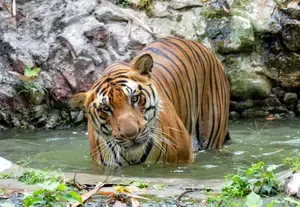
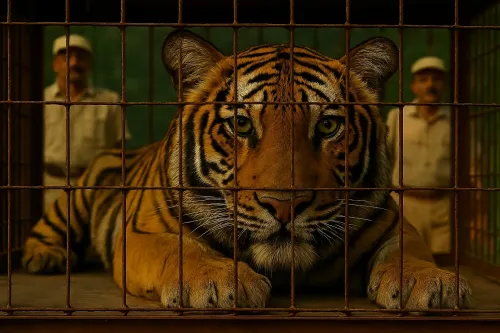
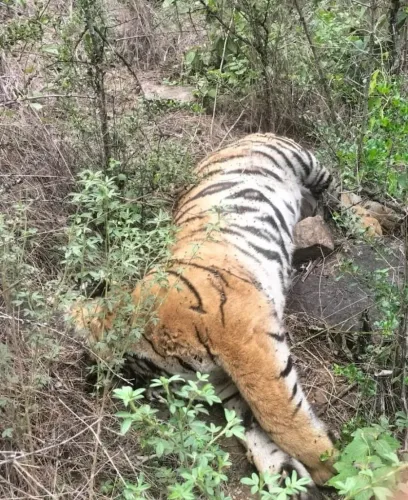
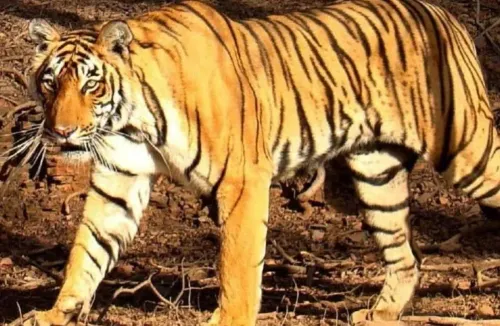
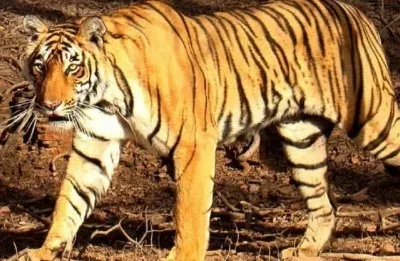
A 12-year-old tigress was safely captured by the Karnataka Forest Department near Maddur in Chamarajanagar district on 26 August, ending several days of fear among residents after the big cat repeatedly wandered close to human habitation and agricultural fields. Officials suspect the animal sustained a chest injury, possibly from a fight with another tiger, which may have prevented it from returning to the forest.
How the Capture Unfolded
The operation was set in motion when Rajendra, a youth from Maddur village in Gundlupet taluk, spotted the tigress just a few metres away while working in his agricultural field on Tuesday. Alarmed, he fled to safety unhurt and immediately alerted villagers, who in turn notified the Bandipur Forest Department.
A forest team swiftly deployed to the area and used a drone camera to track the tigress's movements and pinpoint her location. A prolonged overnight operation followed, culminating in the animal's safe capture without harm to either the tigress or personnel.
Condition and Next Steps
Officials are expected to conduct a detailed medical examination focusing on the chest injury. A decision on treatment, rehabilitation, or release will be taken based on the animal's health assessment. The injury is believed to have been sustained during an intra-species conflict, a pattern that wildlife experts say can push tigers into fringe habitats as they lose competitive ground within their territory.
Days of Anxiety for Local Communities
The tigress had been moving around Maddur Colony and surrounding residential areas for several days before the capture, causing considerable distress among farmers and daily labourers working in the fields. Villagers had been on edge, and the successful capture brought visible relief to the community. This incident underscores the growing frequency of human-wildlife contact in the buffer zones adjoining Bandipur Tiger Reserve, one of India's most significant tiger habitats.
Rare Tiger Sighting Near Hampi Adds to the Picture
Separately, for the first time in nearly five decades, a tiger has been recorded in forests near Hampi in Koppal district, with camera traps at Kishkinda Hills capturing the movement. The last confirmed tiger presence in that region dates to the 1970s. Experts believe the animal may have migrated from the Shrishailam wildlife corridor in Andhra Pradesh and could have been resident in the Kishkinda Hills for several months. Residents in that area have been advised to avoid venturing into the forest alone and to refrain from sleeping outdoors at night.
Together, the two developments reflect a broader dynamic: Karnataka's tiger population is expanding its range, bringing both conservation milestones and fresh challenges for communities living on the forest edge.
Point of View
But the real gap remains: there is no fast-response protocol for the days-long anxiety villagers endured before capture. The Hampi sighting, meanwhile, is a conservation landmark that deserves more attention — a tiger reclaiming a corridor after 50 years is a rare ecological signal, and the absence of a clear community advisory framework there is a vulnerability officials should address before the novelty turns into conflict.
NationPress
10 Oct 2026
Frequently Asked Questions
Where and when was the tigress captured in Karnataka?
The 12-year-old tigress was captured near Maddur in Chamarajanagar district, Karnataka, on 26 August. The Forest Department conducted a prolonged overnight operation using a drone camera to track and safely secure the animal after it had been moving near residential areas and agricultural fields for several days.
Why did the tigress wander into human-inhabited areas?
Forest officials suspect the tigress sustained a chest injury, possibly during a fight with another tiger, which may have prevented her from returning to the forest. Injured big cats often move toward fringe habitats when they lose competitive ground within their territory.
What happens to the tigress now?
Officials plan to conduct a detailed medical examination to assess the chest injury. Based on the health findings, a decision will be taken on treatment, rehabilitation in a wildlife facility, or eventual release back into the forest.
What is the significance of the tiger sighting near Hampi?
A tiger was recorded on a camera trap at Kishkinda Hills in Koppal district near Hampi — the first confirmed sighting in the region in nearly five decades. Experts believe the animal migrated from the Shrishailam wildlife corridor in Andhra Pradesh. Residents have been advised not to venture into the area alone or sleep outdoors.
How did the Forest Department track the tigress in Chamarajanagar?
After a local farmer, Rajendra of Maddur village, reported spotting the tigress in his field, a Bandipur Forest Department team deployed a drone camera to monitor her movements and identify her location before launching the overnight capture operation.