Handloom Hackathon 2.0: IITs, NIFTs to drive tech solutions for weavers

Synopsis
Over 2,500 innovators competed at Handloom Hackathon 2.0 at IIT Delhi to build technology that could transform India's weaving sector. With a Centre of Excellence for Handloom Technology set to open within days and an e-commerce portal already connecting weavers to global markets, the government is betting that IIT-grade engineering can preserve — and scale — a craft that employs millions.
Key Takeaways
Handloom Hackathon 2.0 was held at FITT, IIT Delhi on 2 August in collaboration with the Ministry of Textiles .
The event attracted over 2,500 participants ; 280 participants from the top 100 shortlisted teams presented solutions.
Beena , Development Commissioner (Handlooms), called for innovation in loom processes, design, and marketing.
The Indian Handmade Portal allows weavers to sell globally without third-party intermediaries.
A Centre of Excellence for Handloom Technology at IIT Delhi is proposed to be inaugurated the following week.
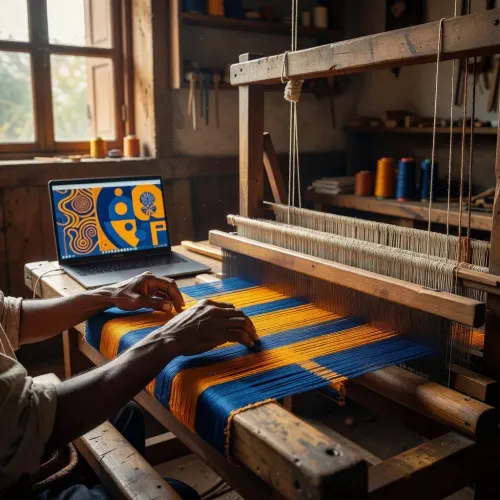
Institutional partnerships with premier bodies such as the Indian Institutes of Technology (IITs) and National Institutes of Fashion Technology (NIFTs) can develop technological solutions that reduce manual effort, integrate scientific precision into traditional weaving processes, and enhance weaver livelihoods, according to an official statement released on Sunday, 2 August. The remarks came during Handloom Hackathon 2.0, held at the Foundation for Innovation and Technology Transfer (FITT) at IIT Delhi, organised in collaboration with the Ministry of Textiles.
Key Developments at Handloom Hackathon 2.0
Dr M. Beena, Development Commissioner (Handlooms), Ministry of Textiles, addressed participants and highlighted the complementary relationship between India's handloom heritage and modern technology. The event drew over 2,500 participants in total, with 280 participants representing the top 100 shortlisted teams from across the country, all tasked with developing technology-driven solutions for India's handloom sector.
'Handloom represents our rich heritage, whereas technology represents the future. Through the Handloom Hackathon, we are combining these two realms to uplift our weaver community,' said Dr Beena.
What the Government Said
Dr Beena underscored that handloom inherently promotes sustainability and circularity, stressing the need for innovation across loom processes, design development, and modern marketing. She also spotlighted the Indian Handmade Portal, an e-commerce platform under the Office of the Development Commissioner (Handlooms) that enables weavers to showcase and sell their products globally without relying on third-party intermediaries.
Centre of Excellence for Handloom Technology
Dr Deepti Gupta, Head of the Department of Textile and Fibre Engineering at IIT Delhi, announced that a forthcoming Centre of Excellence for Handloom Technology at IIT Delhi would strengthen the integration of technology with handloom, enabling greater standardisation and productivity while preserving the uniqueness of handcrafted textiles. The Centre is proposed to be inaugurated the following week in collaboration with the Ministry of Textiles.
Impact on the Handloom Ecosystem
The Hackathon reaffirmed the Ministry's commitment to fostering innovation, collaborative research, and technology-led interventions for India's handloom ecosystem. By encouraging young innovators to develop practical solutions, the initiative aims to improve productivity, sustainability, and market competitiveness — all while preserving the country's handloom heritage. This comes amid a broader government push to modernise traditional craft sectors without eroding their cultural identity.
With the Centre of Excellence set to open shortly and the Indian Handmade Portal already operational, the next phase will test whether these institutional frameworks can translate into measurable income gains for weavers on the ground.
Point of View
But the sector's real challenge is not a shortage of ideas — it is the last mile between a prototype and a loom in a rural home. India's handloom industry employs an estimated 35 lakh weavers, many of whom remain outside formal credit and digital markets. Hackathons generate energy and visibility, but without a structured pipeline to deploy winning solutions at scale — with financing, training, and after-sales support — the risk is that innovation stays on campus. The Centre of Excellence at IIT Delhi could be a meaningful bridge, but its success will depend on whether it is designed around weavers' actual constraints rather than engineers' assumptions about them.
NationPress
2 Aug 2026
Frequently Asked Questions
What is Handloom Hackathon 2.0?
Handloom Hackathon 2.0 is a government-backed innovation competition organised by the Ministry of Textiles at FITT, IIT Delhi, aimed at developing technology-driven solutions for India's handloom sector. The event drew over 2,500 participants, with 280 finalists from 100 shortlisted teams presenting their solutions.
What is the Centre of Excellence for Handloom Technology at IIT Delhi?
It is a proposed facility at IIT Delhi, developed in collaboration with the Ministry of Textiles, designed to integrate technology with handloom production to improve standardisation and productivity while preserving handcrafted textile traditions. It is set to be inaugurated within days of the Hackathon.
What is the Indian Handmade Portal?
The Indian Handmade Portal is an e-commerce platform run by the Office of the Development Commissioner (Handlooms) that enables weavers to showcase and sell their products directly to global buyers without relying on third-party intermediaries.
Why does the government want IITs and NIFTs involved in the handloom sector?
According to the Ministry of Textiles, partnerships with IITs and NIFTs can produce technological solutions that reduce manual effort, bring scientific precision to traditional weaving, and improve weaver livelihoods — combining heritage craft with modern engineering expertise.
Who are the key officials behind this initiative?
Dr M. Beena, Development Commissioner (Handlooms) at the Ministry of Textiles, and Dr Deepti Gupta, Head of the Department of Textile and Fibre Engineering at IIT Delhi, are the principal officials driving the Hackathon and the forthcoming Centre of Excellence.