NCP-SP Delimitation Bill rift: Supriya Sule backs generational dissent
Synopsis
An NCP-SP family row over the Delimitation Bill has gone public — and Supriya Sule's carefully worded response managed to defend free speech, signal party loyalty to Sharad Pawar, and lay out firm conditions for support, all in one breath. The episode previews a combustible Winter session where the INDIA bloc's unity on delimitation will face its first real test.
Key Takeaways
NCP-SP internal tensions surfaced on 16 November over the upcoming Delimitation Bill expected in the Winter session of Parliament.
Natasha Awhad , daughter of legislator Jitendra Awhad , publicly called the Bill an 'unconstitutional move', contradicting her father's party line.
Supriya Sule , NCP-SP Working President, welcomed generational differences in opinion while reaffirming her own loyalty to Sharad Pawar .
The party's support for the Bill is conditional: it demands a written assurance of women's reservation implementation and a transparent model for the 50 per cent seat increase.
Jitendra Awhad defended his daughter's right to speak while stressing his family's 'unwavering loyalty' to Sharad Pawar.
Constituencies currently span 30 to 50 lakh voters ; Sule cited this as a governance challenge justifying some form of delimitation.
An internal fault line has emerged within the Nationalist Congress Party (Sharadchandra Pawar faction), also known as NCP-SP, over the upcoming Delimitation Bill that the Narendra Modi government is widely expected to table during the Winter session of Parliament. The rift surfaced on 16 November after Natasha Awhad — daughter of senior party legislator and former Minister Jitendra Awhad — publicly condemned the legislation as an 'unconstitutional move', contradicting signals that the Sharad Pawar-led faction could support the Bill.
Supriya Sule's Response to the Dissent
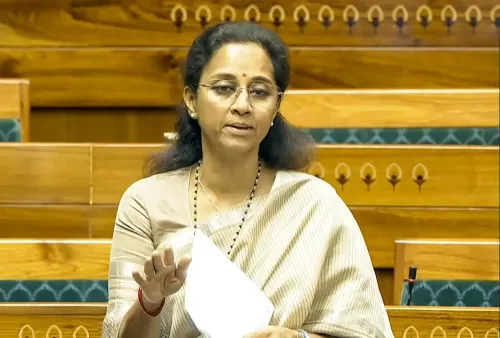
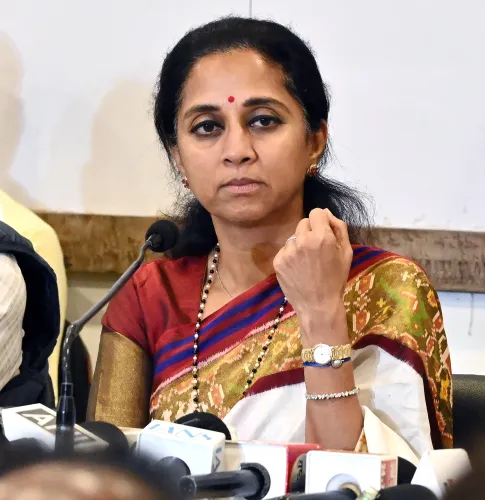
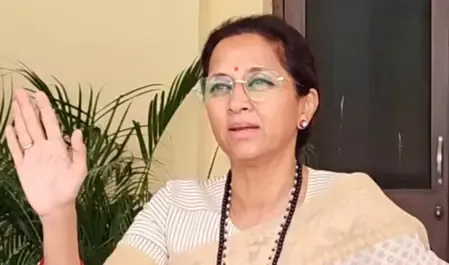
NCP-SP Working President and Baramati MP Supriya Sule responded with a measured defence of generational freedom of expression, stopping well short of endorsing or rejecting Natasha Awhad's position. 'I welcome it. Development does not happen merely by building concrete structures, but through families,' Sule said.
Elaborating on the generational divide, Sule drew a pointed contrast with her own upbringing. 'In a family, a daughter's opinion can differ from her father's. These things exist in the new generation. I belong to the older generation, where parents' words were final. Generations change; in my generation, I do not step outside my parents' words,' she said — remarks widely read as an implicit reaffirmation of her loyalty to her father Sharad Pawar.
Sule also acknowledged Congress youth leader Shivani Wadettiwar's advice to undertake a thorough study of the delimitation process, saying she was grateful for the suggestion. Notably, Wadettiwar had praised Natasha Awhad's stance in a post on social media platform X.
Jitendra Awhad Stands by His Daughter
At a separate press conference, Jitendra Awhad addressed the controversy head-on, stressing that no one in the family restricts his daughter's freedom of speech. 'What she chooses to voice is her prerogative,' he said, while reaffirming his own family's 'unwavering loyalty' to Sharad Pawar.
Awhad acknowledged the profound debt his family owes to the NCP chief. 'The favours Sharad Pawar has done for me and my family can never be repaid in a lifetime — I understand that, but perhaps she doesn't. Therefore, she has the right to speak, and she is speaking,' he said. He added that Natasha speaks after 'thorough reading and deep consideration', and expressed confidence that Pawar would never pressure him to silence her.
NCP-SP's Conditional Position on the Delimitation Bill
Beyond the family drama, Sule used the occasion to spell out the party's official stance on delimitation. She pointed out that constituencies have expanded to 30 to 50 lakh voters, making it nearly impossible for a single Member of Parliament to manage administration effectively on a standard ₹5 crore annual MP fund.
She noted that delimitation exercises have historical precedent, having been carried out under Prime Ministers Jawaharlal Nehru, Indira Gandhi, and Atal Bihari Vajpayee. Parliamentary seats are expected to increase across constituencies from Kashmir to Kanyakumari, she clarified, dismissing concerns that the exercise would disadvantage southern states disproportionately.
However, the party's support is explicitly conditional. 'We will be positive about delimitation only if we are given a written assurance that women's reservation will be strictly implemented and a transparent model detailing how the 50 per cent seats will be increased is provided,' Sule reiterated. She added that discussions have already taken place with Union Home Minister Amit Shah, Union Law and Justice Minister Kiren Rijiju, and opposition leaders including DMK representatives and AIMIM Chief Asaduddin Owaisi.
'The bill is yet to be handed to us or thoroughly read,' Sule noted, signalling that the party's final position remains open pending a formal review of the legislation.
Broader Political Context
The episode highlights a tension that runs deeper than one family's disagreement. The NCP-SP, still consolidating its identity after the 2023 split from the Nationalist Congress Party (NCP), faces the dual challenge of projecting unity while accommodating diverse voices within its ranks. This is not the first time grassroots-level dissent within opposition parties has surfaced ahead of a contentious parliamentary session.
With the Winter session approaching, how the INDIA bloc — of which NCP-SP is a part — coordinates its response to the Delimitation Bill will be closely watched. The party's insistence on a written guarantee for women's reservation could emerge as a key bargaining point in cross-party negotiations.
Point of View
Used the generational contrast to quietly but unmistakably signal her own deference to Sharad Pawar, and simultaneously articulated a conditional party position that keeps the NCP-SP's options open. What mainstream coverage underplays is that the party's real leverage lies in its demand for a written women's reservation guarantee — a condition that could become a sticking point for the entire INDIA bloc. The 'family values' framing also obscures a harder truth: within a party still defining itself after a traumatic split, any visible internal dissent carries outsized reputational risk.
NationPress
16 Nov 2026
Frequently Asked Questions
What is the NCP-SP's position on the Delimitation Bill?
The NCP-SP has taken a conditional stance: it will support the Delimitation Bill only if the government provides a written assurance that women's reservation will be strictly implemented and offers a transparent model for the proposed 50 per cent increase in seats. The party says it has not yet received or fully read the bill.
Why did Natasha Awhad oppose the Delimitation Bill?
Natasha Awhad, daughter of NCP-SP legislator Jitendra Awhad, publicly called the upcoming Delimitation Bill an 'unconstitutional move'. Her statement went against signals that the Sharad Pawar-led faction might support the legislation, sparking an internal debate within the party.
What did Supriya Sule say about the intra-family dissent?
Supriya Sule welcomed the generational difference of opinion, saying that in any family a daughter can hold a different view from her father. She contrasted this with her own upbringing, where parental guidance was considered final — a remark widely read as reaffirming her personal loyalty to Sharad Pawar.
What is the Delimitation Bill and why is it controversial?
The Delimitation Bill is expected to redraw parliamentary constituency boundaries and increase the total number of seats in Parliament. Critics, particularly from southern states, argue the exercise could reduce their representation relative to more populous northern states; supporters say it is necessary to address governance challenges in constituencies that now have 30 to 50 lakh voters.
How has Jitendra Awhad reacted to his daughter's public stance?
Jitendra Awhad defended his daughter's right to free speech, saying 'what she chooses to voice is her prerogative', while simultaneously reaffirming his family's loyalty to NCP chief Sharad Pawar. He expressed confidence that Pawar would never pressure him to silence her.