Trump Departs for Asia: ASEAN in Philippines, APEC in China
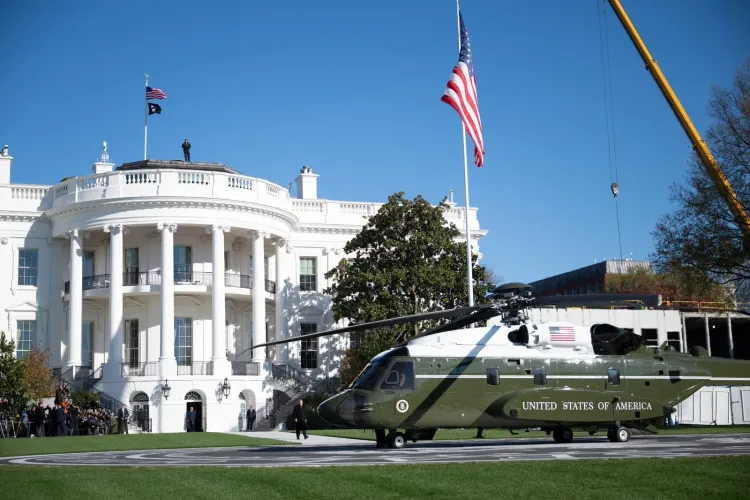
Synopsis
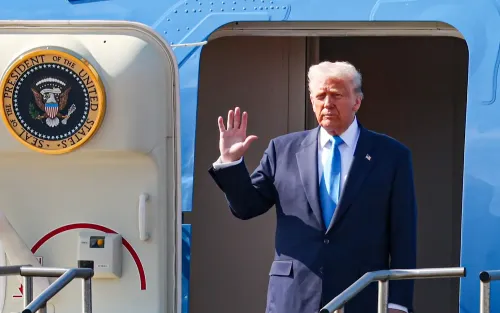
President Trump has left for Asia on a twin-summit tour — the ASEAN gathering in the Philippines followed by the APEC Leaders' Meeting in Shenzhen, China — with the White House invoking 'peace through strength' as the trip's defining frame.
Key Takeaways
Trump has departed the US on a major Asia trip covering two multilateral summits.
His first stop is the Philippines for the ASEAN Summit , where ten Southeast Asian leaders will convene.
He then travels to Shenzhen, China for the APEC Leaders' Summit , placing him in direct proximity to Chinese leadership.
The White House framed the trip under the slogan 'peace through strength' , a consistent Trump foreign-policy motif.
Trump made a similar dual ASEAN-APEC Asia tour in November 2017 , also beginning in the Philippines.
Key watch-points include potential US-China bilateral talks and any statements on South China Sea or trade and supply-chain security.
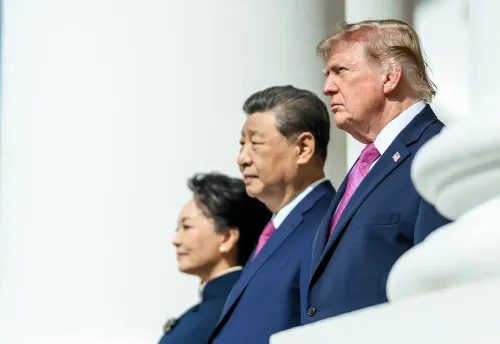
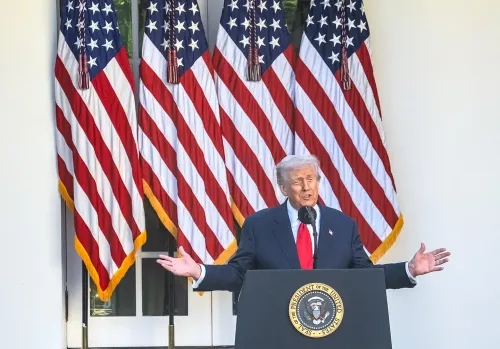
With two of the Indo-Pacific's most consequential multilateral summits on the itinerary, President Donald J. Trump has departed the United States on a major Asia trip — first to the Philippines for the ASEAN Summit, then onward to Shenzhen, China, for the APEC Leaders' Summit. The White House framed the journey in four words: 'peace through strength.'
Two summits, one strategic signal
The twin-stop itinerary is as much theatre as diplomacy. Landing first in Manila to meet the leaders of the Association of Southeast Asian Nations — a ten-nation bloc that sits astride some of the world's busiest shipping lanes — sends an early message about US commitment to the region. From there, the pivot to Shenzhen, the gleaming tech-and-manufacturing heartland of southern China, for the Asia-Pacific Economic Cooperation (APEC) Leaders' Meeting, places Trump in direct proximity to Chinese leadership at a moment when trade and supply-chain tensions remain acute.
ASEAN and APEC together represent over half of global GDP and the bulk of seaborne trade. For any sitting US president, showing up matters — absence is read as disengagement, presence as a bid for influence.
The 'peace through strength' doctrine in the Indo-Pacific
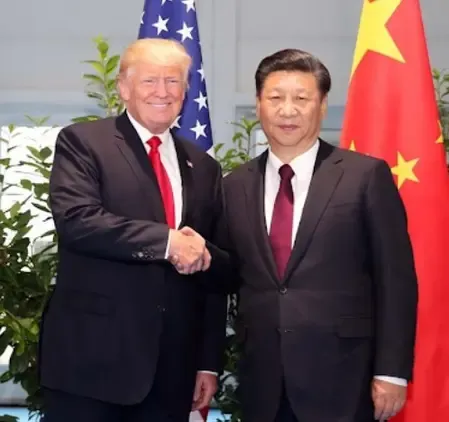
The phrase 'peace through strength' is not incidental. It is a throughline of Trump's foreign-policy identity, recurring across his first-term statements on alliances, China trade policy, and military posture. During his November 2017 Asia tour — which also included an ASEAN stop in the Philippines and an APEC meeting in Vietnam — the same rhetorical architecture was on display: bilateral deal-making, public displays of naval and air power, and direct engagement with Beijing from a position of projected confidence.
The choice of Shenzhen as the APEC venue is itself a detail worth noting. A city that symbolises China's economic rise — from a small fishing town to a global technology capital in four decades — it is an unusual backdrop for a summit where the United States and China will inevitably be the dominant gravitational forces in the room.
What to watch from Manila to Shenzhen
Analysts and trade desks alike will be scanning for side meetings: any bilateral between Trump and his Chinese counterpart carries immediate market implications. South China Sea territorial tensions, semiconductor supply-chain security, and the architecture of any new trade commitments are the live wires. The Philippines, as a longstanding US treaty ally, also provides a natural stage for reaffirming defense ties — a message heard loudly in Beijing even before Air Force One lands there.
The 'peace through strength' signoff is the kicker the White House wanted the world to read first. Whether the summits deliver matching substance is the question every capital from New Delhi to Tokyo is now watching.
Point of View
When Indo-Pacific engagement was framed as a counter-weight to Chinese regional influence rather than a multilateral commitment in its own right. The choice of Shenzhen — symbolically China's economic showpiece — as the APEC venue adds a layer of strategic theatre: the US president will be negotiating on Chinese soil while the Philippines stop telegraphs treaty-ally solidarity. For India, the optics matter: a confident US Indo-Pacific presence traditionally reinforces New Delhi's own strategic space, even when the bilateral India-US agenda is not the summit's centrepiece. The 'peace through strength' framing signals that any economic agreements emerging from these summits will be packaged, at home, as wins secured from a position of power — not accommodation.
NationPress
16 Nov 2026
Frequently Asked Questions
Where is President Trump going on his Asia trip?
President Trump is traveling first to the Philippines for the ASEAN Summit and then to Shenzhen, China for the APEC Leaders' Summit .
What is the ASEAN Summit and why does it matter?
The ASEAN Summit is the annual leader-level meeting of the Association of Southeast Asian Nations , a ten-member bloc covering a region that controls critical global shipping lanes and represents a major share of world trade.
What is APEC and what happens at the Leaders' Summit?
APEC (Asia-Pacific Economic Cooperation) is a 21-member forum whose annual Leaders' Meeting brings together heads of government from economies bordering the Pacific to discuss trade, investment, and economic cooperation.
What does 'peace through strength' mean in US foreign policy?
'Peace through strength' is a longstanding American foreign-policy phrase, used prominently by the Trump administration , meaning that credible military and economic power deters conflict and underpins diplomatic leverage.
Has Trump attended ASEAN and APEC summits before?
Yes. In November 2017 , during his first term, Trump attended the ASEAN Summit in the Philippines and the APEC meeting in Vietnam as part of a similar Indo-Pacific tour.