Smriti Irani: UP Has Rejected Congress in Every Election Since 1989
Synopsis
BJP leader Smriti Irani highlights that Uttar Pradesh has rejected Congress in every assembly election since 1989, and warns that no opposition alliance will succeed in destabilising India.
Key Takeaways
Smriti Irani posted on October 16, 2026 , pointing to Congress's unbroken electoral failure in Uttar Pradesh since 1989 .
Congress last formed a government in UP after the 1985 assembly elections — every subsequent cycle has seen it lose ground.
Irani warned that no matter how many parties Congress unites, the alliance will not succeed in 'destabilising India.' Uttar Pradesh sends 80 MPs to the Lok Sabha, making it the most consequential state in national electoral politics.
The BJP has held UP since 2017 , continuing the state's pattern of keeping Congress out of power for over three decades.
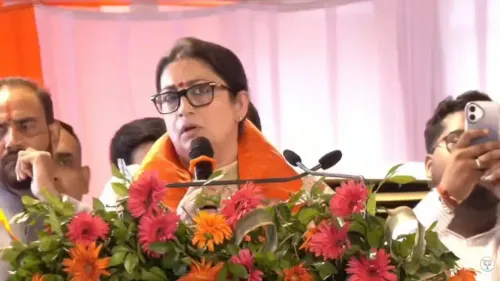
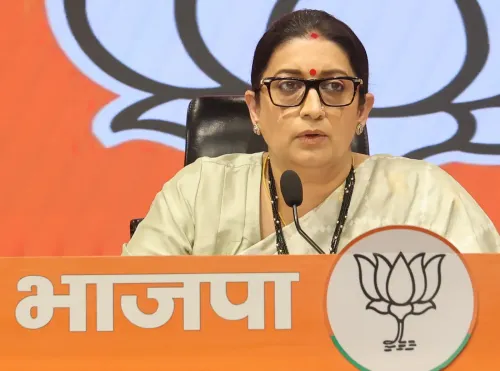
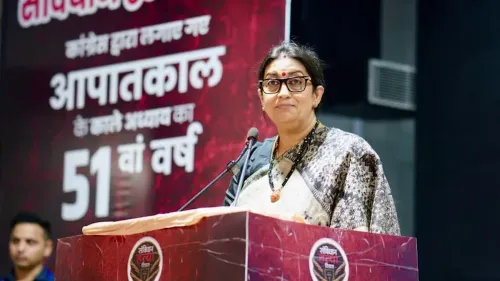
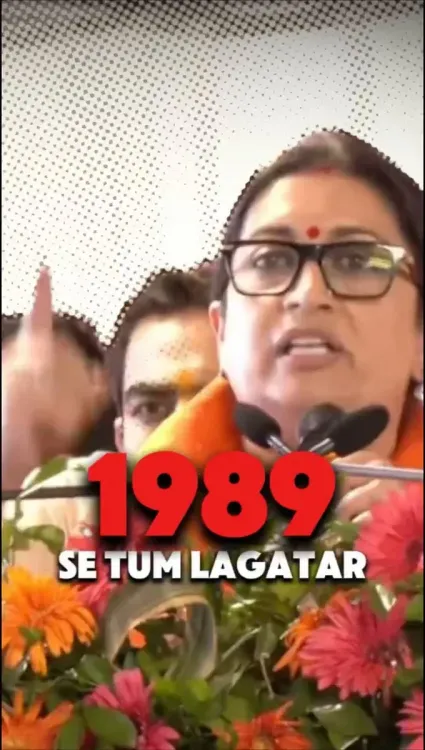
Thirty-seven years of consecutive rejection — that is the electoral verdict BJP leader Smriti Irani is reminding the country of, as she takes sharp aim at Congress and its opposition alliance-building ambitions on Friday, October 16, 2026. The message is pointed: no amount of coalition arithmetic can paper over what Uttar Pradesh voters have been saying since 1989.
Posting in Hindi, Irani wrote: '1989 से लगातार हुए हर विधानसभा चुनाव में उत्तर प्रदेश ने कांग्रेस को नकारा है।' — 'In every consecutive assembly election in Uttar Pradesh since 1989, the state has rejected Congress.' She then went further, asserting that 'no matter how many parties Congress unites, it will not succeed in destabilising India.'
UP's Verdict: An Unbroken Streak Since 1989
Uttar Pradesh, India's most populous state and the single largest contributor of Lok Sabha seats, last handed Congress a government after the 1985 assembly elections. The 1989 contest broke that hold — and the state has not looked back. In the decades since, power has rotated between the Samajwadi Party, the Bahujan Samaj Party, and since 2017, the BJP — but Congress has remained a marginal force each time.
The arithmetic is stark. Every assembly cycle for over three and a half decades has returned the same answer. For a party that once governed from Lucknow, that is not a slump — it is a structural estrangement from UP's electorate.
The Alliance Question Irani Is Answering
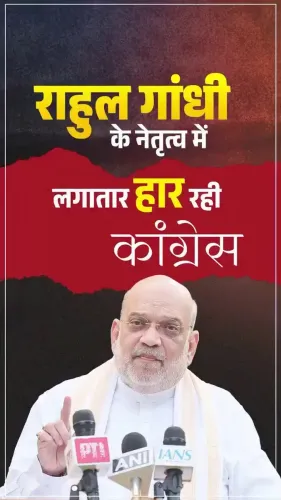
Irani's second line — about destabilising India — lands in a specific context. Opposition parties have periodically attempted to stitch together broad anti-BJP alliances at both state and national levels, with Congress often positioned as the anchor or a key participant. Irani's framing rejects the premise: that gathering more allies changes the underlying voter verdict.
It is a classic BJP counter-narrative — shift the debate from coalition headcounts to electoral track record. The argument is not merely about UP; by invoking 'destabilising India,' Irani scales it into a national-stability claim, framing opposition coordination as a threat rather than a democratic exercise.
Why UP Remains the Ultimate Benchmark
Uttar Pradesh sends 80 members to the Lok Sabha — more than any other state. Winning or losing UP is rarely just a state story; it shapes the national mandate. That is precisely why BJP leaders return to UP's track record as a rhetorical anchor again and again: the state's rejection of Congress carries outsized symbolic weight in any national political conversation.
As opposition parties recalibrate their strategies ahead of future electoral cycles, Irani's post serves as an early, public line in the sand — dare the alliances to prove three-and-a-half decades of history wrong.
Point of View
' she elevates a state-level trend into a sovereignty argument, a framing the BJP has deployed effectively in multiple election cycles. The statement likely anticipates fresh opposition alliance announcements and is designed to preempt their narrative momentum. For Congress, the 1989 benchmark remains an uncomfortable fact that no alliance reshuffle can easily rewrite.
NationPress
16 Oct 2026
Frequently Asked Questions
When did Congress last win a state election in Uttar Pradesh?
Congress last formed a government in Uttar Pradesh after the 1985 assembly elections . It lost power in the 1989 election and has not returned to power in the state since.
What did Smriti Irani say about Congress and UP?
Smriti Irani stated that Uttar Pradesh has rejected Congress in every consecutive assembly election since 1989 , and warned that no opposition alliance will succeed in destabilising India.
Why is Uttar Pradesh so important in Indian elections?
Uttar Pradesh is India's most populous state and sends 80 members to the Lok Sabha — the highest of any state — making it the single most influential state in determining national election outcomes.
Which party currently governs Uttar Pradesh?
The BJP has governed Uttar Pradesh since the 2017 assembly elections , continuing the state's decades-long trend of keeping Congress out of power.
Why is Smriti Irani talking about Congress alliances?
Irani's remarks respond to ongoing opposition efforts to build broad anti-BJP coalitions. She argues that regardless of how many parties join Congress, the historical electoral verdict in Uttar Pradesh reflects a deep, structural rejection that alliances cannot overcome.