EU-India Free Trade Agreement signing top goal of Ireland's EU Presidency
Synopsis
Ireland has taken over the EU Council Presidency with one headline ambition for India: get the long-stalled EU-India Free Trade Agreement signed before 31 December. With negotiations complete and legal review underway, Ambassador Kevin Kelly says the political will is there — making the next six months a genuine closing window for one of the world's most consequential trade deals.
Key Takeaways
Ireland assumed the Presidency of the Council of the EU on 1 July 2025 , holding it until 31 December 2025 .
Signing the EU-India Free Trade Agreement before the Presidency ends is Ireland's stated headline ambition.
FTA negotiations are reportedly complete; legal experts on both sides are now reviewing the text.
Ireland's Presidency priorities are Competitiveness, Values and Security under the motto 'Strength with Unity' .
Key sectors for EU-India cooperation include trade, technology, maritime security, resilient supply chains, and digital cooperation.
This is the eighth time Ireland has held the rotating EU Council Presidency.
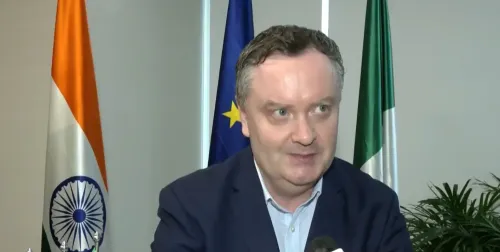
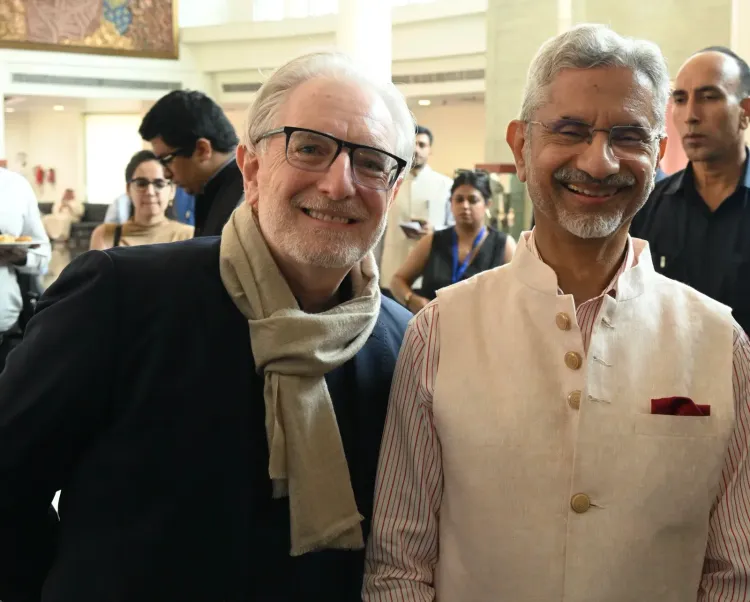
Ambassador of Ireland to India, Kevin Kelly, on Wednesday, 1 July declared that strengthening the European Union's strategic partnership with India would be a defining priority of Ireland's Presidency of the Council of the European Union, which officially commenced the same day and runs until 31 December 2025. At the heart of that ambition, Kelly said, is securing the long-awaited EU-India Free Trade Agreement (FTA) before the Presidency concludes.
Ireland Takes the Helm of the EU Council
This marks the eighth time Ireland has assumed the rotating EU Council Presidency — a responsibility that Kelly described as reflecting Ireland's enduring commitment to partnership, cooperation, and progress within Europe. For the next six months, Ireland will guide negotiations among the EU's 27 Member States, chair Council meetings, advance the Union's legislative agenda, and foster consensus on policy issues affecting more than 450 million European citizens.
The Irish Presidency is anchored around three overarching priorities — Competitiveness, Values and Security — under the motto 'Strength with Unity'. Kelly noted that Ireland assumes this role at a moment of profound geopolitical flux, marked by ongoing conflicts, rapid technological transformation, and mounting pressure on the multilateral system.
The EU-India FTA: Ireland's Headline Ambition
The prospective EU-India Free Trade Agreement has been in negotiation for years, and Kelly signalled that the hard bargaining is now effectively over. 'Our big hope is that the EU Free Trade Agreement with India will finally be signed before the end of our presidency. That's our ambition, and we're hoping it will happen. We'll be doing everything we can. Of course, it's now at a stage where all the hard work has been done, the negotiations have been completed, and the legal experts on both sides are reviewing the text to ensure it stands up to legal scrutiny. I think it would be a wonderful achievement if the Irish Presidency of the European Council would also be known as the period of time when the Free Trade Agreement with India was finally signed,' Kelly said.
The deal, if concluded, would be one of the most significant trade agreements for both blocs — linking the EU's single market with one of the world's fastest-growing major economies.
Key Sectors in Focus
Beyond the FTA, Ireland's Presidency programme identifies several sectors where EU-India cooperation is expected to deepen: trade, technology, research, connectivity, maritime security, resilient supply chains, and digital cooperation. Kelly underscored that the EU increasingly views India as one of its most important strategic partners, and that the Presidency programme explicitly highlights both the importance of the Indo-Pacific region and the priority attached to the EU-India relationship.
Why the EU-India Partnership Has Grown Strategically
'Together, India and the European Union account for almost two billion people. We are vibrant democracies, major economic powers and increasingly indispensable partners in addressing global challenges,' Kelly said. Having spent nearly three years in India, the Ambassador noted a marked deepening of European awareness among Indian interlocutors — conversations that once centred on trade now span technology, security, geopolitics, and the future of the international order.
This comes amid a broader Western effort to diversify supply chains and deepen ties with democratic partners in the Indo-Pacific, with India occupying an increasingly central position in that calculus. Notably, the EU-India FTA negotiations were relaunched in 2022 after a decade-long pause, and Ireland's Presidency now represents one of the clearest political windows for closure. Whether that window holds will depend on the pace of legal review on both sides in the months ahead.
Point of View
And before that stalled for a decade. Ireland's six-month window is real, but tight. What mainstream coverage underplays is the asymmetry of urgency: the EU needs India more visibly now — for supply-chain resilience and Indo-Pacific positioning — than India needs the EU on its current growth trajectory. That asymmetry will shape the final text more than any Presidency motto.
NationPress
30 Sept 2026
Frequently Asked Questions
What is the EU-India Free Trade Agreement and where does it stand?
The EU-India Free Trade Agreement is a comprehensive bilateral trade deal between the European Union and India that, if signed, would be one of the largest trade agreements in the world. Negotiations were relaunched in 2022 after a decade-long pause; as of July 2025, the substantive negotiations are reportedly complete and legal experts on both sides are reviewing the text before signing.
Why is Ireland's EU Presidency significant for India?
Ireland has explicitly placed the EU-India strategic partnership — and specifically the FTA signing — at the centre of its six-month EU Council Presidency (1 July to 31 December 2025). As Presidency holder, Ireland chairs Council meetings and shapes the legislative and diplomatic agenda, giving it direct influence over the pace of EU-India negotiations.
What are Ireland's three main priorities for its EU Presidency?
Ireland's Presidency is built around three priorities: Competitiveness, Values, and Security, operating under the motto 'Strength with Unity'. These frame a broader agenda that includes the EU-India relationship, Indo-Pacific policy, and responses to ongoing geopolitical instability.
Who is Kevin Kelly and what did he say about the FTA?
Kevin Kelly is the Ambassador of Ireland to India. Speaking on 1 July 2025, he said the FTA signing before the end of Ireland's Presidency would be 'a wonderful achievement' and confirmed that negotiations are complete, with legal review now the remaining step.
Which sectors are priorities for EU-India cooperation under Ireland's Presidency?
Ireland has identified trade, technology, research, connectivity, maritime security, resilient supply chains, and digital cooperation as the key sectors for advancing the EU-India strategic partnership during its Presidency.