India-EU FTA: FICCI calls for stronger standards ecosystem to unlock European markets
Synopsis
The India-EU Free Trade Agreement promises preferential tariffs on 99.5% of Indian exports — but FICCI leaders warn the real battle is non-tariff barriers. Without a stronger standards ecosystem, testing infrastructure, and digital compliance tools, the deal risks being a diplomatic win that Indian exporters cannot actually cash in on.
Key Takeaways
The India-EU Free Trade Agreement will extend preferential tariff treatment to 99.5 per cent of Indian exports, according to Darpan Jain , Additional Secretary, Department of Commerce and Industry.
FICCI leaders called for urgent upgrades to India's standards infrastructure, testing and certification capabilities , and digital compliance tools to access European markets effectively.
Non-tariff barriers — including technical standards, sanitary regulations, and conformity assessments — were flagged as the primary obstacle for Indian exporters.
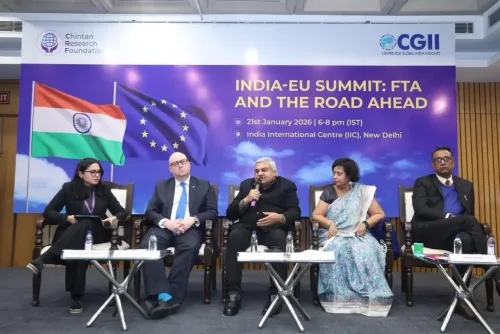
The conference, held in New Delhi on 22 May , was jointly organised by IIFT's Centre for Trade and Investment Law and FICCI .
FICCI Director General Jyoti Vij warned that low industry awareness risks underutilisation of the agreement, citing a pattern seen with past Indian trade pacts.
As India pushes ahead with its trade negotiations with Europe, industry leaders and policymakers on Friday, 22 May called for a significant upgrade in the country's standards infrastructure, digital compliance systems, and institutional mechanisms to help Indian businesses navigate non-tariff barriers and gain effective access to European Union markets. The observations came at a high-level conference in New Delhi, underlining that the hard work of realising the India-EU Free Trade Agreement's full potential lies beyond the negotiating table.
Conference Background and Key Participants
The discussions took place at a conference titled 'Next-Gen Trade Pacts: Leveraging India's Partnership with Europe under FTAs', organised by the Centre for Trade and Investment Law at the Indian Institute of Foreign Trade (IIFT) in collaboration with the Federation of Indian Chambers of Commerce & Industry (FICCI). The event brought together senior government officials, trade law experts, and industry representatives to assess what India must do to translate the agreement into tangible commercial gains.
FICCI Secretary General Anant Swarup opened the conference by highlighting the growing strategic importance of India's trade ties with European economies, particularly as free trade agreement negotiations advance and global trade frameworks continue to evolve.
Industry's Preparedness Gap
Harish Ahuja, Chair of the FICCI Foreign Trade and Trade Facilitation Committee and Managing Director of Shahi Exports Pvt. Ltd., argued that India must urgently strengthen its testing and certification capabilities alongside digital compliance tools to remain competitive in European markets. He underlined that non-tariff barriers — including technical standards, sanitary regulations, and conformity assessment requirements — are increasingly the real gatekeepers of global trade, often more consequential than tariff levels themselves.
This concern is not new, but it has grown sharper as the EU rolls out stringent regulations around carbon border adjustments, deforestation-linked supply chains, and data governance — all of which affect Indian exporters across sectors from textiles to pharmaceuticals.
What the India-EU FTA Promises
In the keynote address, Darpan Jain, Additional Secretary in the Department of Commerce and Industry, described the conclusion of negotiations for the India-EU Free Trade Agreement as a major milestone in India's economic diplomacy. He said the agreement would extend preferential tariff treatment to 99.5 per cent of Indian exports to the EU, while also deepening India's integration into European value chains.
According to Jain, the pact is also expected to improve market access across goods and services sectors and reduce non-tariff trade barriers — a commitment that will require sustained regulatory alignment and institutional follow-through on both sides.
Beyond Tariffs: The Next-Gen Trade Agenda
Dr. James J. Nedumpara, delivering the context-setting address, emphasised that next-generation trade agreements extend well beyond tariff reductions. He noted that modern trade pacts are actively shaping the future of international commerce through broader economic and regulatory cooperation — covering areas such as intellectual property, investment protection, digital trade, and sustainability standards.
This framing is significant: for Indian businesses, compliance with EU regulatory frameworks is no longer optional but a prerequisite for market participation. Industry bodies will need to invest in awareness campaigns and enterprise-level readiness programmes.
Industry Awareness and the Road Ahead
Jyoti Vij, Director General of FICCI, stressed in her concluding remarks during the inaugural session that industry awareness and enterprise preparedness are critical to ensuring that trade agreements are effectively utilised rather than left as underexploited diplomatic achievements. Notably, past trade agreements signed by India have often seen low utilisation rates among smaller exporters who lack the compliance capacity to meet partner-country requirements.
With the India-EU FTA now at a landmark stage, the pressure is on Indian industry and government institutions alike to build the ecosystem that can convert preferential access into actual export growth.
Point of View
South Korea, Japan — and utilisation rates among small and mid-size exporters have consistently disappointed, largely because compliance infrastructure never kept pace with the deal's ambitions. The EU is a far more demanding regulatory environment than any of India's existing FTA partners: carbon border adjustments, deforestation supply-chain rules, and GDPR-adjacent data requirements are not bureaucratic footnotes but hard market-entry conditions. Until India builds a credible, nationally networked standards and certification ecosystem — and until FICCI and government bodies run sustained enterprise-readiness programmes — the India-EU FTA risks becoming another under-leveraged agreement. The urgency flagged at this conference is real; whether it translates into budgetary and institutional commitment is the question mainstream coverage is not asking.
NationPress
6 Oct 2026
Frequently Asked Questions
What is the India-EU Free Trade Agreement?
The India-EU Free Trade Agreement is a bilateral trade pact between India and the European Union that, upon conclusion of negotiations, will extend preferential tariff treatment to 99.5 per cent of Indian exports. It is also expected to improve market access across goods and services sectors and reduce non-tariff trade barriers.
Why are non-tariff barriers a concern for Indian exporters under the India-EU FTA?
Non-tariff barriers — such as technical standards, sanitary and phytosanitary regulations, and conformity assessment requirements — can effectively restrict market access even when tariffs are low or zero. FICCI leaders argue that India's current standards infrastructure, testing capabilities, and digital compliance tools are not yet robust enough to meet EU regulatory requirements at scale.
What did FICCI call for at the New Delhi conference?
FICCI leaders called for strengthening India's standards infrastructure, upgrading testing and certification capabilities, developing digital compliance tools, and building stronger institutional mechanisms to address non-tariff barriers. FICCI Director General Jyoti Vij also stressed the importance of industry awareness and enterprise preparedness to ensure the agreement is effectively utilised.
Who are the key figures involved in India's EU trade negotiations?
Key figures include Darpan Jain, Additional Secretary in the Department of Commerce and Industry, who described the FTA conclusion as a major milestone in India's economic diplomacy. On the industry side, FICCI Secretary General Anant Swarup and Harish Ahuja, MD of Shahi Exports and Chair of FICCI's Foreign Trade Committee, have been prominent voices on trade readiness.
What are next-generation trade agreements and why do they matter for India?
Next-generation trade agreements go beyond traditional tariff reductions to cover regulatory cooperation, digital trade, intellectual property, investment protection, and sustainability standards. For India, this means compliance with EU frameworks is increasingly a prerequisite for market participation, not just a negotiating objective.