Islamic State's lone-actor push intensifies in Maharashtra: A growing pattern

Synopsis
Maharashtra is emerging as a key target for Islamic State's lone-actor strategy, with security agencies flagging a surge in IS-linked incidents — from the Mira Road stabbing to explosive-laden toy car plots. Officials warn the outfit is exploiting online radicalisation to push isolated, economically frustrated individuals to carry out attacks independently, with minimal oversight or training.
Key Takeaways
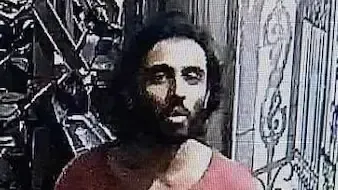
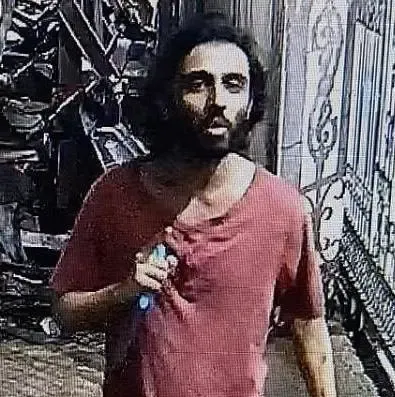
Zaib Zubair Ansari, 31 , was arrested on Tuesday after allegedly stabbing two security guards at Mira Road, Mumbai ; handwritten notes expressed desire to join the Islamic State.
The Maharashtra ATS and Delhi Police Special Cell earlier arrested Mossab Ahdam and Mohammad Hamad Kollara in April 2025 for allegedly planning IS-directed explosive attacks using remote-controlled toy cars.
The Islamic State has been directing significant volumes of radicalisation material at individuals in Maharashtra , alongside its traditional focus on Kerala and South India.
Security agencies have flagged Borivali-Padgha (Thane district) and Pune-Kondhwa as geographic hotspots for IS penetration.
IS's current strategy promotes low-cost lone-actor attacks — knives, vehicle rammings, stones — requiring no offline training.
Maharashtra's IS history dates to 2014 , when four individuals left to join the outfit in Syria; the threat has since evolved from foreign travel to domestic attack planning.
Security agencies have identified a deepening Islamic State (IS) footprint in Maharashtra, with the latest incident on Tuesday, 29 April 2025 bringing renewed focus on the outfit's strategy of radicalising isolated individuals to carry out low-cost, independent attacks. The arrest of Zaib Zubair Ansari, 31, who allegedly stabbed two security guards in Mumbai's Mira Road area while reportedly asking about their religion, has exposed what counterterrorism officials describe as a textbook lone-actor operation.
The Mira Road Stabbing and What Investigators Found
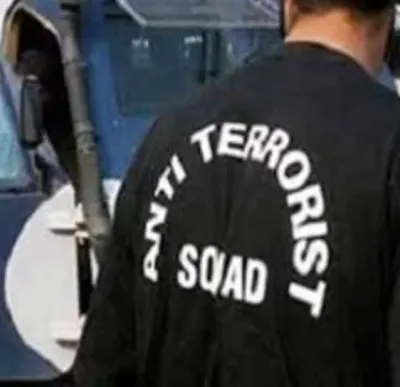
Following Ansari's arrest, the Maharashtra Anti-Terrorism Squad (ATS) recovered handwritten notes in which he reportedly expressed a desire to join the Islamic State. The notes, according to officials, explicitly stated that the Mira Road attack was his first step towards joining the outfit. Investigators noted that the attack closely followed a recruitment and operational manual that the Islamic State has reportedly circulated for over eight years.
Ansari's background adds another layer to the probe. He had previously lived in the United States but returned to Maharashtra in 2019 after failing to secure employment. He lived alone at Mira Road thereafter. Investigators are now working to determine whether radicalisation occurred during his time in the US or after his return to India.
A Wider Maharashtra Module Under the Scanner
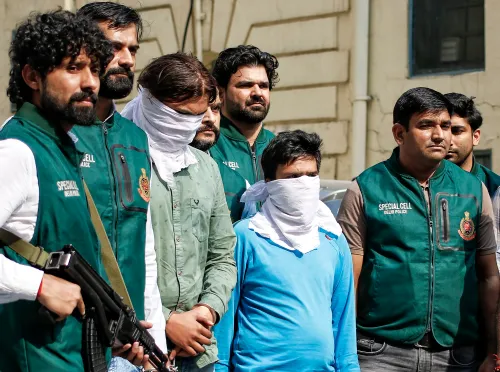
The Ansari case is not an isolated incident. Earlier in April 2025, the Special Cell of the Delhi Police and the Maharashtra ATS jointly arrested Mossab Ahdam alias Kalam Kalyan and Mohammad Hamad Kollara from Mumbai's Kurla and Khadavli areas. The two are alleged to be part of an IS module and were reportedly planning to conceal explosives inside remote-controlled toy cars to evade security checks before executing attacks. Investigators said both individuals were radicalised online by IS handlers based outside India.
In 2023, the National Investigation Agency (NIA) arrested several persons — including medical professionals — for allegedly promoting IS-linked activity in Maharashtra. As recently as February 2025, the ATS conducted simultaneous raids at 21 locations across Ahilyanagar and Yavatmal districts to dismantle IS networks attempting to radicalise youth in the region.
The Islamic State's Lone-Actor Playbook
According to an official who tracks IS activity, the outfit has deliberately shifted away from investing in offline training camps. Instead, it is pushing individuals — particularly those it identifies as lonely, frustrated, or economically marginalised — to plan, procure materials for, and execute attacks entirely on their own. This approach minimises the outfit's operational exposure while maximising reach.
Counterterrorism officials note that IS has been advocating low-cost attack methods: knife attacks, ramming vehicles into crowds, and using stones as weapons. These require no specialised training, making detection and prevention significantly harder for agencies.
An Intelligence Bureau official told NationPress that while South India — particularly Kerala — has historically been a stronghold for IS radicalisation in India, the outfit has been directing increasing volumes of digital material towards individuals in Maharashtra. Officials say the rising volume of online IS content is now the single biggest operational concern for security agencies in the state.
Geographic Hotspots Within Maharashtra
Security agencies have identified specific areas within Thane district — particularly the Borivali-Padgha belt — as exhibiting higher IS penetration. Pune's Kondhwa area has also been flagged as a zone of concern and remains under active surveillance. Officials say the outfit has been concentrating resources in localities where its messaging has historically gained more traction.
Maharashtra's IS History: From 2014 to Now
The first significant IS footprint in Maharashtra was recorded in 2014, when Areeb Majeed, Fahad Shaikh, Saheem Tanki, and Aman Tandel left India to join the outfit. Majeed returned to India the same year and is currently on bail. The other three are believed to have died in bombings in Syria. Over the past decade, the threat profile has evolved from individuals travelling to conflict zones to IS-directed local modules planning attacks on Indian soil.
With security agencies warning of an overstretched operational bandwidth and an increasingly sophisticated online radicalisation pipeline, Maharashtra's counterterrorism apparatus faces one of its most complex challenges yet.
Frequently Asked Questions
Who is Zaib Zubair Ansari and why was he arrested?
Zaib Zubair Ansari, 31, was arrested after allegedly stabbing two security guards at Mira Road in Mumbai, reportedly asking about their religion during the attack. The Maharashtra ATS subsequently recovered handwritten notes in which he expressed a desire to join the Islamic State, describing the stabbing as his first step towards joining the outfit.
What is the Islamic State's lone-actor strategy in India?
The Islamic State's lone-actor strategy involves radicalising isolated individuals online and directing them to plan and execute attacks independently, without offline training or direct organisational support. The outfit advocates low-cost methods such as knife attacks, vehicle rammings, and stone assaults, minimising its own operational exposure.
Which areas in Maharashtra are considered Islamic State hotspots?
Security agencies have identified the Borivali-Padgha belt in Thane district and Pune's Kondhwa area as zones of higher Islamic State penetration in Maharashtra. Officials say the outfit concentrates its digital outreach in localities where its messaging has historically gained more traction.
What other Islamic State-linked cases have been reported in Maharashtra recently?
In April 2025, the Delhi Police Special Cell and Maharashtra ATS arrested Mossab Ahdam and Mohammad Hamad Kollara from Mumbai for allegedly planning IS-directed attacks using explosives hidden in remote-controlled toy cars. In 2023, the NIA arrested several individuals including medical professionals for promoting IS activity, and in February 2025 the ATS raided 21 locations in Ahilyanagar and Yavatmal districts.
When did the Islamic State first establish a footprint in Maharashtra?
The first significant Islamic State presence in Maharashtra was documented in 2014, when Areeb Majeed, Fahad Shaikh, Saheem Tanki, and Aman Tandel left India to join the outfit in Syria. Majeed returned the same year and is currently on bail; the other three are believed to have died in bombings in Syria.