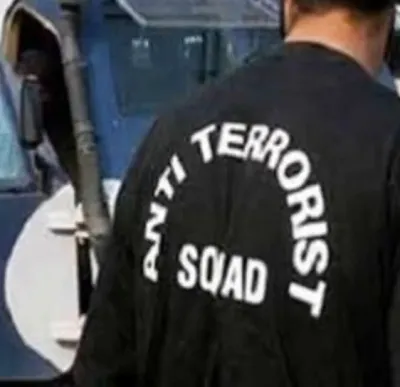
Did Maharashtra ATS Capture a Software Engineer Linked to Terrorism?

Synopsis
In a significant operation, Maharashtra ATS arrested a software engineer in Pune for alleged connections to terror organizations. This incident raises critical concerns about the ongoing threat of online radicalization and the resurgence of terror networks in India. Stay informed about this unfolding story and its implications for national security.
Key Takeaways
Zubair Hangargekar arrested for alleged terror links.
Under investigation for radicalizing youth.
Seized materials suggest a broader terror network .
Recent cases highlight online radicalization.
Ongoing vigilance is essential for national security.
Mumbai, Oct 27 (NationPress) A software engineer was apprehended by the Maharashtra Anti-Terrorism Squad (ATS) in Pune on Monday due to his alleged connections with outlawed groups such as Pakistan's Al Qaeda and his involvement in the radicalization of youth, as stated by an official.
Zubair Hangargekar, who had been under surveillance by the Pune ATS since last month, was promptly brought before the court following his arrest. The Special UAPA Court has ordered him to remain in police custody until November 4.
A police representative revealed that the suspect, who was taken into custody from the Kondhwa area in Pune, has been charged under the Unlawful Activities (Prevention) Act.
During the court proceedings, it was alleged that Hangargekar was engaged in activities deemed anti-national and was plotting terror attacks in Maharashtra and other locations.
Furthermore, the police indicated that incriminating evidence aimed at the radicalization of youth was discovered during searches conducted at the software engineer's residence.
In a related operation, the Pune Police had previously detained four individuals from the Chennai Express at the Pune Railway Station on October 27.
Earlier, on October 9, the ATS executed raids across multiple sites in Pune, seizing electronic devices, documents, and materials that suggested a broader terror network in the area, according to a police officer.
This recent action by the Pune ATS follows the arrests of Md Adnan Khan, also known as Abu Muharib (19), from Delhi's Sadiq Nagar, and Adnan Khan, also known as Abu Mohammad (20), from Bhopal, related to an Islamic State-linked case.
These arrests highlight the active role of the online radicalization arm of the IS. The Islamic State, which maintains a significant online presence, has implemented several tactics for recruitment.
Investigations into the Delhi incident have uncovered that the two suspects were radicalized via the internet and were in communication with a handler located in Syria.
The revelation that they were being managed from Syria strongly indicates the group's resurgence within the nation.
Despite its defeat in Syria, the Islamic State appears to have made a robust return.
With 115 attacks reported this year, compared to 72 last year, it is evident that the group has regained strength.
Officials from the Intelligence Bureau assert that operations in India are being orchestrated from Syria.
Point of View
It is crucial to approach this incident with a commitment to factual reporting. The arrest of Zubair Hangargekar highlights a pressing issue regarding the radicalization of youth and the need for vigilance against emerging terror threats. Our responsibility lies in informing the public without sensationalism while advocating for informed discussions surrounding national security.
NationPress
28 Sept 2026
Frequently Asked Questions
What were the charges against the software engineer?
The software engineer was charged under the Unlawful Activities (Prevention) Act for alleged links to banned organizations and radicalizing youth.
What actions were taken by the ATS in Pune?
The ATS conducted surveillance and searches that led to the arrest and the recovery of incriminating materials meant for radicalization.
How does this case relate to online radicalization?
The case underscores the active role of online platforms in radicalizing individuals, as seen with the recent arrests connected to the Islamic State.
What is the current status of the arrested individual?
Zubair Hangargekar has been remanded to police custody until November 4 by the Special UAPA Court.
What implications does this have for national security?
The incident raises concerns about the resurgence of terror networks in India and the ongoing threat posed by online radicalization.