Is the Union Government Diluting MGNREGA with the VB-G RAM G Bill?
Click to start listening
Synopsis
The Punjab AAP condemns the Union government's attempt to dismantle MGNREGA, claiming it as a deception that threatens rural labor rights. With over 12 crore workers impacted, the new VB-G RAM G Bill raises serious concerns about employment security for the rural workforce.
Key Takeaways
- Change in Employment Policy: MGNREGA is being replaced by the VB-G RAM G Bill.
- Impact on Rural Workers: Over 12 crore rural workers will be affected.
- Concerns Over Employment Guarantees: The new bill may not ensure guaranteed work for rural laborers.
- Centralization of Power: The bill could disconnect employment from grassroots levels.
- Need for Scrutiny: The implications of the changes require careful examination.
Chandigarh, Dec 16 (NationPress) The Punjab Aam Aadmi Party (AAP) expressed strong disapproval on Tuesday regarding the Union government's initiative to dismantle the Mahatma Gandhi National Rural Employment Guarantee Act (MGNREGA) and replace it with the Viksit Bharat Guarantee for Rozgar and Ajeevika Mission Gramin (VB-G RAM G). They labeled this move as a “well-orchestrated deception” aimed at undermining the rights, dignity, and livelihood security of rural laborers.
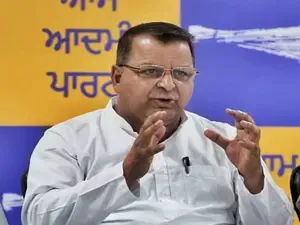
AAP spokesperson Neel Garg addressed the media, asserting that the Modi administration has continuously utilized “empty slogans and political theatrics” to mislead the public while systematically diminishing welfare guarantees intended for the most impoverished sections of society.
“This is not just a renaming exercise, nor is it simply about removing Mahatma Gandhi’s name. The core issue is that the Centre has effectively delivered a death blow to MGNREGA, attempting to conceal its anti-labor stance behind fabricated TV debates and distractions,” he stated.
Garg cautioned that over 12 crore rural workers, who currently possess MGNREGA job cards, will be directly impacted by this newly introduced Bill in Parliament. “While the government claims to increase guaranteed workdays from 100 to 125 days, the intricate details of the proposed legislation reveal a perilous truth. Clause 68 of the new bill does not guarantee work, but instead includes provisions for denying work,” he explained.
“It specifies that during 60 days of the agricultural season, there is no requirement to offer employment. Who will determine whether a laborer found work in agriculture or whether their household managed to survive during those 60 days?” the AAP leader questioned. Under MGNREGA, employment demand was evaluated at the grassroots level, with workers approaching the panchayat or sarpanch directly.
Garg raised concerns about how rural laborers would now secure employment. “Will an impoverished worker now have to seek work from the Prime Minister? Even reaching the sarpanch was challenging; this policy completely severs employment from the grassroots and centralizes authority in Delhi,” he added.
Point of View
The restructuring of MGNREGA into the VB-G RAM G Bill raises significant concerns about the future of rural employment and welfare. While the government claims to enhance work opportunities, the implications for grassroots access and the livelihoods of millions must be carefully scrutinized. Ensuring the rights and dignity of rural laborers should remain a priority for any administration.
NationPress
16/12/2025
Frequently Asked Questions
What is MGNREGA?
MGNREGA stands for the Mahatma Gandhi National Rural Employment Guarantee Act, which guarantees a minimum of 100 days of wage employment in a financial year to every rural household.
What is the VB-G RAM G Bill?
The VB-G RAM G Bill is a proposed legislation intended to replace MGNREGA, focusing on rural employment and livelihood security.
How will the new bill affect rural workers?
It is expected to impact over 12 crore rural workers by potentially limiting their access to guaranteed employment and changing how employment is allocated.
What are the main concerns regarding the new bill?
Key concerns include the lack of guaranteed employment during certain periods and the centralization of power away from local governance.
Is there a risk of losing MGNREGA benefits?
Yes, critics argue that the new bill could dilute the benefits and protections currently provided under MGNREGA, affecting rural livelihoods.