Jagan Gurjar jail death: Autopsy confirms strangulation, hyoid bone fracture
Synopsis
A six-member medical board has confirmed that dacoit Jagan Gurjar was strangled to death inside Ajmer High-Security Jail — the hyoid bone fractured, asphyxia setting in within three minutes. The CCTV camera in his cell was non-functional at the time, raising pointed questions about how a hardcore prisoner was killed in one of Rajasthan's most secure prisons.
Key Takeaways
Jagan Gurjar was killed inside Ajmer High-Security Jail on 29 June ; autopsy results confirmed on 1 July .
A six-member medical board found death was caused by strangulation and fracture of the hyoid bone .
Gurjar succumbed to asphyxia within approximately three minutes of the assault, per initial findings.
Co-prisoner Vishnu , accused in the Kuldeep Jaghina murder case from Bharatpur , allegedly used Gurjar's own towel to strangle him.
The CCTV camera in the cell was non-functional at the time, exposing serious surveillance lapses.
Gurjar's body was cremated at Bhavutipura village , Dholpur , on Wednesday after family protests secured a post-mortem agreement with the administration.
The autopsy report of notorious dacoit Jagan Gurjar, killed inside Ajmer High-Security Jail on 29 June, has confirmed that he died of strangulation — specifically, a fracture of the hyoid bone caused by severe pressure applied to his neck and throat. The findings, released on 1 July, were produced by a six-member medical board that conducted the post-mortem in Ajmer.
What the Autopsy Found
The preliminary post-mortem report documented internal haemorrhage in the middle portion of the neck, along with significant injuries around the trachea (windpipe) and oesophagus (food pipe). According to initial findings, Gurjar succumbed to asphyxia within approximately three minutes of the assault — a detail that underscores the speed and force of the attack.
The six-member board's conclusion — neck fracture and strangulation as cause of death — leaves little ambiguity about the nature of the killing.
How the Murder Unfolded
According to the family, a co-prisoner identified as Vishnu, an accused in the Kuldeep Jaghina murder case from Bharatpur, allegedly strangled Gurjar using his own towel. Both men, classified as hardcore prisoners, were housed in the same barrack at the time of the incident. The murder is currently under investigation by authorities.
Notably, the CCTV camera in the cell where the attack occurred was found to be non-functional at the time — a fact that has drawn sharp scrutiny of the prison's surveillance infrastructure and oversight protocols.
Family Protests and Last Rites
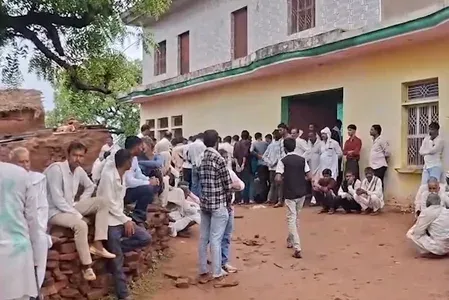
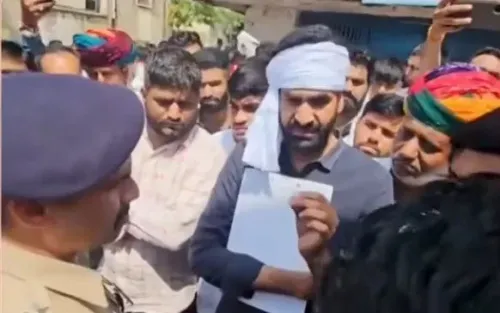
Gurjar's family had been staging protests and demanding justice following his death. After an agreement was reached between the family and the district administration, the post-mortem was conducted in Ajmer on Tuesday. The body was subsequently transported to his native Bhavutipura village in Dholpur's Dang region for the funeral.
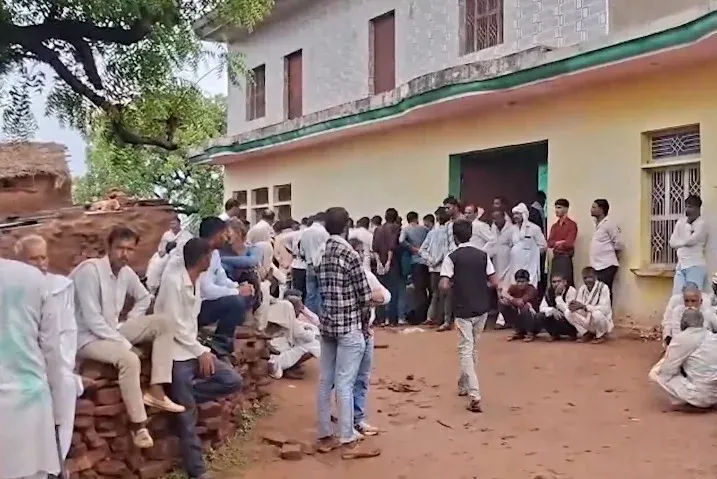
The mortal remains arrived at the village at around 7:30 am, with villagers and supporters having begun gathering from 6:00 am onwards. Gurjar's younger brother, Pappu Gurjar, was escorted under tight security from Ajmer to Dholpur at around 1:00 am to attend the last rites.
Serious Questions Over Jail Security
The killing of a hardened criminal by a fellow inmate inside one of Rajasthan's most secure prisons has exposed what critics describe as significant lapses in the prison security system. The non-functional CCTV camera in the relevant cell has amplified concerns about surveillance gaps and administrative accountability.
This is not the first time that a high-security Indian prison has faced scrutiny following an in-custody death — but the combination of a classified hardcore prisoner being killed, a dysfunctional camera, and two dangerous inmates sharing a barrack has made this case particularly damaging for the jail administration. An investigation is ongoing, and further findings are expected in the coming days.
Point of View
That the cell camera was non-functional, and that the killing was completed in roughly three minutes — each detail alone would warrant inquiry; together, they suggest systemic neglect rather than a one-off lapse. High-security prisons in India have long operated on a presumption of internal order that this case directly punctures. The investigation must go beyond identifying the perpetrator — who is already known — and account for the administrative chain of decisions that made this possible.
NationPress
30 Sept 2026
Frequently Asked Questions
How did Jagan Gurjar die inside Ajmer High-Security Jail?
According to the preliminary autopsy report by a six-member medical board, Jagan Gurjar died of strangulation — severe pressure on his neck caused a fracture of the hyoid bone and internal haemorrhage, leading to asphyxia within approximately three minutes. Co-prisoner Vishnu, an accused in the Kuldeep Jaghina murder case, allegedly used Gurjar's own towel to carry out the attack on 29 June.
What did the autopsy report reveal about Jagan Gurjar's injuries?
The post-mortem found a fractured hyoid bone, internal haemorrhage in the middle of the neck, and significant injuries around the trachea and oesophagus. The six-member medical board concluded that strangulation and the resulting neck fracture caused his death.
Why is the CCTV issue significant in the Jagan Gurjar case?
The CCTV camera installed in the cell where the murder occurred was non-functional at the time of the attack. This has raised serious questions about surveillance oversight inside Ajmer High-Security Jail, as the absence of footage could hamper the investigation and points to broader security lapses.
Where was Jagan Gurjar cremated and what happened at the funeral?
Gurjar's body was cremated at his native Bhavutipura village in Dholpur's Dang region on Wednesday. His remains arrived at around 7:30 am, with supporters gathering from 6:00 am. His younger brother Pappu Gurjar was brought from Ajmer under tight security at around 1:00 am to attend the last rites.
What security concerns has this case raised about Indian jails?
The murder has exposed lapses in Ajmer High-Security Jail's security system — specifically, two hardcore prisoners sharing a barrack and a non-functional CCTV camera in the relevant cell. Critics argue the incident reveals systemic gaps in surveillance and prisoner classification protocols inside high-security Indian prisons.