Jaishankar meets Azerbaijan FM Bayramov, addresses press
Synopsis
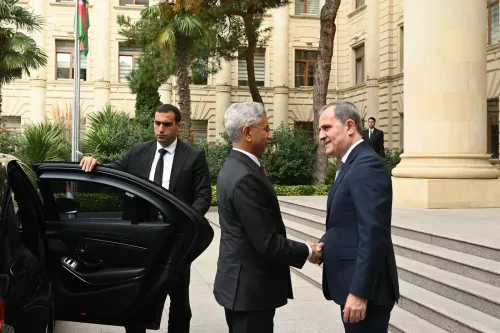
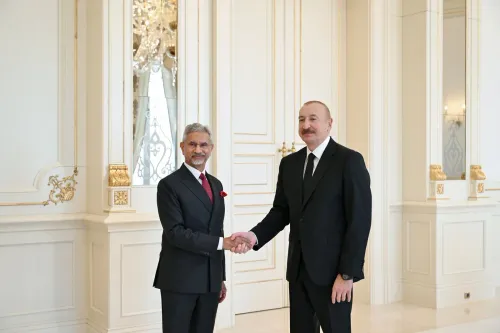
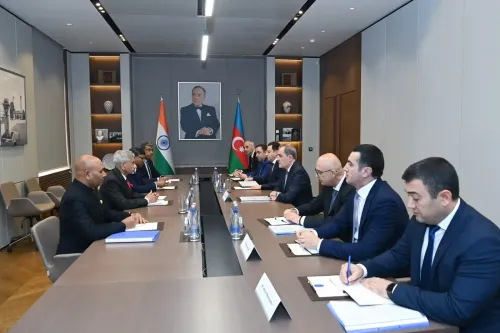
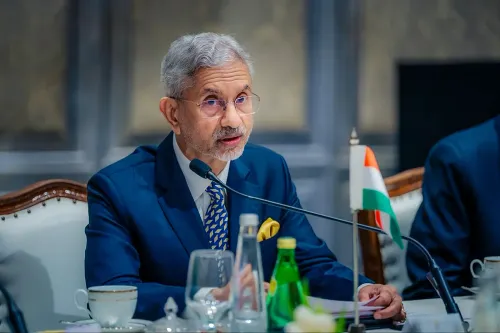
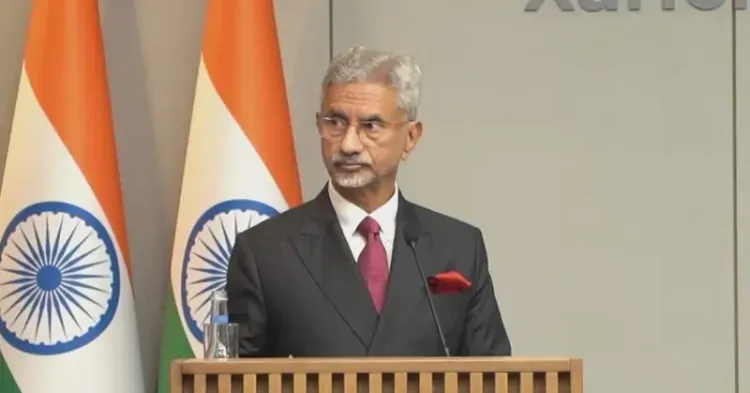
External Affairs Minister Dr. S. Jaishankar met Azerbaijani FM Jeyhun Bayramov on 23 October 2026 and addressed the press, underscoring India's deepening engagement with the Caspian state on energy, trade, and connectivity corridors.
Key Takeaways
Jaishankar met Azerbaijani Foreign Minister Jeyhun Bayramov and issued a press statement on 23 October 2026 .
India and Azerbaijan have maintained diplomatic relations since 1992 , with periodic foreign-minister-level exchanges on energy and trade.
Azerbaijan is a Caspian littoral state with major hydrocarbon reserves and a key node on the International North-South Transport Corridor (INSTC) .
India has pursued diversified energy partnerships across the Caspian basin as part of its broader energy-security strategy.
A dedicated bilateral press statement signals substantive engagement beyond the routine sideline meetings at multilateral forums.
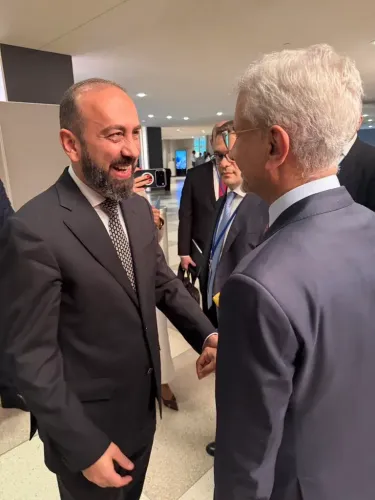
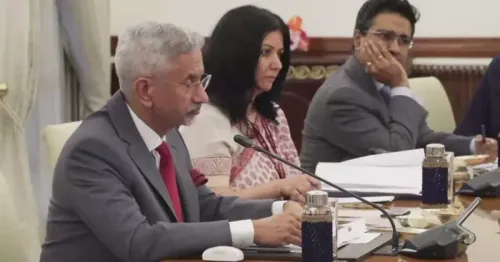
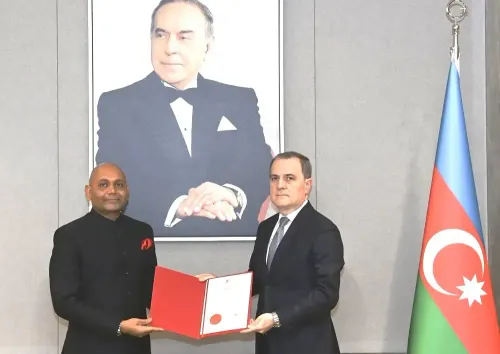
Two foreign ministers stood before cameras on Friday, 23 October 2026, and the conversation they just finished — between Union External Affairs Minister Dr. S. Jaishankar and Azerbaijani Foreign Minister Jeyhun Bayramov — landed squarely at the intersection of energy security, connectivity, and India's widening diplomatic footprint across the Caspian region.
India and Azerbaijan: a partnership older than it looks
Diplomatic ties between New Delhi and Baku stretch back to 1992, the year Azerbaijan emerged as an independent state from the Soviet Union. Yet for much of those three decades, the relationship operated quietly on the margins. What has changed is India's strategic calculus: a deliberate push to diversify energy supplies and plug into new trade and transit corridors that bypass traditional chokepoints.
Azerbaijan sits at a compelling node in that geometry. A Caspian littoral state with substantial hydrocarbon reserves, it is also a pivot point for the International North-South Transport Corridor (INSTC) — the route linking India through Iran, the Caspian Sea and Azerbaijan into Russia and onward to Europe. Every senior-level exchange between the two foreign ministries now carries both an energy subtext and a connectivity subtext.
Why Bayramov and Jaishankar at the table matters now
India has held periodic foreign minister-level meetings with Baku — often on the sidelines of multilateral forums — to discuss hydrocarbon imports and trade facilitation. A dedicated bilateral press statement, as Dr. Jaishankar indicated in his post, signals a meeting that merited its own public framing rather than a footnote to a larger summit.
India's energy import strategy over recent years has intentionally spread risk across suppliers — Gulf states, Russia, Africa, and increasingly the Caspian basin. Azerbaijan's state energy infrastructure gives New Delhi a potential avenue for both crude and, looking ahead, green-energy partnerships as Baku positions itself in global clean-energy conversations.
Connectivity corridors and what comes next
Beyond hydrocarbons, the INSTC remains the headline strategic prize. Progress on the corridor has been uneven, but each high-level diplomatic touchpoint between participating states keeps the architecture live. A joint press statement from two foreign ministers is precisely the kind of political signal that precedes movement on project timelines, trade facilitation protocols, or follow-up visits.
Whether Friday's meeting yielded concrete deliverables — an energy contract, a connectivity MoU, or a confirmed visit calendar — will become clear when the full statement is published. What is already clear is that Dr. Jaishankar and FM Bayramov chose to speak to the press together, and that choice is diplomatic language in itself.
The Caspian is no longer a footnote in India's foreign policy map. It is becoming a chapter.
Point of View
Particularly along the INSTC spine. For India, Azerbaijan is not just an energy source but a transit hub whose cooperation directly affects the viability of the North-South Corridor — a project New Delhi has invested diplomatic capital in for years. A standalone press interaction, rather than a multilateral sideline meeting, reflects a deliberate elevation of the relationship. Watching for any follow-up energy or connectivity announcement will reveal how substantive this engagement truly was.
NationPress
23 Oct 2026
Frequently Asked Questions
Why did Jaishankar meet Azerbaijan FM Bayramov?
External Affairs Minister Dr. S. Jaishankar met Azerbaijani Foreign Minister Jeyhun Bayramov on 23 October 2026 to hold bilateral talks and address the press, covering areas such as energy cooperation, trade, and connectivity corridors between India and Azerbaijan.
What is India's relationship with Azerbaijan?
India and Azerbaijan established diplomatic relations in 1992. The two countries have held periodic foreign-minister-level meetings to discuss energy supplies, hydrocarbon imports, and trade, with Azerbaijan also featuring in India's connectivity discussions around the International North-South Transport Corridor.
What is the INSTC and why does Azerbaijan matter for India?
The International North-South Transport Corridor (INSTC) is a multi-modal route linking India through Iran, the Caspian Sea, Azerbaijan, and Russia to Europe. Azerbaijan's geographic position makes it a critical transit hub, which is why New Delhi has prioritised diplomatic engagement with Baku.
Who is Jeyhun Bayramov?
Jeyhun Bayramov is the Foreign Minister of Azerbaijan, representing the Caspian nation in bilateral and multilateral diplomatic engagements including the 23 October 2026 meeting with India's External Affairs Minister Dr. S. Jaishankar.
What could come out of the India-Azerbaijan foreign minister meeting?
Possible outcomes include joint statements, energy supply agreements, trade facilitation protocols, or announcements related to the International North-South Transport Corridor, though the full details will emerge once the official press statement is published.