Jaishankar mourns Malviya Nagar fire deaths, MEA aids embassies
Synopsis
Union External Affairs Minister Dr. S. Jaishankar mourned the loss of lives, including foreign nationals, in a tragic fire in Malviya Nagar, New Delhi. He said the Ministry of External Affairs is in touch with affected embassies and extending all necessary assistance, and prayed for the speedy recovery of those injured in the incident.
Key Takeaways
Jaishankar expressed deep condolences over the Malviya Nagar fire in New Delhi on 3 June 2026.
The casualty list includes foreign nationals, prompting direct MEA involvement.
The Ministry of External Affairs is in touch with the relevant embassies in New Delhi.
MEA is extending all necessary assistance, in line with Vienna Convention consular norms.
The minister also prayed for the speedy recovery of those injured in the incident.
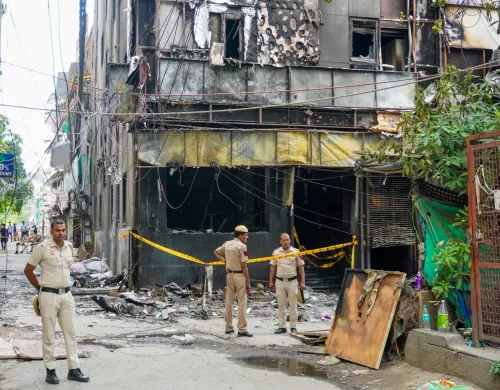
Union External Affairs Minister Dr. S. Jaishankar on Wednesday, 3 June 2026, expressed deep condolences over the loss of lives, including those of foreign nationals, in a tragic fire incident in Malviya Nagar, New Delhi. He said the Ministry of External Affairs is in touch with the affected embassies and is extending all necessary assistance, while praying for the speedy recovery of the injured.
In his post, the minister wrote, 'Express my deepest condolences at the loss of lives, including of foreign nationals, in the tragic fire incident in Malviya Nagar, New Delhi. Pray for the speedy recovery of the injured. MEA is in touch with Embassies and is extending all necessary assistance.'
Context
The fire broke out in Malviya Nagar, a densely populated residential locality in South Delhi that hosts a significant number of foreign students, researchers and short-stay visitors alongside long-term residents. The neighbourhood's mix of guest houses, paying-guest accommodations and rented apartments has historically drawn a transient international population.
Dr. Jaishankar's intervention signals that the casualty list includes citizens of more than one country, which is why the Ministry of External Affairs has stepped in alongside the local administration. Specific casualty figures, nationalities and the cause of the blaze are subjects of an ongoing investigation.
Policy backdrop
The MEA is India's nodal body for diplomatic relations and consular coordination, and routinely activates its consular wing whenever foreign citizens are affected by accidents on Indian soil. Such responses are aligned with India's obligations under the Vienna Convention on Consular Relations, which governs notification to and access by foreign missions in cases involving their nationals.
Standard operating procedures typically include early notification to the relevant embassy, facilitation of medical care, assistance with documentation for the injured, and coordination on the repatriation of mortal remains where applicable. The minister's public message — issued within hours of the incident — reflects an effort to reassure foreign missions in New Delhi that channels of communication are already open.
Stakeholders and impact
The immediate stakeholders are the families of those killed and injured, the diplomatic missions of the affected countries, and the local civic and police authorities handling the site. For embassies, prompt access to victims and information is a core consular expectation, and the MEA's liaison role is critical in bridging the gap between local agencies and foreign diplomats.
For the Government of India, incidents involving foreign casualties carry an added diplomatic dimension. How swiftly authorities share information, facilitate visits by embassy officials, and assist families travelling from abroad can shape bilateral perceptions well beyond the immediate tragedy.
Dr. Jaishankar, a former Foreign Secretary and former Indian Ambassador to the United States, China and Singapore, has consistently underscored consular outreach as a priority of Indian diplomacy. His direct articulation of MEA involvement places the incident firmly within the ambit of the foreign policy establishment, not merely a local emergency.
What's next
Attention will now turn to official updates on the fire investigation, including the building's safety compliance and the trigger for the blaze. The MEA is expected to issue further communications to affected embassies on identification of victims, hospital care and any compensation or repatriation-related coordination.
Beyond the immediate response, the incident is likely to renew scrutiny of fire safety standards in residential pockets of Delhi that house large foreign and student populations. For India's diplomatic apparatus, the test will be the speed and sensitivity with which the consular machinery delivers on the minister's public assurance.
Point of View
Dr. Jaishankar is pre-empting the diplomatic friction that typically follows such incidents, especially around information access. The episode also throws fresh light on fire safety in Delhi neighbourhoods popular with international residents, an area where civic enforcement has lagged. How the consular machinery delivers in the coming days will matter more than the message itself.
NationPress
17 Oct 2026
Frequently Asked Questions
What did Jaishankar say about the Malviya Nagar fire?
Dr. S. Jaishankar expressed his deepest condolences over the loss of lives, including foreign nationals, in the Malviya Nagar fire in New Delhi. He said the MEA is in touch with the embassies and is extending all necessary assistance, and prayed for the speedy recovery of the injured.
Where did the Malviya Nagar fire incident take place?
The fire incident occurred in Malviya Nagar, a residential locality in South Delhi. The area is known for hosting a significant transient population, including foreign students and short-stay visitors in guest houses and rented accommodations.
What role is the Ministry of External Affairs playing?
The Ministry of External Affairs is coordinating consular assistance for the affected foreign nationals. It is liaising with the embassies of the affected countries in New Delhi, in line with India's obligations under the Vienna Convention on Consular Relations.
Were foreign nationals killed in the Delhi fire?
Yes, the minister confirmed that foreign nationals were among those who lost their lives in the Malviya Nagar fire. Specific nationalities and casualty figures are part of an ongoing investigation and have not been officially detailed.
How does India assist foreign nationals in such incidents?
India follows established consular protocols that include notifying the relevant embassy, facilitating medical care, assisting with documentation, and coordinating repatriation of remains if needed. The MEA acts as the bridge between local authorities and foreign missions during such incidents.