Amit Shah expresses grief over Malviya Nagar fire in Delhi
Synopsis
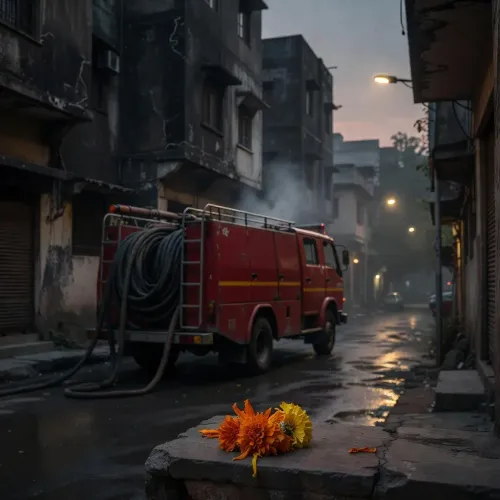
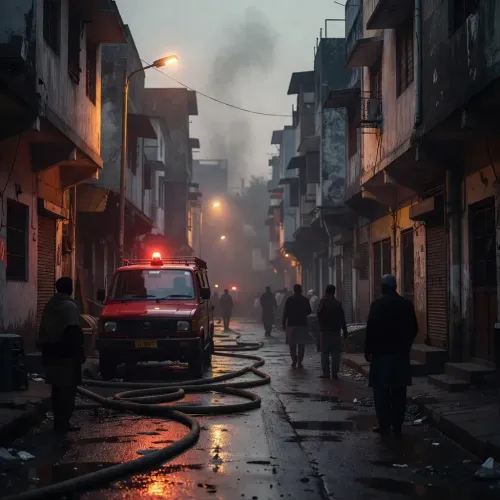
Union Home Minister Amit Shah said he was deeply pained by the fire in Delhi's Malviya Nagar, conveyed condolences to bereaved families and assured that local administration was leading relief and rescue while the injured received the best medical care.
Key Takeaways
Union Home Minister Amit Shah issued a public statement on the Malviya Nagar fire in Delhi on 3 June 2026.
He said local administration was engaged in relief and rescue operations.
Shah conveyed condolences to families that lost members in the incident.
He assured that the injured are being given the best medical facilities.
The post does not specify the cause of the fire or casualty numbers.
Delhi's fire response operates under the National Disaster Management Act, 2005 framework.
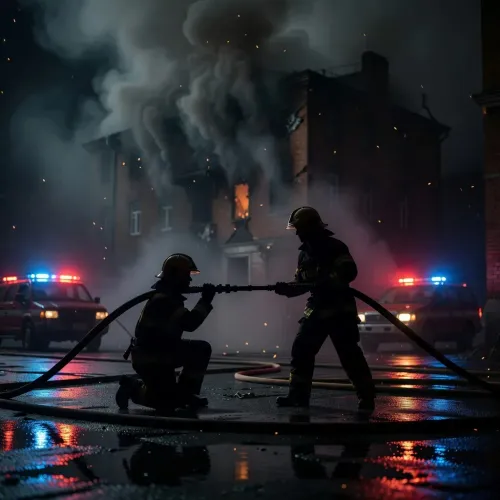
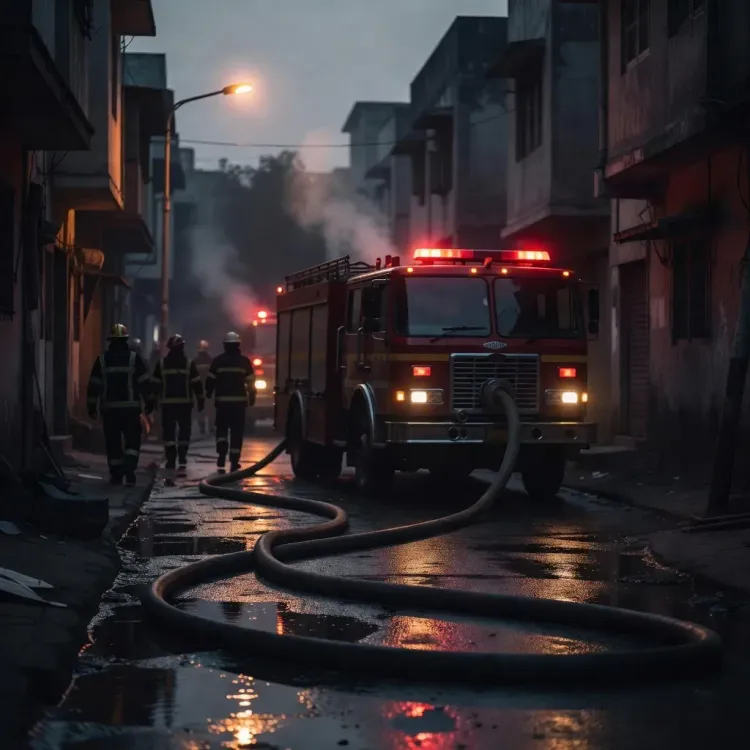
Union Home Minister Amit Shah on 3 June 2026 expressed deep anguish over a fire incident in Malviya Nagar, South Delhi, stating that local administration was engaged in relief and rescue operations and that the best medical care was being extended to the injured. In a post on X, the senior Bharatiya Janata Party leader conveyed condolences to families that lost loved ones in the blaze and prayed for the swift recovery of those hurt.
Translated from Hindi, Shah wrote that he was 'अत्यंत व्यथित' (deeply pained) by the fire in Malviya Nagar and that 'the local administration is engaged in relief and rescue work.' He added, 'My condolences are with those who have lost their family members in this heart-rending incident. May God grant the bereaved families the strength to bear this sorrow. The injured are being provided the best medical facilities, and I wish all the injured a speedy recovery.'
Context
Malviya Nagar is a densely populated residential and commercial locality in South Delhi, with a mix of older built-up housing, narrow lanes and busy market stretches. Fire incidents in such pockets of the national capital often draw immediate attention from the Union government because Delhi, as a union territory, sits within the Home Ministry's broader administrative remit.
Shah's message is consistent with the standard pattern of senior central leaders publicly acknowledging the response on the ground and signalling that injured residents are being prioritised for treatment. The post does not specify casualty figures or the cause of the fire.
Policy backdrop
Urban fire response in India operates under a layered framework. The National Disaster Management Act, 2005 established the National Disaster Management Authority (NDMA) and the National Disaster Response Force (NDRF), which can be mobilised alongside state and local fire services in major urban emergencies.
In Delhi, frontline response is led by the Delhi Fire Service, supported by police and civic agencies, with the Lieutenant Governor's office and the Union Home Ministry kept in the loop on serious incidents. Fire-safety compliance in older residential clusters has been a recurring policy concern, especially where electrical loads, storage of inflammable goods and narrow access lanes complicate rescue work.
Stakeholders and impact
The immediate stakeholders are the affected families in Malviya Nagar, neighbouring residents, shop owners and first responders. For bereaved households, the focus will shift to identification, last rites and any ex-gratia announcements that may follow from the Delhi government or the Centre.
For the administration, the episode places renewed attention on building-safety audits in South Delhi colonies, including checks on wiring, exits and access for fire tenders. Hospitals treating burn and smoke-inhalation cases will play a central role in the coming days, in line with Shah's assurance that the injured are receiving the 'best medical facilities'.
What's next
Attention will turn to an official account of how the fire started, the number of people affected, and whether structural or safety violations contributed to the scale of damage. Any inquiry findings could feed into wider fire-safety compliance reviews across Delhi's residential pockets.
As Union Home Minister, Shah's public intervention also signals that central agencies remain available to support the Delhi administration if the situation escalates. The broader implication is a likely fresh push for tighter enforcement of fire norms in dense urban neighbourhoods, where recurring incidents continue to expose gaps between regulation and ground reality.
Point of View
An assurance on medical care, and an implicit signal that central machinery is on standby. The choice to post in Hindi underscores the message's intended reach among Delhi's residents rather than a national policy audience. Politically, urban fire incidents in Delhi increasingly intersect with questions about municipal fire-safety enforcement, an area where the Centre, the Delhi government and civic bodies share overlapping responsibilities. The real test will be whether this expression of grief is followed by a concrete safety-audit push in older South Delhi neighbourhoods.
NationPress
17 Oct 2026
Frequently Asked Questions
What did Amit Shah say about the Malviya Nagar fire?
Amit Shah said he was deeply pained by the fire in Delhi's Malviya Nagar, that local administration was conducting relief and rescue, and that the injured were being given the best medical care. He also conveyed condolences to families that lost loved ones.
Where did the Malviya Nagar fire take place?
The fire took place in Malviya Nagar, a densely populated residential and market locality in South Delhi within the National Capital Territory.
When did Amit Shah post his message on the Delhi fire?
Amit Shah posted his message on X on 3 June 2026, expressing anguish over the Malviya Nagar fire and offering condolences to affected families.
Which agencies handle fire response in Delhi?
Frontline fire response in Delhi is led by the Delhi Fire Service, supported by police and civic agencies. The NDMA and NDRF, set up under the National Disaster Management Act, 2005, can be mobilised for major urban emergencies.
Has the cause of the Malviya Nagar fire been disclosed?
The cause of the fire has not been disclosed in the Home Minister's post. Any official account is expected to emerge from the local administration's inquiry.