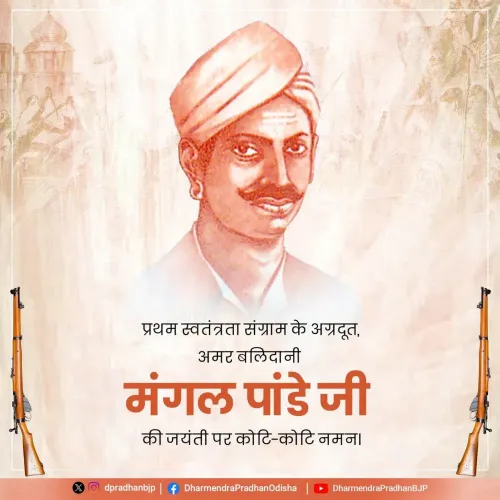
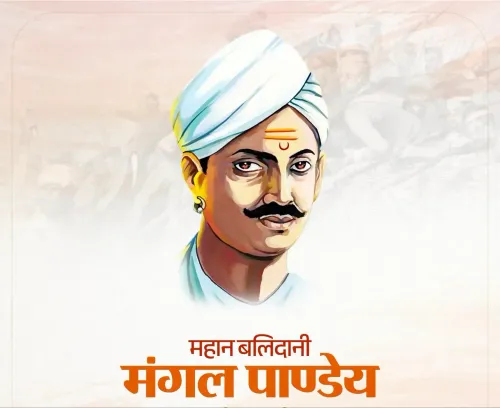
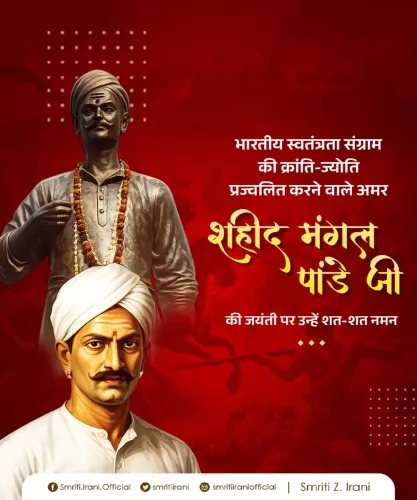
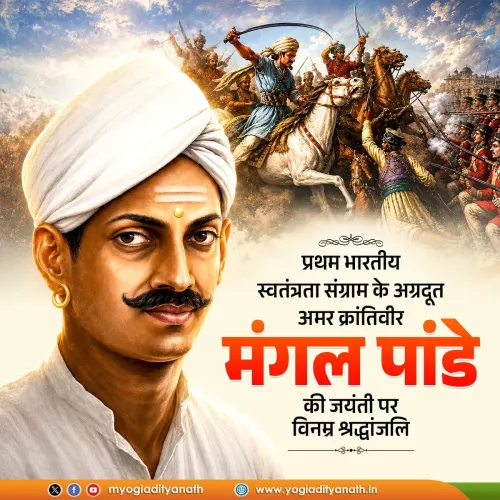
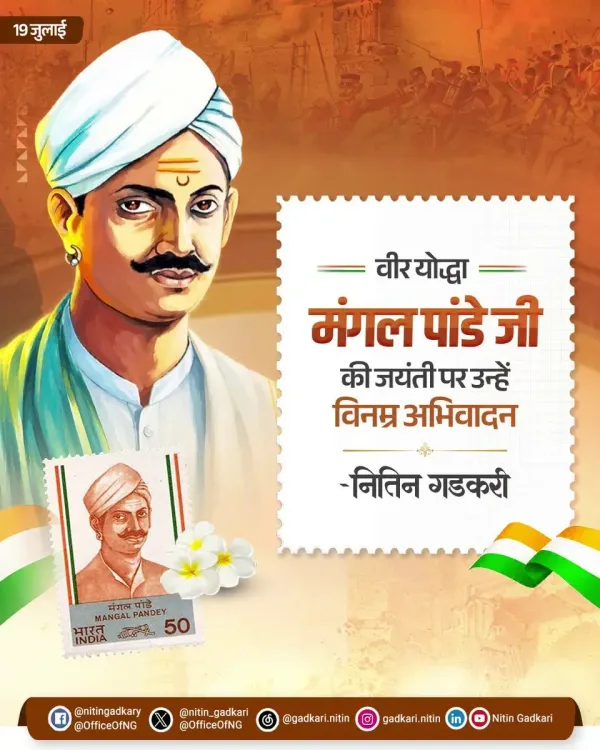
Gadkari pays tribute to Mangal Pandey on birth anniversary
Synopsis
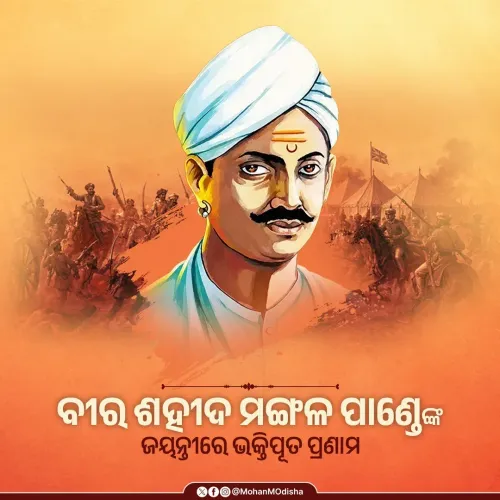
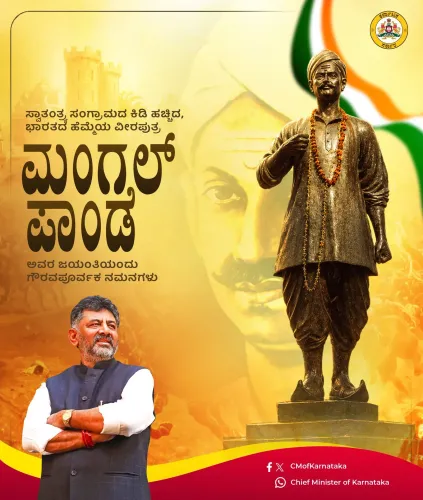
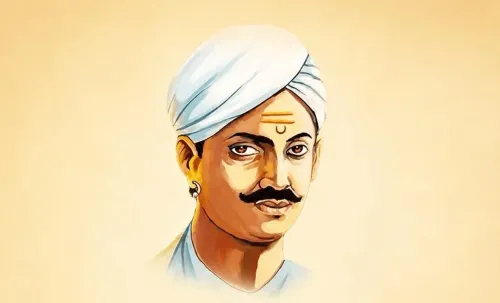
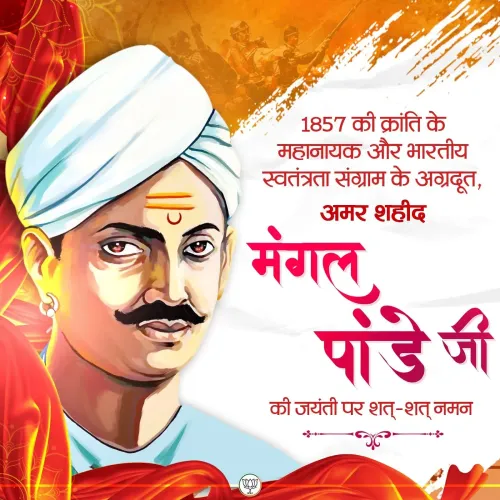
Union Minister Nitin Gadkari on 19 July 2026 paid tribute to Mangal Pandey, the 1857 sepoy whose act of defiance at Barrackpore is widely regarded as an early spark of India's First War of Independence, marking his birth anniversary on X.
Key Takeaways
Union Minister Nitin Gadkari posted a tribute to Mangal Pandey on his birth anniversary, 19 July 2026 .
Mangal Pandey was a sepoy in the 34th Bengal Native Infantry who attacked British officers at Barrackpore on 29 March 1857 .
He was executed on 8 April 1857 and is regarded as a pioneering figure of the First War of Independence .
Senior BJP leaders have routinely commemorated 1857 revolt figures on social media since 2014 as part of a sustained emphasis on pre-20th-century resistance narratives.
The tribute comes less than a month before Independence Day on 15 August 2026 , a period of heightened patriotic commemoration.
Union Road Transport and Highways Minister Nitin Gadkari on Sunday, 19 July 2026, paid tribute to Mangal Pandey, honouring the 1857 freedom fighter on his birth anniversary with a post on X.
In his post, Gadkari wrote: 'स्वाधीनता संग्राम के अग्रणी योद्धा मंगल पांडे जी की जयंती पर उन्हें विनम्र अभिवादन' — 'Humble greetings to Mangal Pandey, a pioneering warrior of the freedom struggle, on his birth anniversary.'
Context
Mangal Pandey was a sepoy in the 34th Bengal Native Infantry of the East India Company. On 29 March 1857, he attacked British officers at Barrackpore, near present-day Kolkata, in an act of open defiance that became one of the earliest recorded sparks of the wider uprising that followed. He was subsequently court-martialled and executed on 8 April 1857.
The 1857 Revolt — which spread across northern and central India as a military mutiny and a broader civilian uprising — is officially commemorated in India as the First War of Independence. Pandey's act of resistance has come to symbolise the first organised challenge to colonial rule in the popular historical imagination.
Policy Backdrop
Since 2014, senior government figures and BJP leaders have systematically incorporated birth and death anniversaries of pre-20th-century resistance figures — particularly those associated with the 1857 uprising — into their official social media calendars. These commemorations align with a broader policy emphasis on recentring 19th-century anti-colonial narratives in public discourse and school curricula.
Annual tributes to Mangal Pandey on 19 July — his birth anniversary — recur alongside similar messages for other revolt leaders such as Rani Lakshmibai of Jhansi, Nana Sahib, and Tatya Tope. These posts form part of a sustained commemorative pattern rather than isolated gestures.
Stakeholders and Impact
The tribute is addressed to the general public and carries symbolic weight in the run-up to Independence Day on 15 August, a period when patriotic commemorations intensify across government platforms. For the BJP, invoking 1857 figures reinforces a political narrative that positions the party as a custodian of India's deepest anti-colonial heritage.
Historians and educators note that public tributes by senior ministers lend institutional visibility to figures like Pandey, potentially influencing how younger generations engage with the pre-Gandhian phase of India's independence movement.
What's Next
With Independence Day 2026 less than a month away, tributes of this kind are likely to intensify across the political spectrum. State governments — particularly those led by BJP — may also organise programmes marking the 1857 revolt anniversary, especially in Uttar Pradesh, where Mangal Pandey was born in the village of Nagwa in Ballia district. Any formal government event or curriculum initiative linked to the commemoration would mark a step beyond social media tribute into institutional action.
Point of View
Part of a well-established BJP pattern of publicly honouring 1857 figures to reinforce the party's claim as the foremost guardian of India's anti-colonial legacy. The timing — less than a month before Independence Day — amplifies the symbolic value of such posts, ensuring they land in a news cycle already primed for patriotic narratives. Over time, this sustained commemorative cadence has helped normalise a particular reading of Indian history that foregrounds 19th-century armed resistance alongside the Gandhian mainstream. For senior ministers like Gadkari, these posts serve both as personal expressions of reverence and as disciplined contributions to a larger ideological messaging architecture.
NationPress
17 Oct 2026
Frequently Asked Questions
Who was Mangal Pandey and why is he famous?
Mangal Pandey was a sepoy in the British East India Company's 34th Bengal Native Infantry who attacked British officers at Barrackpore on 29 March 1857. He is widely regarded as one of the earliest figures to openly defy colonial rule, making him a symbol of the 1857 First War of Independence.
When is Mangal Pandey's birth anniversary?
Mangal Pandey's birth anniversary falls on 19 July. He was born in 1827 in Nagwa village in Ballia district, present-day Uttar Pradesh.
What did Nitin Gadkari post about Mangal Pandey?
On 19 July 2026, Union Minister Nitin Gadkari posted a tribute on X offering 'humble greetings' to Mangal Pandey, describing him as a 'pioneering warrior of the freedom struggle' on his birth anniversary.
What was the 1857 revolt and how is it commemorated in India?
The 1857 revolt began as a military mutiny against the British East India Company and spread into a broader civilian uprising across northern and central India. It is officially commemorated in India as the First War of Independence.
Why do BJP leaders frequently pay tribute to 1857 freedom fighters?
Since 2014, BJP leaders have systematically marked the birth and death anniversaries of pre-20th-century resistance figures, including those associated with the 1857 revolt, as part of a broader emphasis on anti-colonial narratives in public discourse and educational policy.