Sitharaman: Traditional Arts Need Markets, Not Just Subsidies
Synopsis
Finance Minister Nirmala Sitharaman, in a Tamil-language column in Dinamalar, argues that traditional arts need stable markets and fair artisan incomes — not just subsidies — and links this vision to PM Modi's One District One Product scheme.
Key Takeaways
Nirmala Sitharaman authored a column in Tamil-language daily Dinamalar on 19 July 2026 on preserving traditional arts.
She argued that subsidies alone are insufficient; artisans need sustainable markets and fair income for genuine cultural preservation.
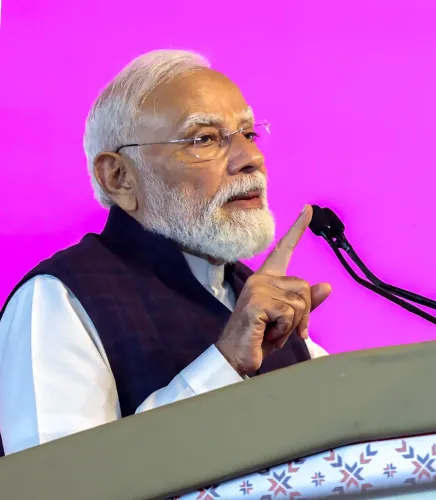
She cited PM Modi's One District One Product (ODOP) scheme as embodying this market-linkage approach.
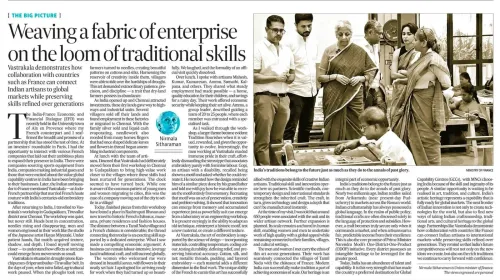
The column references Tamil Nadu's Vastrakala textile tradition gaining visibility in France , highlighting export potential.
The ODOP scheme was first launched in Uttar Pradesh in 2018 and later expanded nationally to support traditional crafts through branding and exports.
The policy sits within a broader government framework including GI registrations and handicraft export-promotion councils active since 2014 .
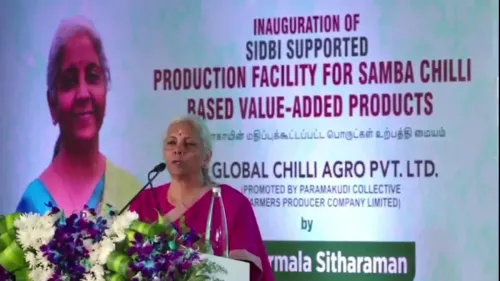
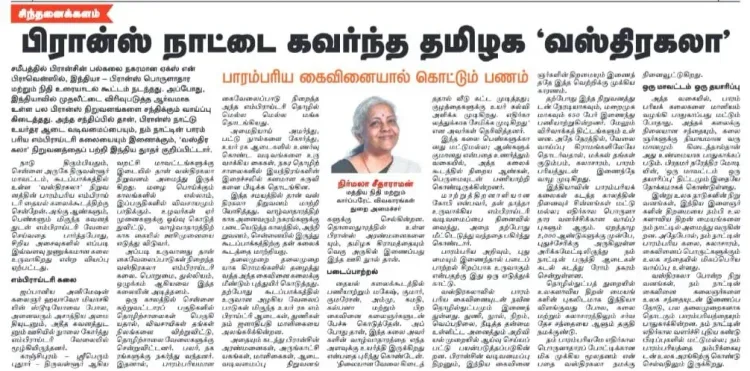
Union Finance Minister Nirmala Sitharaman on Sunday, 19 July 2026, argued that preserving traditional arts requires sustainable markets and fair incomes for artisans — not subsidies alone — citing Prime Minister Narendra Modi's One District One Product (ODOP) scheme as a model for achieving that goal. The remarks appeared in a column she authored in the Tamil-language daily Dinamalar.
Context
Writing in Tamil, Sitharaman stated: 'பாரம்பரியக் கலைகளை மானியம் வழங்கிப் பாதுகாப்பது மட்டும் போதாது' — 'Protecting traditional arts through subsidies alone is not enough.' She added that such arts are truly preserved only when artisans receive a stable market and fair income. The column was published on 19 July 2026 in Dinamalar, one of Tamil Nadu's widely read Tamil-language dailies, and the post links to coverage of how Tamil Nadu's Vastrakala textile tradition has drawn attention in France.
The Finance Minister explicitly connected this argument to the ODOP scheme championed by Prime Minister Modi, describing it as sharing the same objective of converting cultural heritage into viable livelihoods.
Policy Backdrop
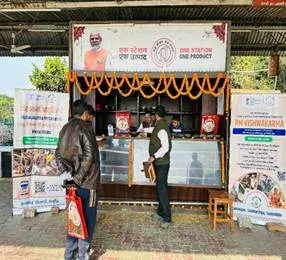
The One District One Product initiative was first launched in Uttar Pradesh in 2018 before being scaled nationally. It identifies one signature product per district — often a traditional craft or food item — and supports it through branding, marketing infrastructure, and export facilitation. The scheme sits within a broader government philosophy, active since 2014, of pairing cultural-heritage protection with market-access measures rather than relying on direct subsidy alone.
Complementary instruments include Geographical Indications (GI) registrations for traditional products and export-promotion councils for handicrafts. Together, these aim to raise India's share in global handicraft trade while generating sustainable rural employment. Tamil Nadu, with deep traditions in silk weaving, handloom textiles and craft forms such as Vastrakala, stands to benefit significantly from such frameworks.
Stakeholders and Impact
The primary beneficiaries of the policy direction Sitharaman outlines are traditional artisans and handloom weavers, many of whom depend on government patronage but lack direct access to domestic or international markets. A shift toward market-linkage models means their income would be tied to commercial demand rather than grant cycles, offering greater long-term stability.
The reference to Tamil Nadu's Vastrakala crafts drawing interest in France illustrates the export and cultural-diplomacy potential of such an approach. International exhibitions form part of a wider effort that also supports the 'Make in India' and Atmanirbhar Bharat frameworks, positioning Indian craft traditions as globally competitive products rather than objects of heritage conservation alone.
What's Next
Observers will watch the next Union Budget and supplementary demands for the culture and textiles ministries to see whether allocations shift further toward market-linkage and export-promotion measures. Possible expansion of ODOP coverage and new GI registrations for Tamil Nadu crafts are among the near-term policy moves that could follow the direction Sitharaman has articulated. Her decision to write in Tamil for a Tamil-language publication also signals continued outreach to southern audiences on economic and cultural themes.
Point of View
A distinction that has defined the Modi government's approach to heritage since 2014. Writing in Tamil for a Tamil-language audience is itself a political signal, reflecting the BJP's sustained effort to expand its cultural and electoral footprint in the south. The ODOP reference ties a Union-level scheme to regional pride, a rhetorical move that simultaneously promotes central policy and acknowledges Tamil Nadu's distinctive craft identity. If this philosophy translates into the next Budget's allocations, it could meaningfully shift the balance between subsidy and market-linkage spending in the culture and textiles ministries.
NationPress
19 Jul 2026
Frequently Asked Questions
What did Nirmala Sitharaman say about traditional arts?
Sitharaman argued that protecting traditional arts through subsidies alone is not enough — artisans also need stable markets and fair incomes for cultural heritage to be genuinely preserved, as she wrote in her Dinamalar column on 19 July 2026.
What is the One District One Product scheme?
The One District One Product (ODOP) scheme identifies one signature product per district — often a traditional craft — and supports it through branding, marketing and export facilitation. It was first launched in Uttar Pradesh in 2018 and later expanded nationally.
What is Vastrakala and why is it in the news?
Vastrakala refers to Tamil Nadu's traditional textile craft tradition. It is in the news because Sitharaman's Dinamalar column references its growing visibility in France as an example of how Indian traditional crafts can find international markets.
Why did Sitharaman write in a Tamil newspaper?
Sitharaman authored the column in Dinamalar, a widely read Tamil-language daily, to reach Tamil-speaking audiences directly on themes of cultural policy and economic empowerment of artisans in Tamil Nadu.
How does the ODOP scheme help artisans?
ODOP helps artisans by providing branding support, marketing infrastructure and export-promotion linkages for their traditional products, aiming to convert craft skills into sustainable livelihoods rather than keeping artisans dependent on government subsidies.