CM Dhami Seeks 350 MW Extra Power, ₹7,800 Cr Aid for Uttarakhand
Synopsis
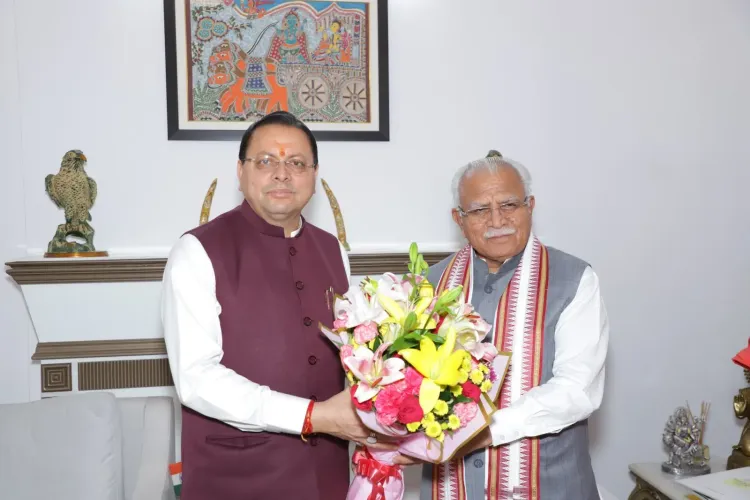
Uttarakhand CM Pushkar Singh Dhami met Union Power Minister Manohar Lal Khattar in New Delhi on 19 July 2026, seeking 150 MW and 200 MW extra power for July and August, ₹7,800 crore in central funding for hydro and pumped storage projects, and an expansion of the state's BESS project from 500 MWh to 665 MWh.
Key Takeaways
CM Dhami requested 150 MW additional power from the central pool for July 2026 and 200 MW for August 2026 to meet pilgrimage-season demand.
The request is driven by the ongoing Char Dham Yatra and the upcoming Kanwar Yatra , both of which sharply raise electricity consumption in Uttarakhand.
Dhami sought ₹7,800 crore in CFA/VGF over five years to accelerate hydropower and pumped storage projects in the state.
He urged the Centre to grant Uttarakhand capital financial assistance on par with North Eastern states , citing difficult Himalayan terrain.
A proposal to expand the state's BESS project capacity from 500 MWh to 665 MWh with commensurate VGF was also placed before the Union Minister.
Union Minister Manohar Lal Khattar gave positive assurances on all the issues raised during the meeting.
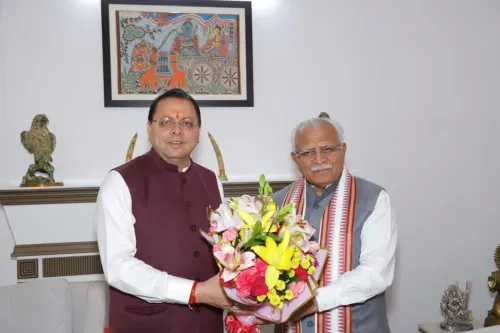
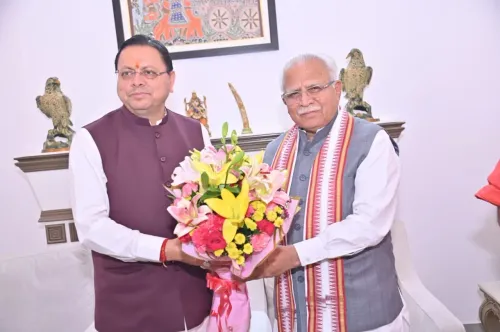
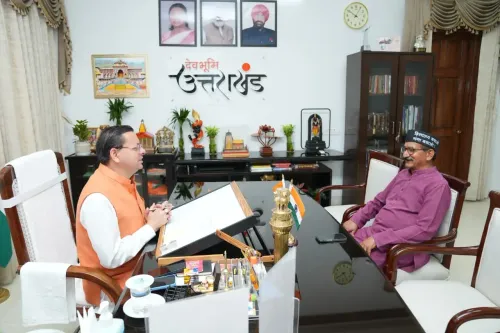
Uttarakhand Chief Minister Pushkar Singh Dhami met Union Minister of Power and Housing & Urban Affairs Manohar Lal Khattar in New Delhi on Sunday, 19 July 2026, to press for additional electricity allocations and central financial assistance to meet the state's surging pilgrimage-season demand and long-term energy security goals.
In a post on X, CM Dhami said he requested 150 megawatts (MW) of additional power from the central pool for July and 200 MW for August, citing the ongoing Char Dham Yatra and the upcoming Kanwar Yatra as the primary drivers of the seasonal demand spike. Dhami wrote, 'Char Dham yatra evam aagami Kanwar yatra ko dhyan mein rakhte hue' — 'keeping in mind the Char Dham pilgrimage and the forthcoming Kanwar Yatra' — as the rationale for the urgent allocation request.
Context
Uttarakhand is a Himalayan state whose electricity grid faces acute stress every summer as millions of pilgrims converge on its shrines. The Char Dham Yatra — covering Yamunotri, Gangotri, Kedarnath, and Badrinath — and the Kanwar Yatra to Haridwar, which peaks in July and August, together push residential, commercial, and civic power consumption well beyond normal levels. State distribution companies have historically sought ad-hoc central pool allocations to bridge this seasonal gap.
Policy Backdrop
Beyond the immediate allocation, CM Dhami urged the Centre to provide ₹7,800 crore in Central Financial Assistance (CFA) and Viability Gap Funding (VGF) over the next five years to accelerate the state's hydropower and Pumped Storage Projects (PSPs). He also requested that Uttarakhand be granted capital financial assistance on par with North Eastern states — a demand rooted in the state's difficult terrain and the higher per-unit cost of building and operating infrastructure in the Himalayas. The parity demand echoes arguments Uttarakhand has made under Finance Commission frameworks since at least 2018, reflecting broader fiscal federalism debates around special-category provisions for hill states.
On grid resilience, Dhami requested that the approved capacity of the state's Battery Energy Storage System (BESS) project be expanded from 500 MWh to 665 MWh, with corresponding VGF revised upward to match the enhanced capacity. The Centre's VGF scheme for grid-scale BESS — notified by the Ministry of Power in 2023 — targets 40 GWh of storage capacity nationally to firm up variable renewable generation and enable peak shaving, making Uttarakhand's request consistent with the national storage push.
Stakeholders and Impact
The most immediate beneficiaries of the short-term allocation, if approved, would be pilgrims, hoteliers, and local residents along the Char Dham and Kanwar corridors, who depend on uninterrupted power for lighting, cold-chain operations, and public facilities. State-owned distribution companies would gain headroom to avoid load-shedding during peak pilgrimage weeks. For hydropower and pumped-storage project developers, the ₹7,800 crore CFA ask, if sanctioned, could unlock long-stalled projects whose economics are squeezed by high capital costs in mountainous terrain.
A positive outcome on the BESS capacity upgrade would also strengthen grid stability in a state where transmission infrastructure is vulnerable to landslides and seasonal disruptions, reducing dependence on diesel backup generation in remote areas.
What's Next
CM Dhami said Minister Khattar gave 'positive assurances' on all the issues discussed — 'sakaratmak aashwasan' — though formal orders from the Ministry of Power on the July-August allocation and the revised BESS VGF sanction are still awaited. The ₹7,800 crore CFA request for hydropower and pumped storage could find its way into the next central budget cycle or an update to the National Infrastructure Pipeline. The outcome of these discussions will be a key indicator of how the Centre balances fiscal support for difficult-terrain states against competing demands from across the country's power sector.
Point of View
Politically visible request — electricity for Char Dham and Kanwar pilgrims — with structural demands like ₹7,800 crore in CFA and North Eastern-state parity is a deliberate negotiating strategy. The BESS capacity upgrade request fits neatly into the Centre's own 2023 storage push, giving Uttarakhand a policy-aligned hook. Whether 'positive assurances' translate into formal sanctions before the pilgrimage peaks will test the Centre's responsiveness to hill-state energy federalism.
NationPress
20 Jul 2026
Frequently Asked Questions
Why did CM Dhami meet Manohar Lal Khattar on 19 July 2026?
CM Dhami met Union Power Minister Manohar Lal Khattar in New Delhi to request additional electricity from the central pool for July and August 2026, central financial assistance for hydropower and pumped storage projects, and an expansion of Uttarakhand's battery storage project capacity.
How much extra power has Uttarakhand requested from the central pool?
Uttarakhand has requested 150 MW of additional power for July 2026 and 200 MW for August 2026 from the central pool to meet demand during the Char Dham Yatra and Kanwar Yatra pilgrimage seasons.
What is the ₹7,800 crore CFA/VGF request by Uttarakhand?
CM Dhami requested ₹7,800 crore in Central Financial Assistance and Viability Gap Funding over the next five years to accelerate the development of hydropower and pumped storage projects in Uttarakhand, which face high capital costs due to the state's mountainous terrain.
What is the BESS project expansion Uttarakhand has sought?
Uttarakhand has asked the Centre to expand the approved capacity of its Battery Energy Storage System project from 500 MWh to 665 MWh and to provide revised Viability Gap Funding in line with the enhanced capacity, aimed at strengthening grid stability.
Why does Uttarakhand want financial parity with North Eastern states?
Uttarakhand argues that its difficult Himalayan terrain makes infrastructure development significantly more expensive, similar to conditions in North Eastern states that already receive special capital financial assistance from the Centre. The state has been making this demand since at least 2018.