Khattar Meets CM Dhami, Reviews Uttarakhand Power Needs
Synopsis
Union Power Minister Manohar Lal Khattar met Uttarakhand CM Pushkar Singh Dhami on 19 July 2026 to discuss the state's rising electricity needs, additional central power allocation, financial support for pumped storage and hydroelectric projects, and BESS capacity expansion.
Key Takeaways
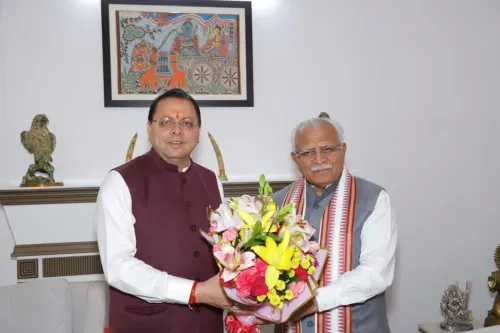
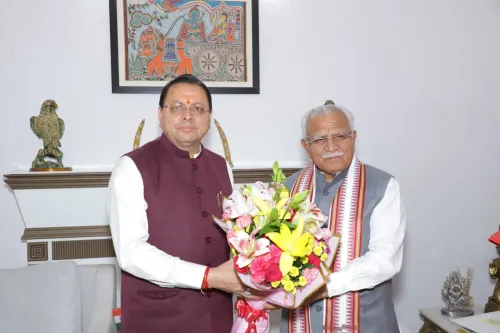
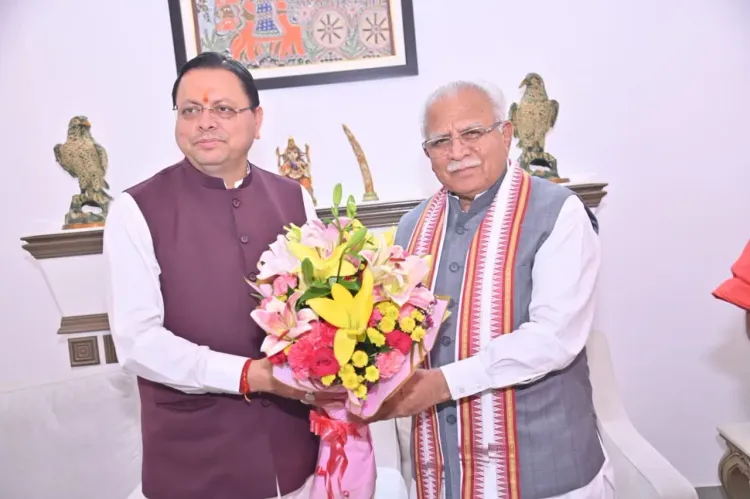
Union Power Minister Manohar Lal Khattar met Uttarakhand CM Pushkar Singh Dhami at his residence on 19 July 2026 .
Discussions covered Uttarakhand's growing electricity requirements and the case for additional central power allocation to the state.
Financial assistance for Pumped Storage Projects (PSP) and hydroelectric projects was a key agenda item.
Expansion of Battery Energy Storage Systems (BESS) capacity in the state was also discussed.
Khattar reaffirmed the Centre's commitment to strengthening Uttarakhand's energy sector under PM Narendra Modi's leadership.
Outcomes may include formal approvals for additional power allocation or viability gap funding for storage projects.
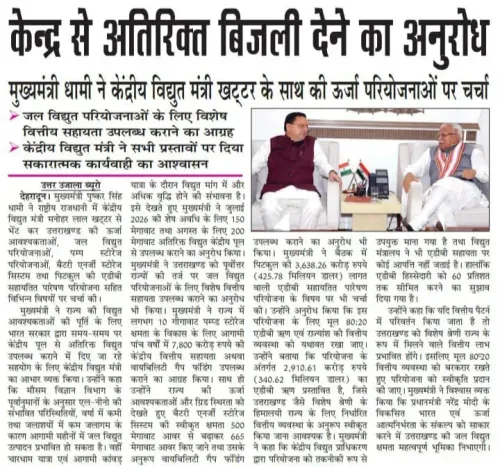
Union Power Minister Manohar Lal Khattar met Uttarakhand Chief Minister Pushkar Singh Dhami at the latter's residence on Sunday, 19 July 2026, for wide-ranging discussions on the state's energy sector. The meeting covered additional power allocation, financial support for hydroelectric and pumped storage projects, and the expansion of battery energy storage capacity in the hill state.
Context
Khattar, posting on X in Hindi, described the meeting as a 'snehil bhent' (warm, affectionate meeting) and said discussions were held on 'vidyut kshetra se jude vibhinn mahatvapurn vishyon' — various important subjects related to the energy sector. The agenda included Uttarakhand's growing electricity requirements, additional central power allocation, financial assistance for Pumped Storage Projects (PSP) and Hydroelectric Projects, and capacity expansion of Battery Energy Storage Systems (BESS). Khattar reaffirmed the Centre's commitment to strengthening Uttarakhand's energy sector under the leadership of Prime Minister Narendra Modi.
Policy Backdrop
Uttarakhand, a northern Himalayan state drained by the Ganga and Yamuna river systems, holds some of India's largest untapped hydropower reserves. The state's geography makes it a natural candidate for both run-of-river hydro projects and pumped storage schemes, which store surplus power by pumping water uphill and release it during peak demand — a critical tool for grid stability as renewable energy penetration rises.
India's broader energy storage push gained momentum after the country's updated climate commitments at COP26 in 2021, which set a net-zero target by 2070 and called for rapid scaling of storage technologies including PSP and BESS. The Electricity Act, 2003, provides the legal framework under which the Centre allocates power from central generating stations to states, a mechanism that Uttarakhand has periodically sought to leverage given its rising demand from tourism, industry, and residential consumers.
Centre-state coordination meetings of this kind have become a regular feature of power sector governance under the current government, with Union ministers engaging directly with chief ministers to fast-track project approvals and financial support mechanisms such as viability gap funding.
Stakeholders and Impact
Uttarakhand's power consumers — residential, commercial, and industrial — stand to benefit directly if additional central allocation is formalised, easing the state's dependence on expensive short-term market purchases during peak seasons. State electricity utilities and hydropower developers operating in the region would gain from any financial assistance package tied to PSP and BESS projects, reducing upfront capital risk on long-gestation infrastructure.
At the national level, expanding pumped storage and battery storage capacity in Himalayan states supports the northern grid's ability to absorb variable solar and wind power generated elsewhere in the country, directly advancing India's clean energy integration goals. Uttarakhand's hydro resources, if developed at scale, could also supply surplus power to neighbouring states, strengthening regional grid stability.
What's Next
The discussions are expected to feed into formal inter-ministerial and state-central review processes, where specific proposals for additional power allocation and financial assistance for PSP and BESS projects would be evaluated and cleared. Formal approvals, if they follow, would be notified through the Ministry of Power and the relevant central financing institutions. Observers will watch whether this meeting translates into concrete viability gap funding announcements or revised power-sharing schedules for Uttarakhand in the coming weeks.
Point of View
With PSP and BESS forming the twin pillars of that strategy. For the BJP, high-visibility ministerial engagement with a state it governs reinforces the narrative of cooperative federalism in a sector where Centre-state coordination is operationally critical. The focus on financial assistance — rather than just policy guidance — suggests the Centre is willing to deploy fiscal instruments like viability gap funding to de-risk long-gestation hydro storage projects. If concrete allocations follow, Uttarakhand could emerge as a northern grid anchor for renewable energy integration, giving the state both strategic and economic leverage.
NationPress
18 Oct 2026
Frequently Asked Questions
Why did Power Minister Khattar meet Uttarakhand CM Dhami?
Khattar met CM Dhami on 19 July 2026 to discuss Uttarakhand's growing electricity needs, additional central power allocation, financial support for pumped storage and hydroelectric projects, and expansion of battery energy storage systems (BESS) in the state.
What are Pumped Storage Projects (PSP) and why do they matter for Uttarakhand?
Pumped Storage Projects store surplus electricity by pumping water to an elevated reservoir and release it as power during peak demand. Uttarakhand's Himalayan river systems make it ideal for such projects, which are critical for grid stability as India scales up renewable energy.
What is BESS and what role does it play in India's power sector?
Battery Energy Storage Systems (BESS) are grid-scale batteries that store electricity and discharge it when needed. India is expanding BESS capacity to integrate variable solar and wind power into the national grid and reduce dependence on fossil-fuel peaking plants.
Will Uttarakhand get additional power allocation from the Centre?
The meeting discussed additional central power allocation for Uttarakhand, but no specific figures or formal approvals have been announced yet. Formal decisions would come through the Ministry of Power after inter-ministerial review.
How does this meeting fit into India's broader clean energy goals?
India has committed to net-zero emissions by 2070 and is rapidly scaling hydropower and storage capacity. Developing PSP and BESS in Himalayan states like Uttarakhand is central to that strategy, helping the northern grid absorb renewable energy and ensuring supply security.