CM Dhami Seeks Northeast-Parity for Uttarakhand Energy Aid
Synopsis
Chief Minister Pushkar Singh Dhami has formally demanded that Uttarakhand receive central assistance for energy projects on the same terms as northeastern states, arguing the Himalayan state faces identical terrain and fiscal constraints.
Key Takeaways
CM Pushkar Singh Dhami publicly demanded central energy project assistance for Uttarakhand on par with northeastern states on 20 July 2026 .
Northeastern states have received dedicated central hydropower and infrastructure packages through the North Eastern Council framework since the 2000s .
Uttarakhand cites comparable Himalayan terrain, ecological constraints, and limited own resources as justification for parity.
The demand aligns with India's national push for expanded hydropower and renewable energy capacity.
A positive central response could benefit state power utilities, private developers, and river-valley communities in Uttarakhand .
The Union Ministry of Power and upcoming budget allocations are the next key decision points.
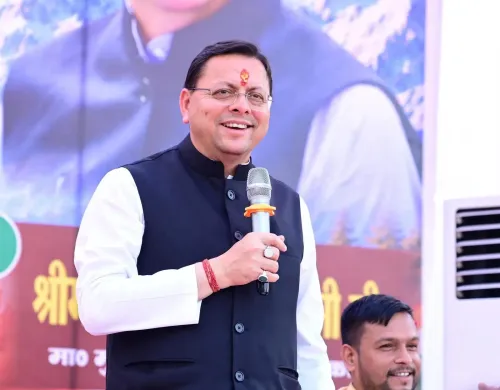
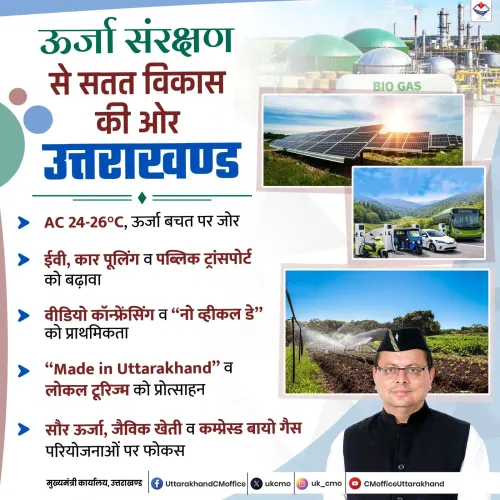
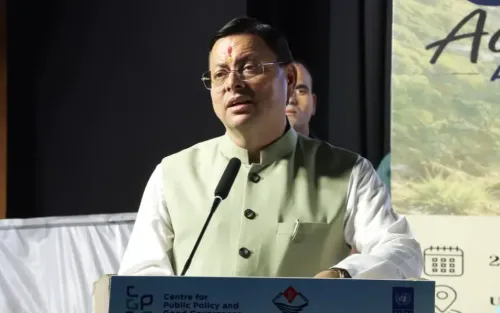
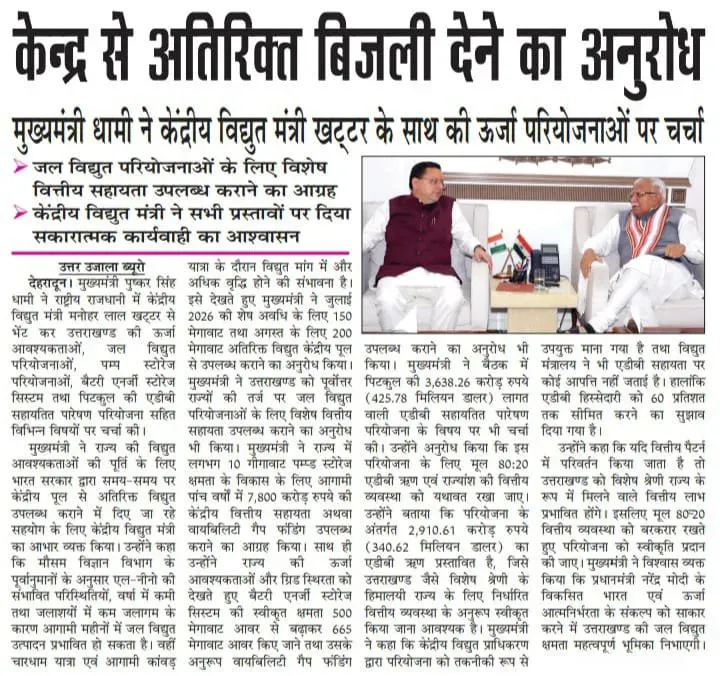
The Chief Minister's Office of Uttarakhand announced on Monday, 20 July 2026, that Chief Minister Pushkar Singh Dhami has formally demanded that Uttarakhand receive central assistance for energy projects on par with what northeastern states currently enjoy — citing comparable Himalayan terrain and developmental constraints.
The post, shared by the official CMO account, stated: 'पूर्वोत्तर राज्यों की तर्ज पर मिले उत्तराखण्ड को ऊर्जा परियोजनाओं में मदद' — ('Uttarakhand should receive assistance for energy projects on the lines of northeastern states') — framing the demand as a matter of federal equity for hill states.
Context
Uttarakhand is a Himalayan state with significant untapped hydropower potential, but energy project development there has long been constrained by funding gaps, complex terrain, and environmental clearance hurdles. CM Dhami, who has helmed the state since 2021, has consistently pushed for greater central support to unlock this potential.
The state's geographic and ecological profile closely mirrors that of the northeastern hill states, yet the dedicated central assistance frameworks available to the northeast have not been extended to Uttarakhand in equivalent measure.
Policy Backdrop
Northeastern states have historically benefited from special central assistance for hydropower and power infrastructure channelled through dedicated packages and the North Eastern Council framework, a structure that has been in place since the 2000s. These arrangements recognise the region's strategic importance, limited own-resource base, and difficult terrain.
Uttarakhand has periodically sought similar parity, arguing that its Himalayan geography, ecological constraints, and limited fiscal capacity present challenges identical to those the northeastern framework was designed to address. The demand fits into a broader federal pattern in which special-category and hill states press for tailored central schemes beyond standard allocations.
India's national energy security agenda — which includes ambitious targets for expanded hydropower and renewable capacity — provides additional impetus for such state-level demands, as the Centre looks to states with high hydro potential to contribute to the national grid.
Stakeholders and Impact
The primary beneficiaries of any such parity arrangement would be Uttarakhand's state power utilities, private hydropower developers, and the communities in river valleys where stalled or under-funded projects could be revived. Enhanced central funding could also reduce the financial burden on the state exchequer, which currently shoulders a disproportionate share of project costs relative to its revenues.
For the Centre, extending a northeast-style package to Uttarakhand would set a precedent that other hill and special-category states — such as Himachal Pradesh — could invoke. This makes any policy response a delicate balancing act between targeted support and broader fiscal commitments.
What's Next
Attention now turns to the Union Ministry of Power and upcoming central budget discussions, where Uttarakhand's formal demand is expected to be taken up. A positive response could unlock dedicated allocations or concessional financing windows for the state's hydropower pipeline.
If the Centre agrees in principle, the modalities — whether through an existing scheme, a bilateral memorandum, or a new sub-category within central energy programmes — will determine how quickly project-level benefits reach the ground. CM Dhami's public articulation of the demand signals that Uttarakhand intends to keep this issue at the forefront of Centre-state negotiations in the months ahead.
Point of View
Dhami is signalling that the state sees itself as structurally under-served rather than merely underfunded. The demand also reflects a wider pattern of hill states asserting that special-category logic should extend beyond the northeast, a pressure that will only intensify as India's renewable energy targets grow more ambitious. How the Centre responds will set a precedent with implications for other Himalayan states watching closely.
NationPress
20 Oct 2026
Frequently Asked Questions
What has CM Dhami demanded for Uttarakhand's energy projects?
CM Pushkar Singh Dhami has demanded that the central government provide Uttarakhand with financial assistance for energy projects on the same terms extended to northeastern states, citing the state's comparable Himalayan terrain and limited fiscal resources.
Why do northeastern states get special central energy funding?
Northeastern states receive dedicated central assistance for hydropower and power infrastructure through packages and the North Eastern Council framework, recognising their strategic importance, difficult terrain, and limited own-resource base — arrangements formalised since the 2000s.
Does Uttarakhand have significant hydropower potential?
Yes, Uttarakhand is a Himalayan state with substantial untapped hydropower potential, though development has been slowed by funding gaps, complex terrain, and environmental clearance requirements.
What would parity with northeastern states mean for Uttarakhand?
It would mean dedicated central funding or concessional financing for energy projects, reducing the burden on the state exchequer and potentially reviving stalled hydropower projects, benefiting utilities, developers, and local communities.
What is the next step after CM Dhami's demand?
The Union Ministry of Power and upcoming central budget discussions are the key forums where Uttarakhand's demand is expected to be considered, with the response likely to set a precedent for other hill states.