Rajnath Singh Condoles Malviya Nagar Fire Deaths in Delhi
Synopsis
Union Defence Minister Rajnath Singh expressed deep grief over a fire tragedy in Delhi's Malviya Nagar, offering condolences to families that lost loved ones and praying for the swift recovery of the injured. His message lends national attention to the South Delhi incident, even as the cause and casualty details await official confirmation from local authorities.
Key Takeaways
Union Defence Minister Rajnath Singh issued a public condolence message over a fire in Malviya Nagar , South Delhi.
He called the incident deeply distressing and offered prayers for the bereaved families.
The minister wished a speedy recovery for those injured in the blaze.
Malviya Nagar is a densely populated residential locality under the jurisdiction of the Delhi Fire Service .
Fire safety in the capital is governed by the Delhi Fire Service Act, 2007 and the National Building Code.
Official inquiry findings and any relief measures from Delhi government and central authorities are awaited.
Union Defence Minister Rajnath Singh on Wednesday expressed grief over a fire incident in Malviya Nagar, South Delhi, in which several people lost their lives, and conveyed condolences to the bereaved families. In a post on X, the senior Bharatiya Janata Party (BJP) leader also wished a speedy recovery for those injured in the blaze.
In his message, originally posted in Hindi, the Defence Minister said the accident caused by the fire in Delhi's Malviya Nagar was 'mann ko vyathit karne wala' (deeply distressing to the mind). 'My deep condolences to those who have lost their loved ones in this incident,' he wrote, adding a prayer to God to grant the families the strength to bear the immense sorrow. He also wished for the early recovery of the injured.
Context
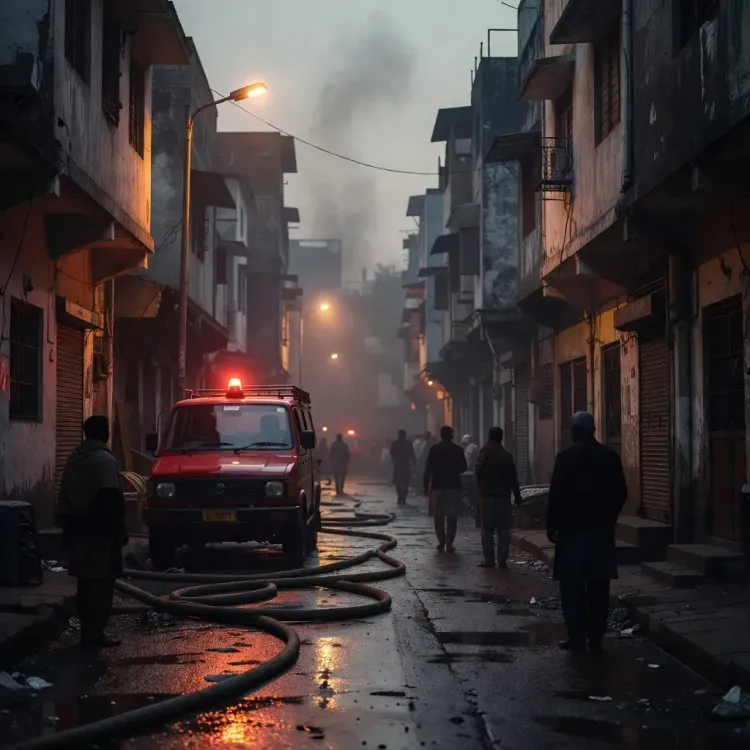
Malviya Nagar is a densely populated residential locality in South Delhi, with a mix of older bungalows, multi-storey apartments and commercial pockets. Fire incidents in the capital's older neighbourhoods often involve narrow lanes that complicate access for emergency vehicles, and have repeatedly drawn attention to the condition of electrical wiring and building safety norms.
Rajnath Singh's intervention, coming from a senior member of the Union Cabinet, lends national visibility to what is otherwise a local civic emergency falling under the jurisdiction of the Delhi Fire Service and the city government.
Policy backdrop
Fire safety in the National Capital is regulated under the Delhi Fire Service Act, 2007 and the National Building Code, with the Delhi Fire Service issuing no-objection certificates for high-rises and commercial premises. Residential buildings below specified height thresholds, however, often fall outside the mandatory NOC regime, leaving compliance uneven.
The capital has witnessed a series of fire tragedies over the past few years across factories, hospitals and residential blocks, prompting periodic audits and enforcement drives. Each major incident has been followed by calls to tighten electrical safety checks, exit-route compliance and the use of fire-resistant materials, though sustained implementation has remained a recurring concern.
Stakeholders and impact
The immediate stakeholders are the affected families in Malviya Nagar, residents of neighbouring lanes, and first responders from the Delhi Fire Service and local police. Hospitals in South Delhi are typically the first point of care for burn injuries and smoke inhalation cases in such incidents.
Politically, expressions of sympathy from Union ministers are part of a well-established pattern in Indian public life. As a former Union Home Minister and former Uttar Pradesh Chief Minister, Rajnath Singh's words carry weight beyond his current defence portfolio, signalling that the central leadership is tracking the situation in the capital.
Such interventions also place implicit pressure on the local administration to expedite relief, medical care for the injured, and a transparent inquiry into the cause of the blaze.
What's next
Attention will now turn to the formal cause-of-fire report from the Delhi Fire Service, post-mortem findings, and any ex gratia or rehabilitation package announced by the Delhi government or central authorities. Building safety audits in the surrounding areas of Malviya Nagar could follow, depending on the findings.
For policymakers, the incident is likely to renew the long-standing debate over enforcement of fire-safety norms in Delhi's mixed-use residential pockets — a debate that has typically intensified after every major urban fire and then receded until the next tragedy.
Point of View
A practice that has become near-mandatory in Indian political communication. Coming from a former Home Minister, the message also subtly underscores the Centre's interest in capital-city law-and-order and civic incidents. The larger arc here is the recurring vulnerability of Delhi's older residential pockets to fire accidents, and the gap between fire-safety regulation and on-ground enforcement. Whether this incident triggers a renewed audit drive or fades into the background will indicate how seriously the political class treats urban safety beyond the immediate condolence cycle.
NationPress
20 Oct 2026
Frequently Asked Questions
What did Rajnath Singh say about the Malviya Nagar fire?
Union Defence Minister Rajnath Singh said the fire incident in Delhi's Malviya Nagar was deeply distressing, offered condolences to families that lost loved ones, and wished a speedy recovery for the injured. He prayed for strength for the bereaved to bear the loss.
Where is Malviya Nagar located in Delhi?
Malviya Nagar is a residential locality in South Delhi. It is a densely populated neighbourhood with a mix of independent houses, apartments and commercial establishments, falling under the jurisdiction of the Delhi government and the Delhi Fire Service.
Who handles fire incidents in Delhi?
The Delhi Fire Service is the primary agency responsible for responding to fire incidents in the national capital. It operates under the Delhi Fire Service Act, 2007, and works alongside Delhi Police and local hospitals during such emergencies.
Has the cause of the Malviya Nagar fire been confirmed?
The official cause of the fire has not been publicly confirmed at this stage. An inquiry by the Delhi Fire Service and local authorities is typically initiated after such incidents, with findings released after preliminary investigation.
What is Rajnath Singh's current role in the government?
Rajnath Singh is the Union Minister of Defence in the Government of India and a senior leader of the Bharatiya Janata Party. He has previously served as Union Home Minister and as Chief Minister of Uttar Pradesh.