Rahul Gandhi condoles deaths in Delhi's Malviya Nagar fire
Synopsis
Congress leader Rahul Gandhi expressed deep grief over a fire in Delhi's Malviya Nagar that killed several people, offered condolences to bereaved families, urged Congress workers to join relief and rescue operations, and wished the injured a swift recovery.
Key Takeaways
Rahul Gandhi posted condolences after a fire in Malviya Nagar , South Delhi, killed several people.
He called on Indian National Congress workers to support relief and rescue efforts.
He wished the injured a speedy recovery.
The post was made on 3 June 2026 in Hindi, without attached media.
Focus now shifts to the official inquiry and any compensation announced by the Delhi government or NDMA .
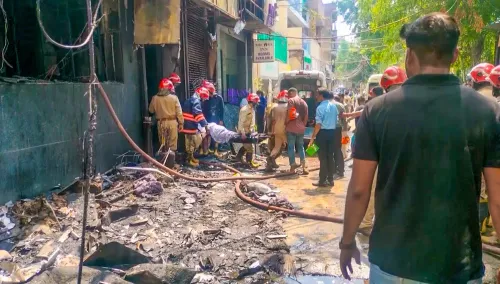
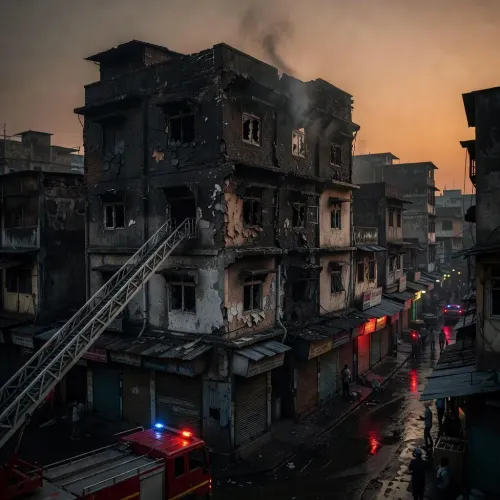
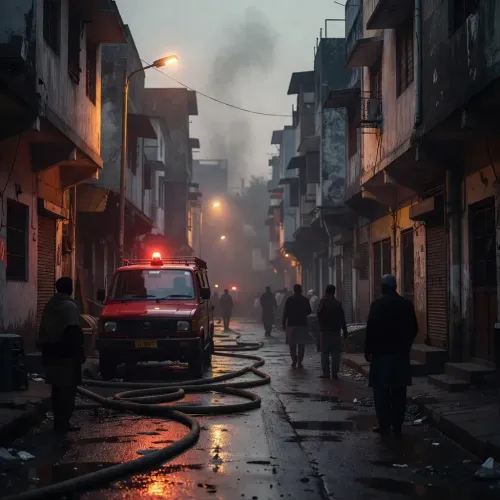
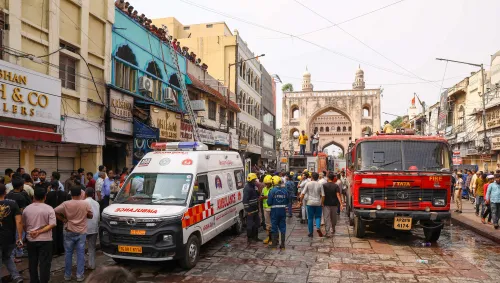
Congress leader Rahul Gandhi, the Leader of the Opposition in the Lok Sabha, on Wednesday, 3 June 2026, expressed grief over the loss of lives in a fire that broke out in Malviya Nagar, a residential locality in South Delhi. In a post on X, he conveyed condolences to the bereaved families and urged party workers to assist in relief and rescue operations.
'The news of several people dying in a fire in Delhi's Malviya Nagar is deeply saddening,' Gandhi wrote in Hindi (दिल्ली के मालवीय नगर में आग लगने से कई लोगों की मृत्यु का समाचार अत्यंत दुखद है). 'I express my deepest condolences to all the grieving families. I urge all Congress workers to contribute in every possible way to the relief and rescue efforts. I hope the injured recover swiftly.'
Context
Malviya Nagar is a densely populated neighbourhood in South Delhi, characterised by a mix of older residential blocks, narrow lanes and busy commercial stretches. Fire incidents in such tightly packed pockets of the capital often draw swift political response given the high human cost and the visibility of the affected localities.
Gandhi, who represents Rae Bareli in the Lok Sabha and serves as the Leader of the Opposition, framed his message as both a tribute and a call to action, directing Indian National Congress cadres to step in alongside emergency services. The post carried no images or video.
Policy backdrop
Urban fire safety in Delhi falls under a layered framework involving the Delhi Fire Service, municipal building bye-laws and the National Disaster Management Authority (NDMA). The capital has, over the years, witnessed recurring fire incidents in residential, commercial and industrial premises, frequently traced to electrical faults, blocked exits or non-compliance with safety norms.
Opposition leaders routinely use such moments to press state and central agencies on enforcement gaps. While Gandhi's post did not name any official or agency, his appeal to Congress workers to participate in relief signals the party's continuing effort to project on-ground presence during civic emergencies in the national capital.
Stakeholders and impact
The immediate stakeholders are the families of those who died, the injured undergoing treatment, and residents of Malviya Nagar coping with the aftermath. Local Congress functionaries are likely to coordinate with civil society and first responders, a pattern the party has followed in earlier Delhi incidents.
For the broader public, the episode renews focus on fire-preparedness in older South Delhi colonies, where ageing wiring, congested lanes and limited access for fire tenders complicate response. Civic agencies typically face questions on inspection records and clearance norms after such tragedies.
What's next
Attention will turn to the official inquiry into the cause of the fire and any compensation or rehabilitation package announced by the Delhi government or the NDMA for the affected families. Updated casualty numbers and the status of the injured are expected to follow from emergency services.
Gandhi's intervention places the incident on the national political radar and is likely to be followed by visits or further statements from Congress representatives. The broader implication is renewed scrutiny of urban fire-safety enforcement in Delhi's residential neighbourhoods.
Point of View
Keeping Congress visible at the local level. The framing avoids partisan attack but implicitly underscores civic-governance accountability in BJP-led central jurisdiction and the AAP-administered Delhi government. Each such incident feeds a longer arc of unresolved fire-safety enforcement in dense Delhi colonies. Watch whether Congress follows up with a delegation visit or a formal demand for a structured relief package.
NationPress
20 Oct 2026
Frequently Asked Questions
What happened in Malviya Nagar, Delhi?
A fire broke out in Malviya Nagar, a residential locality in South Delhi, leading to several deaths and injuries. Specific casualty figures are awaited from emergency services and official sources.
What did Rahul Gandhi say about the Malviya Nagar fire?
Rahul Gandhi called the news 'deeply saddening', offered condolences to bereaved families, urged Congress workers to join relief and rescue operations, and wished the injured a quick recovery.
When did Rahul Gandhi post about the Delhi fire?
He posted the message in Hindi on X on 3 June 2026, shortly after reports of the fire emerged.
Which constituency does Rahul Gandhi represent?
Rahul Gandhi is the Lok Sabha MP from Rae Bareli in Uttar Pradesh and currently serves as the Leader of the Opposition in the Lok Sabha.
Who responds to fire incidents in Delhi?
The Delhi Fire Service leads the response, supported by police and civic agencies. The National Disaster Management Authority and the Delhi government may step in for relief and rehabilitation in major incidents.