Jaishankar pays tribute to Dr. APJ Abdul Kalam on birth anniversary
Synopsis
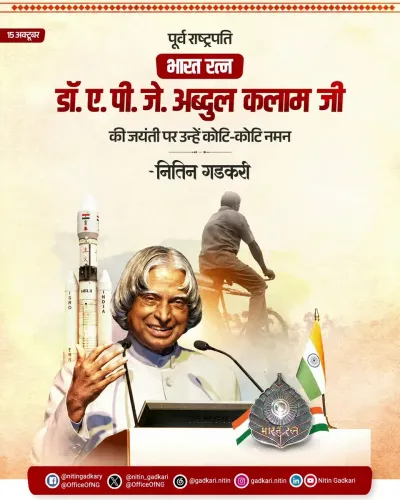
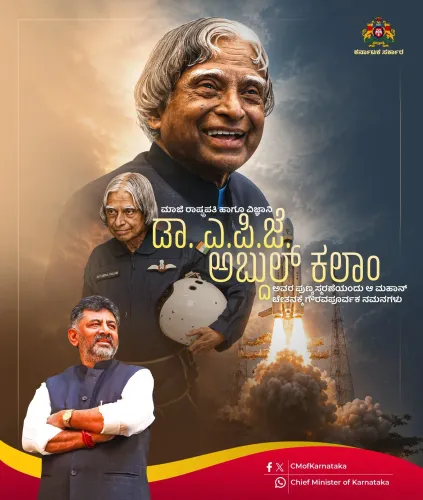
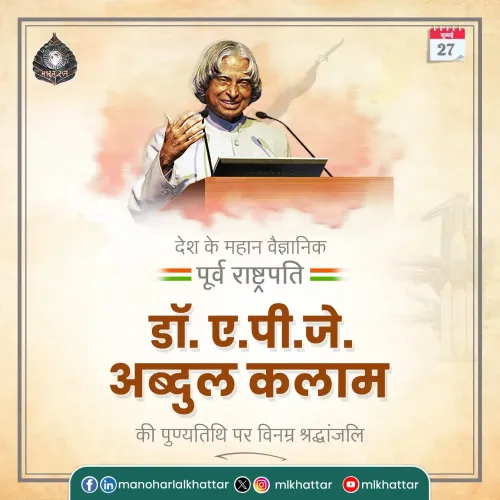
Union External Affairs Minister Dr. S. Jaishankar paid tribute to Bharat Ratna Dr. APJ Abdul Kalam on his October 15 birth anniversary, honouring the former President and aerospace scientist's enduring vision and dedication to the nation.
Key Takeaways
Jaishankar paid tribute to Bharat Ratna Dr.
APJ Abdul Kalam on his birth anniversary, October 15, 2026 .
Kalam served as President of India from 2002 to 2007 and is widely known as the 'Missile Man of India.' He was awarded the Bharat Ratna in 1997 for his contributions to India's defence and space programmes.
Jaishankar cited Kalam's 'vision, commitment and dedication for the nation' as an enduring source of inspiration.
October 15 tributes to Kalam are a consistent practice among Indian ministers and public figures, aligning his legacy with science, education and national development.
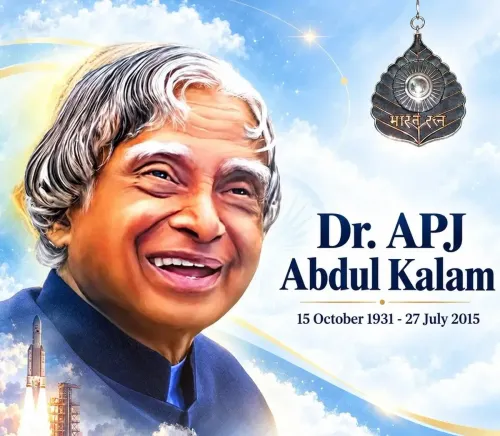
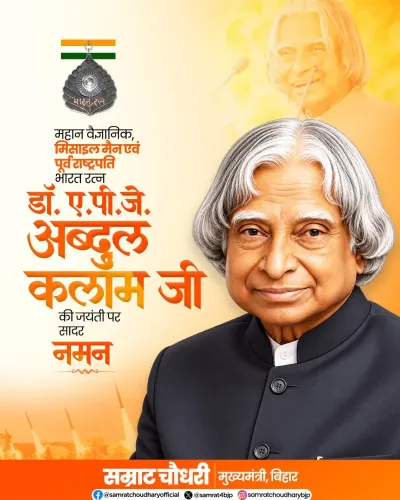
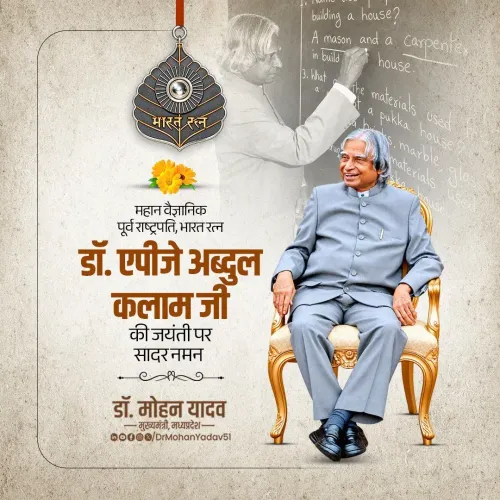
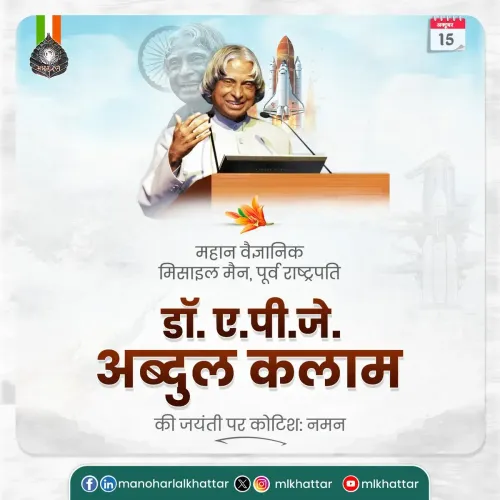
On the birth anniversary of one of India's most beloved scientist-statesmen, Union External Affairs Minister Dr. S. Jaishankar paid tribute to Bharat Ratna Dr. APJ Abdul Kalam on Thursday, October 15, honouring a legacy that continues to resonate across generations.
Jaishankar wrote: 'Pay my tribute to Bharat Ratna Dr. APJ Abdul Kalam on his birth anniversary today. His vision, commitment and dedication for the nation continue to inspire.'
The man behind the missile — and the dream
Dr. APJ Abdul Kalam served as President of India from 2002 to 2007, earning the affection of millions as the 'People's President.' Long before that, as a pioneering aerospace scientist, he was the architect of India's ballistic missile programme — earning the title 'Missile Man of India.' He was awarded the Bharat Ratna in 1997 for his transformative contributions to India's defence and space programmes.
Kalam's singular gift was making science feel urgent and personal — especially for young Indians. His message was simple and unrelenting: dream big, work hard, serve the nation. It is that quality, more than any missile or satellite, that has kept his memory alive in classrooms, laboratories and government chambers alike.
A ritual of remembrance — and what it signals
Jaishankar's tribute follows a well-established pattern among Indian public figures, who mark October 15 each year by invoking Kalam's legacy in the context of education, technology and youth empowerment. The External Affairs Minister's words — 'vision, commitment and dedication' — reflect the trifecta most closely associated with Kalam's public persona: a scientist who thought in decades, not budget cycles.
That a senior diplomat chooses to honour Kalam speaks to the man's reach beyond the purely scientific. Kalam's ideas on governance, self-reliance and India's civilisational potential have found echoes in the foreign-policy vocabulary of the current establishment — from technology diplomacy to strategic autonomy.
Point of View
While ceremonial in form, reflects the current establishment's broader practice of anchoring India's aspirational national identity to figures like Kalam — scientists who embodied self-reliance and strategic ambition. In a foreign-policy context, invoking Kalam's legacy carries a subtle signal: India's techno-strategic ambitions have deep institutional roots, not merely recent political origins. The tribute adds little new policy content but reinforces the cultural grammar through which India's leadership communicates national purpose. It is routine in form, but not trivial in the story it tells about who the Indian state chooses to remember — and why.
NationPress
15 Oct 2026
Frequently Asked Questions
When is APJ Abdul Kalam's birth anniversary?
Dr. APJ Abdul Kalam was born on October 15, 1931 , and his birth anniversary is observed every year on that date across India.
Why is APJ Abdul Kalam called the Missile Man of India?
Dr. Kalam earned the title 'Missile Man of India' for his pioneering role in developing India's ballistic missile programme, including the Agni and Prithvi missiles, as a scientist at DRDO and ISRO.
What Bharat Ratna did APJ Abdul Kalam receive?
Dr. APJ Abdul Kalam was awarded the Bharat Ratna , India's highest civilian honour, in 1997 , recognising his extraordinary contributions to India's defence and space programmes.
When did APJ Abdul Kalam serve as President of India?
Dr. APJ Abdul Kalam served as the 11th President of India from 2002 to 2007 , widely celebrated as the 'People's President' for his accessibility and connection with youth.
What did Jaishankar say about APJ Abdul Kalam?
External Affairs Minister Dr. S. Jaishankar said Kalam's 'vision, commitment and dedication for the nation continue to inspire,' paying tribute on the former President's birth anniversary on October 15, 2026.