Jal Shakti Minister CR Paatil Greets Uttarakhand on Foundation Day
Synopsis
Union Jal Shakti Minister C. R. Paatil greeted Uttarakhand on its Foundation Day, honouring the state as the sacred origin of the Ganga and Yamuna, praising its people's resilience, and praying for prosperity at Kedarnath and Badrinath.
Key Takeaways
Uttarakhand was established as a separate state on 9 November 2000 , carved out of Uttar Pradesh after a prolonged statehood movement.
Union Jal Shakti Minister C.
Paatil posted a Foundation Day greeting on 9 November 2026 , marking the state's 26th anniversary .
Paatil called Uttarakhand the origin point of the Ganga and Yamuna rivers and an 'unparalleled confluence of faith, culture, and nature.' He prayed for residents' well-being at Kedarnath and Badrinath , two of the four sacred Char Dham pilgrimage sites in the state.
The minister expressed hope that Uttarakhand's youth would receive 'continuous opportunities for advancement' as the state develops.
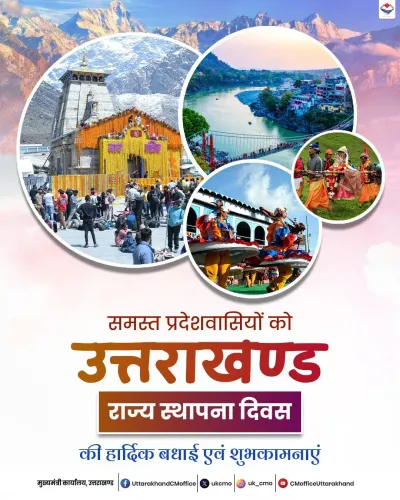
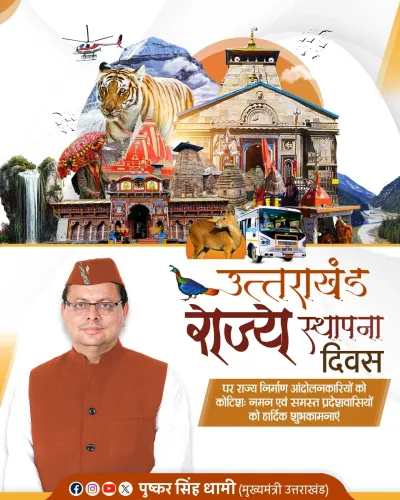
Twenty-six years after a hard-won statehood movement carved Uttarakhand out of Uttar Pradesh on 9 November 2000, Union Jal Shakti Minister C. R. Paatil marked the state's Foundation Day with a heartfelt message saluting its sacred geography, living traditions, and the resilience of its people.
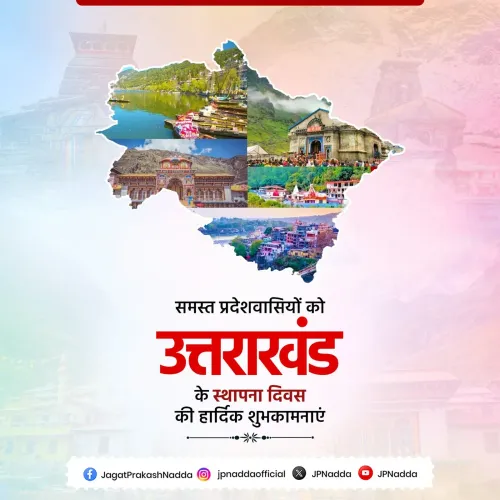
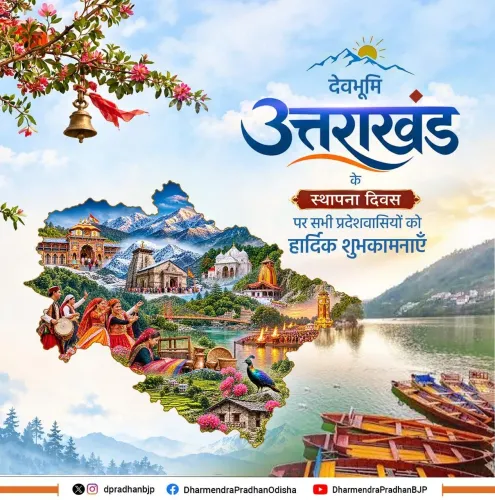
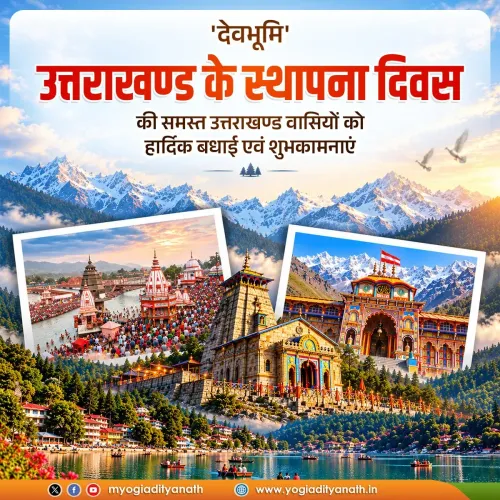
Posting on 9 November 2026, Paatil described Uttarakhand as 'devbhoomi' — the land of the gods — calling it 'an unparalleled confluence of India's faith, culture, and nature.' He invoked the state's singular distinction as the origin point of two of India's holiest rivers: 'Maa Ganga aur Maa Yamuna ki udgamsthali' (the birthplace of Mother Ganga and Mother Yamuna).
Kedarnath, Badrinath, and the Prayer for Prosperity
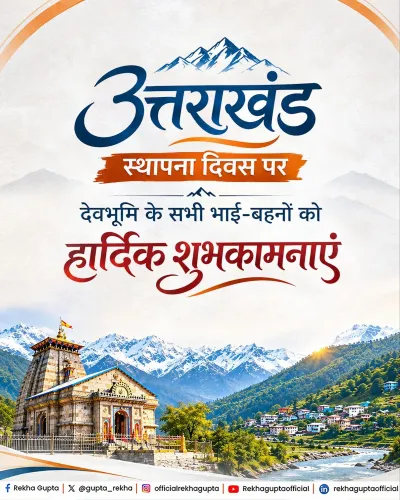
Paatil closed his message with a prayer to two of Uttarakhand's most revered shrines — Baba Kedarnath, the Shiva temple high in the Rudraprayag district, and Bhagwan Badri Vishal, the Vishnu temple at Badrinath in Chamoli district. Both are among the four sacred Char Dham pilgrimage sites that draw millions of devotees every year. His prayer was for 'happiness, good health, and prosperity' for all residents of the state.
The minister also praised the state's 'rich folk traditions' and the spirit of 'hard work, courage, and national service' that Uttarakhand's people have contributed to the country. He expressed hope that the state would 'establish new dimensions of development while preserving its cultural heritage and natural wealth' — and that its youth would find 'continuous opportunities for advancement.'
A Union Minister's Nod to Uttarakhand's Water Legacy
The greeting carries an additional layer given Paatil's portfolio. As head of the Ministry of Jal Shakti — the nodal ministry for water resources, river development, and the flagship Jal Jeevan Mission — his acknowledgement of Uttarakhand as the fountainhead of the Ganga and Yamuna is more than ceremonial. The Himalayan state sits at the top of a river system that sustains hundreds of millions of people across the Indo-Gangetic Plain.
Central ministers routinely mark state formation days with public messages, but Uttarakhand draws particular attention for its dual identity: a Himalayan spiritual heartland and a critical upstream water source for northern India.
As Uttarakhand enters its twenty-seventh year of statehood, the aspiration its Union minister articulates — heritage preserved, rivers protected, youth empowered — is precisely the balancing act the state's policymakers will be judged on.
Point of View
Implicitly linking Uttarakhand's upstream ecology to the river-management agenda his ministry drives. The invocation of youth opportunities also echoes the BJP's broader governance pitch in a state it has governed since 2017. Such messages serve as soft diplomatic gestures that reinforce the Centre-state relationship, particularly useful ahead of any budget or development-plan negotiations. The Char Dham reference, meanwhile, signals continued federal interest in the state's pilgrimage economy — a growing revenue driver that intersects directly with Himalayan environmental concerns.
NationPress
9 Nov 2026
Frequently Asked Questions
When was Uttarakhand founded and why is 9 November significant?
Uttarakhand was established on 9 November 2000 , when it was carved out of Uttar Pradesh following a long statehood movement. The date is observed annually as Uttarakhand Sthaapna Diwas (Foundation Day).
What did CR Paatil say on Uttarakhand Foundation Day 2026?
C. R. Paatil extended greetings to all residents, described Uttarakhand as the sacred birthplace of the Ganga and Yamuna, praised its people's hard work and national spirit, and prayed for prosperity at Kedarnath and Badrinath.
Why is Uttarakhand called Devbhoomi?
Devbhoomi means 'Land of the Gods.' Uttarakhand carries this name because it is home to major Hindu pilgrimage sites including Kedarnath , Badrinath , Gangotri , and Yamunotri , as well as the Himalayan sources of the Ganga and Yamuna rivers.
What is the Jal Shakti Ministry's connection to Uttarakhand?
The Ministry of Jal Shakti oversees water resources and river development across India. Uttarakhand is the upstream source of the Ganga and Yamuna , making it strategically important to the ministry's river-management and conservation work.
What are the Char Dham sites in Uttarakhand?
The four Char Dham pilgrimage sites in Uttarakhand are Kedarnath , Badrinath , Gangotri , and Yamunotri . They are among the holiest destinations in Hinduism and draw millions of pilgrims each year.