Jal Shakti Minister CR Paatil Meets Punjab Governor Kataria
Synopsis
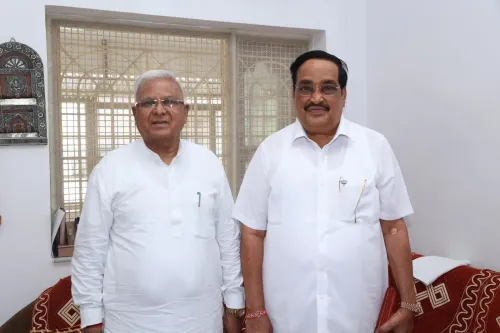
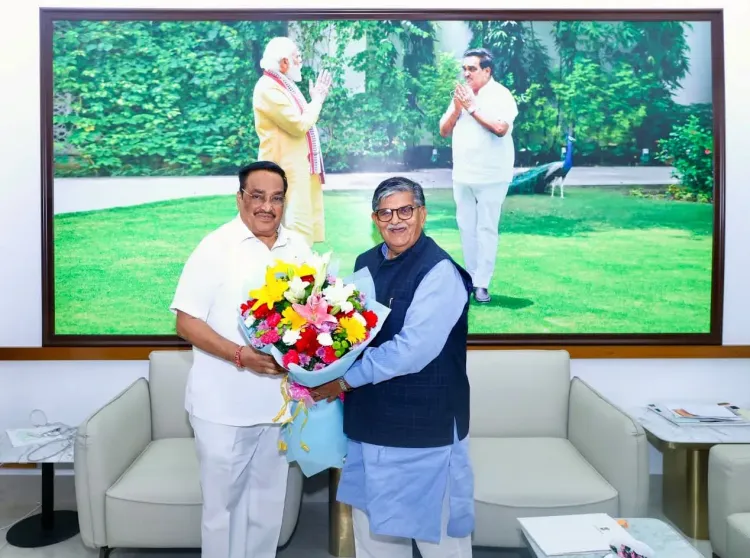
Union Jal Shakti Minister C. R. Paatil met Punjab Governor and Chandigarh Administrator Gulab Chand Kataria on September 29, 2026, for a cordial discussion on 'various subjects,' a meeting that underlines the Centre's administrative engagement with a state governed by the opposition AAP.
Key Takeaways
Paatil , Union Minister of Jal Shakti, met Gulab Chand Kataria , Governor of Punjab and Administrator of Chandigarh, on September 29, 2026 .
Paatil described the conversation as 'cordial' and the discussion as covering 'various subjects' — no specific agenda was disclosed.
Gulab Chand Kataria is a senior BJP leader from Rajasthan serving in the dual role of Punjab Governor and Chandigarh Administrator.
Punjab is governed by the Aam Aadmi Party , making the Governor's office a key channel for Central-state communication.
The Jal Shakti Ministry has direct policy stakes in Punjab's water-sharing disputes, groundwater management, and irrigation infrastructure.
The meeting represents a standard but strategically significant federal coordination exercise between a Union minister and a Central appointee.
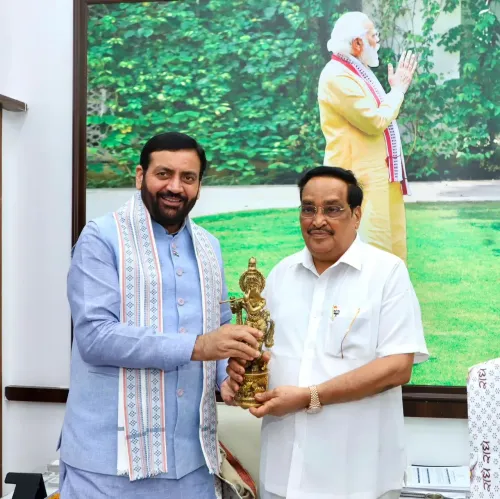
A courtesy call between two senior BJP figures carried more than pleasantries on Tuesday, September 29, 2026, as Union Jal Shakti Minister C. R. Paatil met Gulab Chand Kataria, Governor of Punjab and Administrator of the Union Territory of Chandigarh, for what the minister described as a warm exchange on 'various subjects.'
Paatil shared the meeting on X, writing in Hindi: 'Punjab ke mananeeya Rajyapal evam Kendra Chandigarh ke Prashask Shri Gulab Chand Kataria ji se aaj bhet hui' — 'Today I met the honourable Governor of Punjab and Administrator of Chandigarh, Shri Gulab Chand Kataria.' He added that the conversation was 'cordial' and that Kataria's 'affection and warmth are always a source of inspiration.'
Two BJP Heavyweights, One Federal Pressure Point
Gulab Chand Kataria is a veteran BJP leader from Rajasthan who serves as Punjab's constitutionally appointed Governor while doubling as Administrator of the centrally governed Union Territory of Chandigarh. The dual role places him at a uniquely sensitive intersection of Central and state authority. Punjab, meanwhile, is governed by the Aam Aadmi Party — making the Governor's office a key conduit for Centre-state communication in a state where the ruling party sits in direct political opposition to the BJP at the national level.
Paatil, who heads the Jal Shakti Ministry — responsible for water resources, river development, and the flagship Jal Jeevan Mission — has a natural administrative interface with Punjab, a state that sits at the heart of India's most contested water-sharing disputes. Punjab's rivers and canal networks are perennially subject to inter-state negotiations that ultimately involve the Union government.
Why a 'Routine' Meeting Is Never Entirely Routine
In India's federal architecture, Union ministers meeting state governors is a well-established practice for administrative coordination that sidesteps the friction of direct minister-to-chief-minister channels when political alignments differ. The post does not specify what 'various subjects' were discussed, and no specific agenda has been confirmed.
Yet the timing and the portfolios involved make the meeting worth noting. The Jal Shakti Ministry's work on water infrastructure in Punjab — from groundwater depletion to irrigation modernisation — requires on-ground state cooperation that the governor's office can help facilitate. Any follow-through on water-related projects or administrative coordination between New Delhi and Chandigarh would likely flow from precisely these kinds of quiet, bilateral conversations.
For now, what the post confirms is the meeting, the cordiality, and the intent. The substance, if any, will surface in official channels.
Point of View
The governor's office becomes the most friction-free conduit for policy coordination. For the Jal Shakti Ministry, Punjab is not peripheral — it is ground zero for India's most complex inter-state water disputes, and any progress on irrigation or groundwater projects requires exactly the kind of quiet diplomatic groundwork this meeting represents. Kataria's dual charge over Chandigarh also gives the encounter a Union Territory governance dimension that goes beyond state-level concerns. Routine as the optics may be, meetings like this often precede substantive administrative movement that emerges only weeks later through official orders.
NationPress
29 Sept 2026
Frequently Asked Questions
Why did CR Paatil meet Punjab Governor Gulab Chand Kataria?
Union Jal Shakti Minister C. R. Paatil paid a courtesy call on Punjab Governor Gulab Chand Kataria on September 29, 2026, for a cordial discussion on 'various subjects,' though no specific agenda was disclosed publicly.
Who is Gulab Chand Kataria?
Gulab Chand Kataria is a senior BJP leader from Rajasthan who serves as the Governor of Punjab and, concurrently, as the Administrator of the Union Territory of Chandigarh.
What does the Jal Shakti Ministry have to do with Punjab?
The Jal Shakti Ministry oversees water resources, river development, and schemes like Jal Jeevan Mission. Punjab is central to India's inter-state water disputes and has significant irrigation and groundwater concerns that fall under the ministry's purview.
Is Punjab governed by BJP?
No. Punjab is governed by the Aam Aadmi Party. The Governor, Gulab Chand Kataria, is a BJP-aligned Central appointee, making the governor's office a key link between the AAP state government and the Union government.
What is the significance of the Chandigarh Administrator role held by Kataria?
As Administrator of Chandigarh, a Union Territory, Kataria exercises authority directly under the Central government, giving the role added strategic importance beyond his duties as Punjab's constitutional governor.