Nadda hails VMMC Safdarjung's first Dual Kidney Transplant
Synopsis
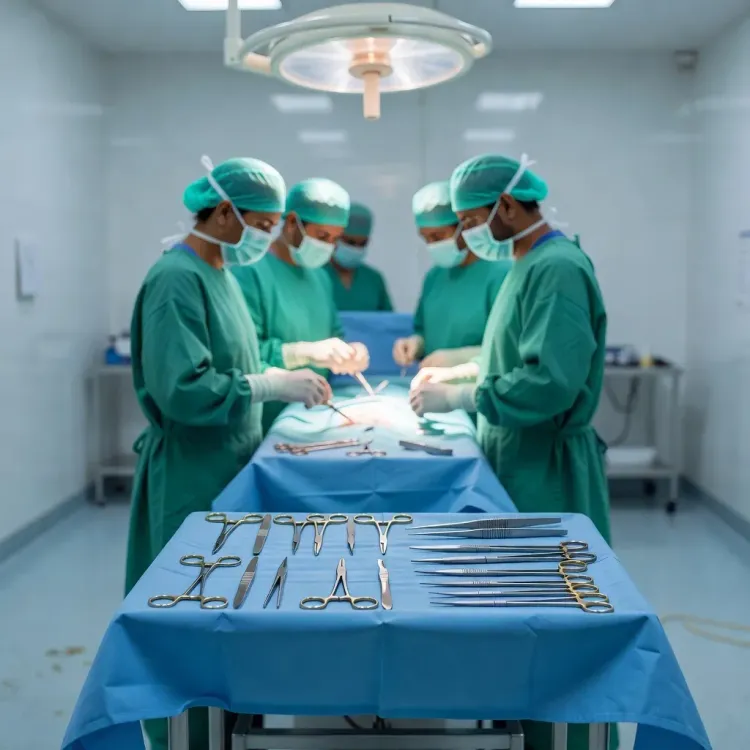
Union Health Minister J. P. Nadda praised VMMC & Safdarjung Hospital for completing its first Dual Kidney Transplant — reportedly a first for any Central Government-run hospital — with donor organs airlifted by the IAF from Command Hospital, Chandimandir, marking a significant advance in India's public-sector transplant capacity.
Key Takeaways
VMMC & Safdarjung Hospital in Delhi performed its first Dual Kidney Transplant, reportedly the first such procedure at any Central Government-run hospital in India.
Donor organs were transported by the Indian Air Force Medical Coordination Cell from Command Hospital, Chandimandir , Haryana, to Delhi.
Union Health Minister J.
Nadda publicly congratulated the hospital team and the IAF on 29 September 2026 .
India's organ transplant framework is governed by the Transplantation of Human Organs and Tissues Act, 1994 (amended 2011) and coordinated nationally by NOTTO , established in 2014 .
The procedure signals potential expansion of complex transplant capability across other Central Government hospitals, reducing dependence on private facilities.
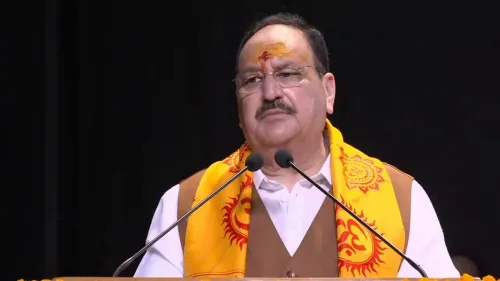
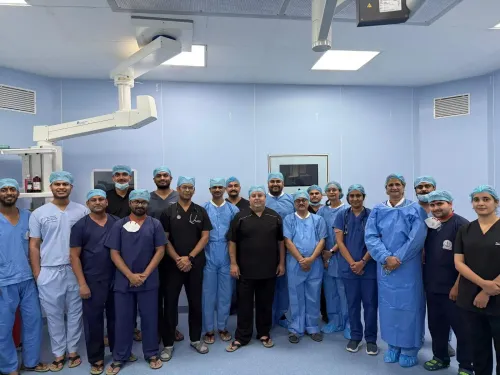
A pair of kidneys, ferried by air from an Army hospital in Haryana to a Central Government facility in Delhi, may have quietly redrawn what public-sector medicine in India can do. Union Health Minister J. P. Nadda on Tuesday, 29 September 2026 congratulated the team at VMMC & Safdarjung Hospital on completing its first Dual Kidney Transplant — described as reportedly the first such procedure at any Central Government-run hospital in the country.
The transplant that crossed service lines
The organs were harvested at Command Hospital, Chandimandir, an Indian Army facility in Haryana, and transported to New Delhi by the Indian Air Force Medical Coordination Cell (@IAF_MCC). Nadda offered 'heartfelt appreciation' to both the healthcare professionals who performed the procedure and the IAF team that made time-critical delivery possible. In organ transplantation, every minute of cold ischaemia — the window between organ removal and implantation — counts; air transport compresses that window dramatically.
The dual kidney transplant, in which both kidneys from a single deceased donor are transplanted into one recipient, is typically used when each kidney alone carries borderline function — together they can sustain the recipient adequately. Performing this at a Central Government hospital signals a step-up in surgical complexity and a direct benefit for patients who cannot afford private-sector care.
What VMMC & Safdarjung represents in public healthcare
VMMC & Safdarjung Hospital is one of India's largest Central Government tertiary-care institutions, affiliated with Vardhman Mahavir Medical College in Delhi. It serves a predominantly low-income and middle-income patient base that has historically had to rely on private hospitals for complex transplant procedures — often at prohibitive cost. A verified in-house dual kidney transplant capability changes that calculus.
India's organ transplantation ecosystem has been shaped by the Transplantation of Human Organs and Tissues Act, 1994, amended in 2011, which created the legal scaffolding for deceased-donor programmes. The National Organ and Tissue Transplant Organisation (NOTTO), established in 2014, coordinates procurement and allocation nationally. Despite this infrastructure, India's deceased-donor rate remains among the lowest globally — a gap that public hospitals entering the transplant space could help narrow.
Armed forces logistics as a transplant lifeline
The Chandimandir-to-Delhi organ run is part of a broader, occasionally under-reported pattern: civilian and military health systems collaborating on time-sensitive organ logistics when road transport would be too slow. Such coordination sidesteps bureaucratic divisions and puts aircraft at the service of patients who would otherwise have no access to them. The IAF's role here underlines how inter-service cooperation can function as genuine healthcare infrastructure, not just a ceremonial gesture.
The milestone comes as India continues to push for expanded transplant capacity in government facilities to ease the burden on a private sector that handles the overwhelming majority of the country's transplant caseload. Whether other Central Government hospitals can replicate the model — and whether NOTTO guidelines evolve to formalise inter-service organ-sharing protocols — will determine how far this moment travels beyond Safdarjung's operating theatre.
One successful dual kidney transplant, one Air Force flight, one Army hospital: a small chain of events with the potential to set a much larger institutional precedent.
Point of View
Or whether Safdarjung remains an isolated milestone.
NationPress
29 Sept 2026
Frequently Asked Questions
What is a dual kidney transplant and why is it significant?
A dual kidney transplant involves transplanting both kidneys from a single deceased donor into one recipient, typically when each kidney alone has borderline function but together can sustain the patient. It is a more complex procedure than a single-kidney transplant and had not previously been reported at a Central Government hospital in India.
Which hospital performed India's first dual kidney transplant at a Central Government facility?
VMMC & Safdarjung Hospital in New Delhi performed the procedure, which Health Minister J. P. Nadda described as reportedly the first dual kidney transplant at any Central Government-run hospital in India.
How did the Indian Air Force help in this kidney transplant?
The Indian Air Force Medical Coordination Cell arranged rapid air transport of the donor organs from Command Hospital, Chandimandir in Haryana to Delhi, ensuring the organs arrived within the critical time window required for a successful transplant.
What is NOTTO and what role does it play in organ transplants in India?
The National Organ and Tissue Transplant Organisation (NOTTO), established in 2014, coordinates organ procurement, allocation, and distribution at the national level in India, operating under the framework set by the Transplantation of Human Organs and Tissues Act, 1994.
Will other government hospitals in India now be able to perform dual kidney transplants?
The Safdarjung success could serve as a template for expanding dual kidney transplant capability to other Central Government hospitals, though any formal rollout would depend on Health Ministry decisions and updates to NOTTO protocols for inter-service organ sharing.